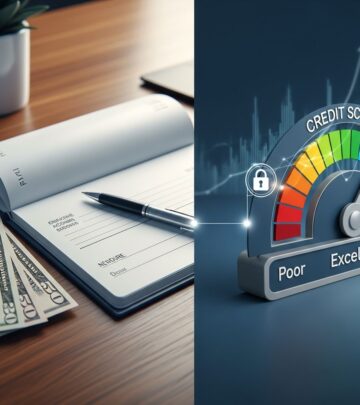
Bank Accounts Without Credit Checks
Discover how to open a bank account regardless of your credit score and what banks actually review during the process.

Most people assume that establishing a basic banking relationship, such as opening a checking or savings account, involves scrutiny of their credit score. In reality, financial institutions rarely pull credit reports for these routine services. Instead, they prioritize evaluating your prior interactions with banks through specialized reporting systems. This approach allows broader access to essential financial tools without the barrier of credit history.
Understanding Bank Account Approval Processes
Financial institutions streamline the process of account openings to encourage widespread banking participation. When you apply for a checking or savings account, banks verify identity and assess risk through non-credit means. Primary requirements include a government-issued photo ID, like a driver’s license or passport, along with your Social Security number or taxpayer ID, contact details, and sometimes a minimum opening deposit ranging from $25 upward.
For joint accounts, additional identification for co-applicants is necessary. Many banks permit online applications for those 18 and older, while minors require in-branch visits with a guardian. This setup ensures compliance with federal regulations like the USA PATRIOT Act for anti-money laundering purposes without delving into creditworthiness.
- Government-issued photo ID (driver’s license, passport, or state ID)
- Social Security number or ITIN
- Proof of address (utility bill or similar)
- Initial deposit (varies by institution)
- Contact information and employment details (optional)
The Difference Between Credit Scores and Banking Reports
Credit scores, such as FICO ranging from 300 to 850, gauge borrowing reliability based on debt repayment, credit utilization, history length, new credit, and mix of accounts. Payment history weighs 35%, amounts owed 30%, length 15%, new credit 10%, and types 10%. These metrics matter for loans, mortgages, or credit cards where repayment risk exists.
Bank accounts differ fundamentally: they involve depositing your own funds, not borrowing. Thus, banks consult ChexSystems, a consumer reporting agency tracking checking and savings behaviors like overdrafts, unpaid fees, account closures, bounced checks, and fraud over five years. A negative report can lead to denials, but not all banks use it uniformly.
| Aspect | Credit Score (FICO) | ChexSystems Report |
|---|---|---|
| Purpose | Assesses borrowing risk | Evaluates banking behavior |
| Key Factors | Payments, debt, history | Overdrafts, closures, fraud |
| Impact on Bank Accounts | None typically | Can cause denials |
| Duration | 7-10 years for negatives | 5 years max |
Common Reasons for Banking History Flags
Issues flagged in ChexSystems often stem from unmanaged overdrafts, where withdrawals exceed balances leading to fees, or frequent negative balances. Unresolved overdraft fees, voluntary closures after risk, or involuntary closures by banks signal unreliability. Fraud attempts or suspected identity theft also appear, potentially blocking new accounts for years.
Not every incident results in denial; severity and recency matter. Minor overdrafts resolved promptly may not hinder approvals, while patterns of abuse do. Banks interpret reports differently—some overlook older issues, others enforce strict policies.
Accessible Account Options for Challenging Histories
If standard accounts prove elusive, second-chance or basic banking products bridge the gap. These feature limited check-writing, no overdraft protection, and monthly fees but allow rebuilding trust. Examples include:
- Bank of America Advantage SafeBalance: $25 minimum deposit, $4.95 monthly fee, no overdraft fees.
- Chase Secure Banking: No ChexSystems check, $5 monthly fee.
- Wells Fargo Clear Access Banking: $25 deposit, $5 fee (waived under 25), contactless debit, no overdrafts.
Credit unions and online banks often skip ChexSystems entirely, offering fee waivers for direct deposit or low balances. Prepaid cards or mobile wallets serve temporarily but lack full checking features like ACH transfers.
Steps to Open an Account Successfully
Begin by reviewing your ChexSystems report annually for free to identify issues. Dispute inaccuracies online. Shop institutions not using ChexSystems—call ahead to confirm. Prepare documents digitally for online apps. Opt for accounts with fee waivers via direct deposit.
- Obtain your free ChexSystems report.
- Research banks/credit unions without history checks.
- Gather ID, SSN, address proof, deposit funds.
- Apply online or in-branch.
- Fund immediately and set alerts for balances.
Post-opening, maintain positive habits: enable low-balance alerts, link savings for overdraft transfers (if allowed), pay fees promptly.
Building Positive Banking Habits Long-Term
Consistent deposits, avoiding overdrafts, and timely fee payments clear ChexSystems flags over time. Transition to full-featured accounts after 12-24 months of good behavior. Pair with credit-building via secured cards, but note banking and credit remain separate.
Opening multiple accounts incurs no credit dings, aiding organization like separate emergency or business funds. Lenders may later review statements for income verification, underscoring responsible management.
FAQs
Will opening a checking account lower my credit score?
No, as no hard credit inquiry occurs.
Can I open a bank account with bad credit?
Yes, credit scores rarely factor in; banking history does.
What if I have a negative ChexSystems report?
Seek second-chance accounts or ChexSystems-free banks.
Do savings accounts require credit checks?
Typically not, similar to checking.
How long do ChexSystems negatives last?
Up to five years, but resolvable earlier.
Choosing the Right Bank Account Type
Basic checking suits daily use; high-yield savings grow funds. Money market accounts blend liquidity and yields. For youth, teen accounts build habits. Match features to needs: mobile deposits, bill pay, ATM networks.
Fees vary—monthly maintenance ($5-15), ATM out-of-network ($2-5), overdrafts ($30+). Waivers via balances, age, or deposits save money. Digital banks minimize costs.
References
- How to open a checking account, what you’ll need and more — Citizens Bank. 2023. https://www.citizensbank.com/learning/how-to-open-a-checking-account.aspx
- 10 Bank Accounts You Can Open Even if You Have Bad Credit — DebtStoppers. 2024-01-15. https://www.debtstoppers.com/blog/10-bank-accounts-you-can-open-even-if-you-have-bad-credit/
- Do Banks Run Credit Checks for Checking Accounts? — SoFi. 2024. https://www.sofi.com/learn/content/do-banks-run-credit-checks-for-checking-accounts/
- Open a Wells Fargo Clear Access Banking Account Online — Wells Fargo. 2025-02-10. https://www.wellsfargo.com/checking/clear-access-banking/
- How to Open a Savings Account and Its Impact on Credit — Texas First Bank. 2023-11-20. https://texasfirst.bank/resource/how-to-open-a-savings-account-and-whether-it-affects-your-credit-score/
- Does opening a checking account affect my credit score? — Discover. 2024. https://www.discover.com/online-banking/banking-topics/does-opening-a-checking-account-affect-credit-score/
Similar Articles








Read full bio of Sneha Tete