Balloon Loan: Definition, How It Works, and Risks
Understand balloon loans: lower payments now, large final payment later. Learn risks and when they make sense.

What Is a Balloon Loan?
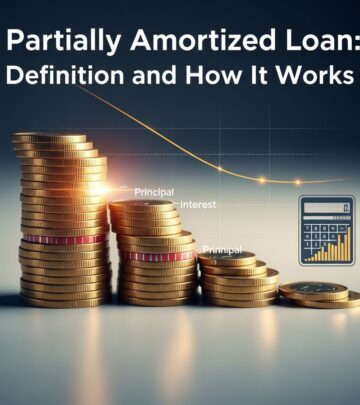
A balloon loan is a type of mortgage or commercial loan that features a large, lump-sum payment—known as a balloon payment—due at the end of the loan term. Unlike traditional fully amortizing loans where the borrower pays down the principal gradually over the entire loan period, balloon loans are structured so that the borrower makes smaller monthly payments throughout the loan term, with the remaining loan balance due in one substantial payment at the end. This final payment is typically much larger than the regular monthly payments and can represent a significant portion of the original loan amount.
The defining characteristic of a balloon loan is the mismatch between the loan term and the amortization period. For example, a borrower might take out a 10-year balloon loan that amortizes over 30 years. This means the monthly payments are calculated as if the loan will be paid off over 30 years, but the entire remaining balance becomes due after just 10 years. Balloon payments are more common in commercial real estate financing than residential mortgages, though they do appear in both markets.
How Balloon Loans Work
To understand how balloon loans function, consider a practical example: If you borrow $5 million to purchase a retail property with a 10-year term, a 5% interest rate, and a 30-year amortization period, your monthly payments would be approximately $27,000. However, this monthly payment does not fully pay off the loan over the 10-year term. Instead, a large balloon payment of approximately $4.1 million would be due at the end of the 10-year period.
The balloon payment can typically be calculated using a commercial mortgage calculator by determining how much principal remains unpaid after all scheduled monthly payments have been made. The structure allows borrowers to enjoy lower monthly cash flows during the loan term while deferring a substantial portion of the principal repayment to the end.
Monthly Payments vs. Traditional Mortgages
The monthly payment advantage is substantial. In the same example, if the loan were fully amortizing over just five years instead, the monthly payments would be approximately $19,000. By extending the amortization to 30 years while keeping the loan term at 5 or 10 years, the monthly payment drops to around $5,400, making it significantly more manageable for borrowers with limited monthly cash flow.
Types of Balloon Loans
Balloon loans come in several variations, each designed to meet different borrower needs and financial circumstances:
Fixed-Rate Balloon Loans: These loans carry a fixed interest rate throughout the loan term, meaning the monthly payment remains constant. Fixed-rate balloon loans are more likely to include balloon payments since they are not reamortized annually.
Adjustable-Rate Balloon Loans: Also called ARMs (Adjustable Rate Mortgages), these loans have interest rates that adjust periodically. ARMs are less commonly paired with balloon payments because they are typically reamortized each year, which can reduce or eliminate the balloon payment.
Interest-Only Balloon Loans: Some balloon loans require borrowers to pay only interest during the loan term, with the entire principal due as the balloon payment at the end. This structure results in even lower monthly payments but requires a substantial lump-sum payment at maturity.
Hybrid Balloon Loans: These loans combine features of different loan types, often featuring an initial period of interest-only payments followed by a period of principal-and-interest payments, with a balloon payment at the end.
Advantages of Balloon Loans
Balloon loans offer several compelling benefits for borrowers who understand and can manage their structure:
Significantly Lower Monthly Payments
The primary advantage is the reduced monthly payment obligation. Borrowers who need to preserve cash flow for other business operations or investments find balloon loans attractive because the lower monthly payments free up capital that might otherwise be committed to loan repayment. This is particularly valuable for commercial real estate investors who need flexibility in managing multiple properties or business expenses.
Better Cash Flow Management
By reducing monthly obligations, balloon loans allow borrowers to manage their cash flow more effectively. This is especially important for businesses with variable income or seasonal revenue fluctuations, as smaller monthly payments are easier to accommodate during slow periods.
Interest Payment Savings
In some scenarios, balloon loans can result in lower total interest payments compared to fully amortizing loans, particularly if the borrower has plans to refinance or sell the property before the balloon payment comes due.
Lower Entry Cost for Investment Properties
For real estate investors, balloon loans make it easier to acquire investment properties with lower monthly payment requirements, potentially allowing them to purchase multiple properties or larger properties than would otherwise be affordable.
Disadvantages and Risks of Balloon Loans
Despite their advantages, balloon loans carry significant risks that borrowers must carefully consider:
Large Final Payment Risk
The most obvious disadvantage is the substantial balloon payment due at the end of the loan term. If borrowers have not properly planned or saved for this payment, they could face serious financial difficulty. A balloon payment is generally more than two times the loan’s average monthly payment and can often represent a substantial portion of the original loan amount, making it a considerable financial obligation.
Foreclosure Risk
If you cannot make the balloon payment when it comes due, you could face foreclosure on the property. Even if the property value has appreciated, if you cannot secure refinancing or sell the property quickly enough, you risk losing the asset and damaging your credit.
Refinancing Challenges
Before the balloon payment is due, borrowers typically refinance the loan to avoid the large final payment. However, this strategy depends on favorable market conditions and a healthy financial position. If your property value declines or your credit score deteriorates, you may not qualify for refinancing, leaving you stuck with the balloon payment obligation.
Interest Rate Risk
If you need to refinance and interest rates have risen significantly since you took out the original loan, your new loan will carry higher interest costs, potentially offsetting any savings achieved through lower initial monthly payments.
Limited Availability in Residential Mortgages
Following the 2008 financial crisis, balloon payments are restricted in residential mortgages deemed “Qualified Mortgages,” with only limited exceptions. This limitation was implemented to protect consumers from taking on excessive risk.
When Balloon Loans Make Sense
Balloon loans are most appropriate for specific situations and borrower profiles:
Short-Term Holders: If you plan to sell the property within a few years, you can use the sale proceeds to pay off the balloon payment without refinancing. The average borrower refinances or moves every 4-6 years, meaning many borrowers never actually reach the balloon payment due date.
Commercial Real Estate Investors: Investors with strong cash flow and the ability to refinance or sell properties are well-suited for balloon loans, as the lower monthly payments improve their cash flow during the holding period.
Borrowers with Planned Income Increases: If you expect your income or business revenue to increase significantly, a balloon loan with lower initial payments may be manageable, with the expectation that you’ll have greater financial capacity to handle the balloon payment in the future.
Property Flippers: Real estate professionals who purchase, improve, and sell properties quickly can benefit from balloon loans’ lower monthly payments while holding the property.
Managing Balloon Payments: Five Strategic Options
1. Refinancing
The most common approach is to refinance the loan before the balloon payment comes due. This involves taking out a new loan to pay off the existing loan, which can help reduce the balloon payment amount. However, this strategy requires that you have sufficient equity in the property and maintain good creditworthiness.
2. Extending the Loan Term
Some lenders may allow borrowers to extend the loan term, spreading remaining payments over a longer period and reducing the balloon payment. This requires lender approval and may result in slightly higher overall interest costs.
3. Making Lump-Sum Payments
Responsible borrowers can negotiate a balloon loan specifically to obtain lower monthly payments, then use extra funds to pay down principal over time. By paying more than the minimum monthly payment, you can significantly reduce the balloon payment by the time it comes due, making it more manageable.
4. Selling the Property
If you own the property, selling it before the balloon payment is due allows you to use the sale proceeds to pay off the loan entirely. This approach is particularly practical for investors with exit strategies based on property appreciation or market conditions.
5. Refinancing Into a Different Loan Structure
After making extra payments to build equity, you can refinance into a fully amortizing loan without a balloon payment, potentially at favorable rates if property values have increased or your financial position has improved.
Balloon Loans vs. Traditional Mortgages
| Feature | Balloon Loan | Traditional Mortgage |
|---|---|---|
| Loan Term | Typically 5-10 years | Typically 15-30 years |
| Monthly Payment | Lower, based on longer amortization | Higher, based on loan term |
| Final Payment | Large balloon payment required | Final payment is regular-sized |
| Total Interest | Can be lower if refinanced early | Higher overall interest expense |
| Refinancing Requirement | Usually necessary before maturity | Optional, based on borrower preference |
| Risk Level | Higher due to balloon payment | Lower, more predictable |
Balloon Loans and Non-Recourse Financing
Many balloon loans, particularly in commercial real estate, are structured as non-recourse loans. This means that if the borrower defaults on the loan, the lender can only pursue the mortgaged property and cannot seek compensation from the borrower’s personal assets or income. This structure limits the borrower’s personal liability but may result in slightly higher interest rates compared to recourse loans.
Frequently Asked Questions
Q: Are balloon payments allowed on residential mortgages?
A: Balloon payments are generally not allowed on residential mortgages deemed “Qualified Mortgages” under federal regulations, though limited exceptions exist. They remain more common in commercial real estate financing.
Q: What happens if I can’t make the balloon payment?
A: If you cannot make the balloon payment, you risk foreclosure on the property. Your options include refinancing, extending the loan term with lender approval, or selling the property before the payment comes due.
Q: How is a balloon payment calculated?
A: A balloon payment is calculated by determining the remaining principal balance after all scheduled monthly payments have been made. Commercial mortgage calculators can compute this amount based on the loan amount, interest rate, loan term, and amortization period.
Q: Should I choose a balloon loan?
A: Balloon loans are best suited for borrowers with short holding periods, strong cash flow, or plans to refinance or sell before the payment comes due. Carefully evaluate whether you can manage the final payment or have a credible exit strategy.
Q: Can I reduce my balloon payment over time?
A: Yes, by making extra principal payments above your minimum monthly obligation, you can reduce the balloon payment amount by the time it comes due. This strategy works best for responsible borrowers who can commit to consistent extra payments.
Q: What’s the difference between a balloon loan and a fully amortizing loan?
A: A fully amortizing loan spreads payments over the entire loan term so the final payment is regular-sized. A balloon loan front-loads interest and principal repayment into monthly payments, leaving a large balance due at the end.
Conclusion
Balloon loans are powerful financial tools for borrowers who understand their structure and have clear strategies for managing the final payment. The significantly lower monthly payments make them attractive for commercial real estate investors and businesses seeking to optimize cash flow. However, the substantial balloon payment obligation creates real risks, particularly if property values decline or refinancing becomes unavailable. Success with balloon loans requires careful planning, disciplined financial management, and a clear understanding of your exit strategy—whether through refinancing, property sale, or accelerated principal payments. For most borrowers, especially in residential markets, traditional fully amortizing mortgages remain the safer choice. However, for sophisticated commercial borrowers with specific financial goals and risk tolerance, balloon loans can be an effective component of a comprehensive real estate financing strategy.
References
- What is a balloon payment? When is one allowed? — Consumer Finance Protection Bureau (CFPB). 2024. https://www.consumerfinance.gov/ask-cfpb/what-is-a-balloon-payment-when-is-one-allowed-en-104/
- 5 Methods for Handling Balloon Payments — Commercial Real Estate Loans. 2024. https://www.commercialrealestate.loans/blog/5-methods-for-handling-balloon-payments/
Similar Articles








Read full bio of medha deb