Balancing Debt Paydown and Wealth Building
Discover proven strategies to reduce debt while growing investments for a secure financial future without choosing one over the other.

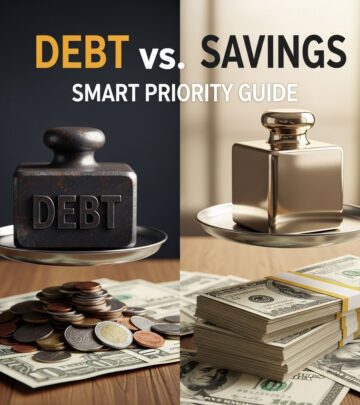
Navigating financial obligations alongside investment goals requires a thoughtful approach that prioritizes high-impact actions without sacrificing future growth. Many individuals face the dilemma of whether to aggressively tackle loans or channel funds into assets, but evidence shows it’s feasible to advance both objectives concurrently through structured planning.
Understanding Your Full Financial Landscape
The foundation of any dual-track strategy begins with a comprehensive audit of your income, expenses, and liabilities. Track every dollar inflow from salaries, side gigs, or other sources over a month to establish a realistic baseline. This clarity reveals surplus funds available for allocation toward obligations and savings.
List all debts including balances, annual percentage rates (APRs), and required minimums. Categorize them by urgency: high-interest items like credit cards often exceed 15-20% APR, eroding wealth faster than typical market returns, while lower-rate student loans or mortgages around 4-6% may warrant a different tactic.
- Income assessment: Calculate net monthly earnings after taxes.
- Expense categorization: Divide into essentials (housing, food), discretionary (entertainment), and flexible areas for cuts.
- Debt inventory: Prioritize by interest rate descending.
Prioritizing High-Interest Obligations First
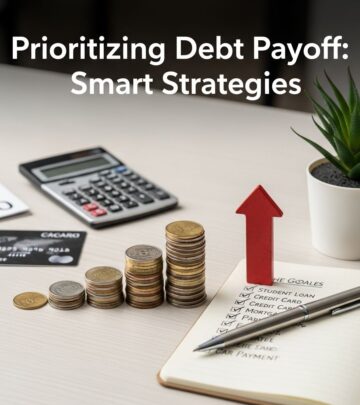
Target debts with APRs above 7-8% aggressively, as they outpace average stock market gains of 7-10% historically. Employ the avalanche method: allocate extra payments to the highest-rate debt while covering minimums elsewhere. This minimizes total interest paid over time.
| Debt Type | Average APR | Priority Level | Strategy |
|---|---|---|---|
| Credit Cards | 15-25% | High | Avalanche payments |
| Personal Loans | 10-15% | Medium | Minimum + extras |
| Student Loans | 4-7% | Low | Minimums, invest surplus |
| Mortgage | 3-5% | Lowest | Minimums, heavy investing |
For lower-rate debts, the opportunity cost of overpaying is significant. Investing surplus at expected 7% returns beats a 4% mortgage rate, building net worth faster.
Implementing a Balanced Budget Framework
Adopt the 50/30/20 rule as a starting point: 50% for necessities, 30% for lifestyle choices, and 20% split between debt reduction and investments. Adjust based on debt load—for instance, temporarily shift from 30% wants to bolster the 20% savings/debt category.
Automation is key: set recurring transfers for minimum payments, extra debt principal, and investment contributions on payday. This enforces discipline and leverages dollar-cost averaging for market entries.
- 50% Needs: Rent, utilities, groceries, transport.
- 30% Wants: Dining out, hobbies—trim here first.
- 20% Goals: 10% debt extras, 5% emergency fund, 5% retirement/investments.
Securing an Emergency Safety Net
Before ramping up investments or debt attacks, establish a starter buffer of $1,000 in a high-yield savings account. This prevents reliance on high-interest borrowing for surprises like car repairs. Once debts stabilize, expand to 3-6 months of living expenses.
High-yield accounts currently offer 4-5% APY, providing returns competitive with low-rate debts while maintaining liquidity.
Leveraging Employer Benefits for Immediate Gains
Contribute enough to retirement plans like 401(k)s to capture full employer matches—often 50-100% free money equating to 50-100% instant returns. This outperforms even high-interest debt elimination in the short term.
For example, a 4% match on 5% contributions yields $2,000 annually on $50,000 salary without net cost. Prioritize this before non-matched investing.
Refinancing and Consolidation Options
Explore refinancing high-rate debts to lower APRs, freeing cash for investments. Balance transfer cards at 0% introductory rates or loan consolidations can reduce effective costs, but scrutinize fees, terms, and credit impacts.
Pros: Lower payments enable dual progress. Cons: Potential rate hikes post-promo or qualification hurdles.
Launching Long-Term Investment Habits
With high-interest threats contained, direct funds to diversified, low-cost index funds or ETFs tracking broad markets. Historical S&P 500 returns average 10% annually, compounding to outrun remaining low-rate debts.
Start small: $50-100 monthly via apps or brokerages. Consistency trumps timing; automate to buy shares regularly, reducing volatility risk.
Boosting Income for Accelerated Progress
Supplement earnings through side hustles, negotiations for raises, or skill monetization. Funnel 70-100% of increments toward goals: 50% debt, 50% invest. This amplifies surplus without lifestyle inflation.
Common Pitfalls to Avoid
Steer clear of raiding retirement accounts for debt—penalties and lost compounding devastate long-term wealth. Similarly, ignore emotional snowball methods if avalanche saves more mathematically.
- Overlooking matches: Misses guaranteed returns.
- No emergency fund: Leads to debt cycles.
- Lifestyle creep: Erodes surpluses.
- Market timing: Harms compounding.
Real-World Application: Sample Monthly Plan
Assume $5,000 net income, $20,000 credit card at 18% ($500 min), $30,000 student loan at 5% ($300 min).
| Category | Allocation | Amount |
|---|---|---|
| Needs | 50% | $2,500 |
| Wants | 25% | $1,250 |
| Debt Minimums | – | $800 |
| Extra Debt | – | $500 |
| Emergency/Invest | 25% | $950 |
Result: Credit card shrinks rapidly, investments grow, security builds.
FAQs
Should I pause investing to eliminate debt?
No, secure matches and invest post-high-interest paydown; low-rate debts justify parallel investing.
What’s the best debt repayment order?
Avalanche by interest rate for math-optimal results.
How much emergency fund is enough?
$1,000 starter, then 3-6 months expenses.
Can refinancing help?
Yes, if it lowers rates sustainably without fees outweighing savings.
Are index funds safe for beginners?
Yes, diversified and low-cost for long-term growth.
References
- How to manage debt and invest at the same time — Betterment. 2023. https://www.betterment.com/resources/how-to-manage-debt-and-investing
- Expert Tips to Invest and Pay Off Debt at the Same Time — Business Insider. 2021-12. https://www.businessinsider.com/invest-and-pay-off-debt-same-time-tips-2021-12
- How do you keep investing for the future while managing debts — DIY Investor. N/A. https://www.diyinvestor.net/guest-post-how-do-you-keep-investing-for-the-future-while-managing-debts/
- How to Manage Debt & Build Wealth at the Same Time — Vertis Wealth. N/A. https://vertiswealth.com/how-to-manage-debt-build-wealth-at-the-same-time/
- Balancing debt and saving | Step-by-step guide — Fidelity Investments. N/A. https://www.fidelity.com/viewpoints/personal-finance/how-to-pay-off-debt
Similar Articles








Read full bio of Sneha Tete