Balanced Scorecard: Strategic Performance Management
Master strategic alignment and performance measurement with the Balanced Scorecard framework.
What is a Balanced Scorecard?
The Balanced Scorecard is a comprehensive strategic management and performance measurement framework that translates an organization’s vision and strategy into a coherent set of performance measures. Developed in 1992 by Harvard Business School Professor Robert Kaplan and David Norton, this management tool has revolutionized how organizations track and measure non-financial variables alongside traditional financial metrics. The framework recognizes that an organization’s success cannot be determined by financial performance alone; rather, it requires a holistic view of organizational health across multiple dimensions.
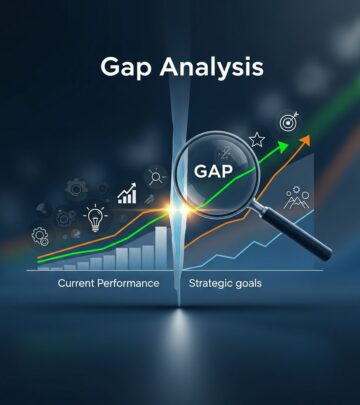
At its core, the Balanced Scorecard bridges the critical gap between strategic planning and execution. It transforms abstract strategic objectives into concrete, measurable outcomes that guide decision-making at all levels of the organization. The framework provides a structured approach to strategic management by creating alignment between organizational intentions, the capacity to execute those intentions, and the resulting value created for customers and stakeholders.
Unlike traditional performance management systems that focus primarily on financial results, the Balanced Scorecard provides a more balanced view of organizational performance. It enables executives to track how well their organization is serving customers, managing internal processes, and developing the capabilities needed for future growth—all while maintaining financial discipline.
The Four Perspectives of the Balanced Scorecard
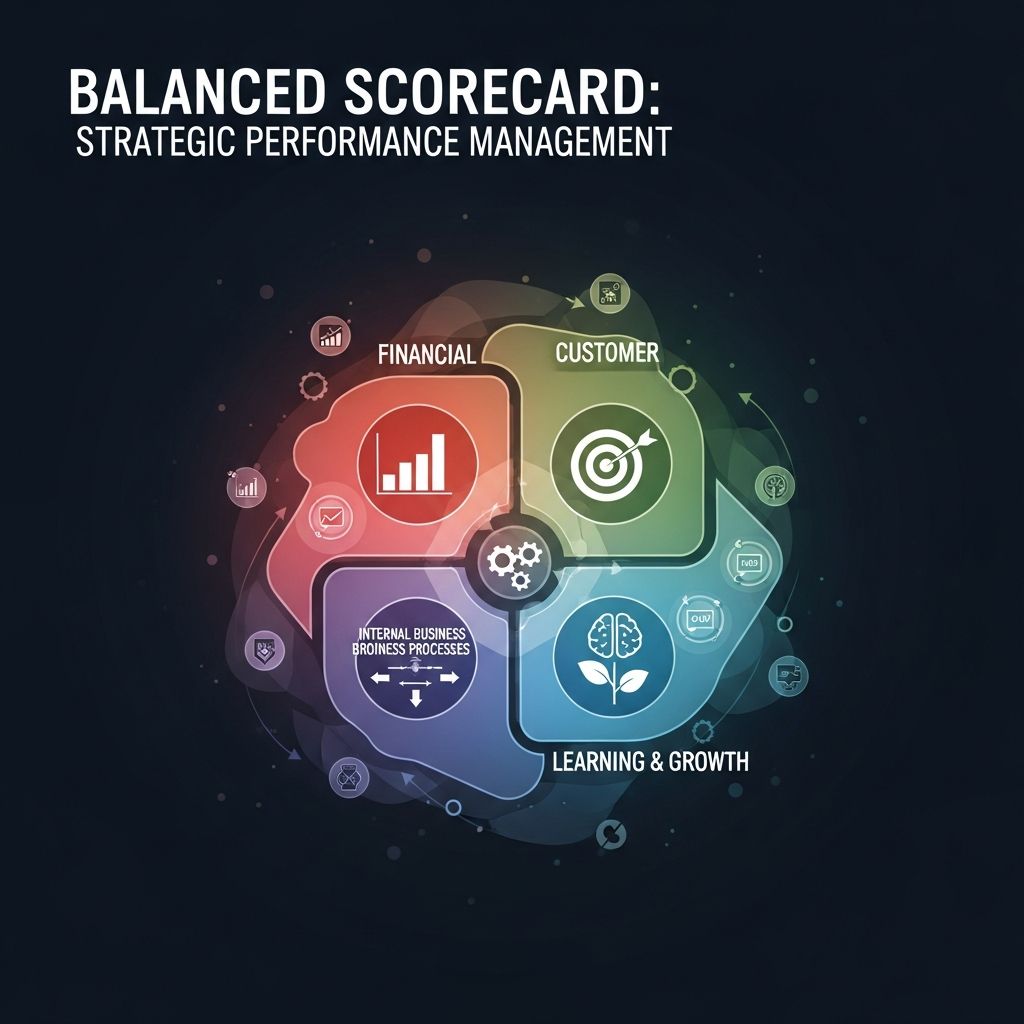
The Balanced Scorecard framework operates around four interconnected perspectives that provide complete visibility into organizational performance. Each perspective answers a critical strategic question and contributes to overall organizational success.
Financial Perspective
The Financial perspective, also called “Stewardship” in some contexts, assesses the organization’s financial performance and evaluates how effectively it uses financial resources. This perspective answers the fundamental question: “Do our strategies, initiatives, and operations create shareholder value?” Financial metrics within this perspective include revenue growth, profit margins, return on investment, cash flow, and return on capital. However, financial outcomes should be viewed not as standalone numbers, but as the cumulative impact of performance across the entire organization. This perspective remains essential for stakeholders and investors, as it demonstrates whether the organization’s strategic initiatives translate into economic value creation.
Customer Perspective
The Customer perspective, sometimes referred to as the “Customer/Stakeholder” perspective, evaluates performance from the viewpoint of customers or key stakeholders the organization is intended to serve. This perspective addresses the critical question: “How do customers perceive us, and are we creating value for them?” Key metrics in this perspective include customer satisfaction scores, customer retention rates, market share, brand perception, and customer loyalty measures. Organizations often discover that improvements in customer-related metrics are leading indicators of future financial performance. By focusing on customer value creation, organizations ensure that their internal operations ultimately serve customer needs and expectations.
Internal Process Perspective
The Internal Process perspective focuses on the quality and efficiency of the company’s internal operations, systems, and processes that produce products, deliver services, or drive other critical business functions. This perspective poses the question: “What must we excel at to deliver value to customers?” Metrics tracked within this perspective include productivity rates, quality measures, cycle times, innovation rates, efficiency indicators, and timeliness of delivery. Internal processes directly impact both customer satisfaction and financial outcomes. Organizations that excel at operational excellence typically deliver superior customer experiences while managing costs effectively.
Learning and Growth Perspective
The Learning and Growth perspective, often referred to as “Organizational Capacity,” examines what an organization needs from its people, infrastructure, technology, and culture to drive breakthrough performance and achieve long-term success. This perspective asks: “Can we continue to improve, innovate, and create value?” This perspective encompasses human capital (people, talent, and knowledge), tools and technology, infrastructure, governance, employee satisfaction, skill development, and cultural alignment. The Learning and Growth perspective serves as the foundation for improvements in all other perspectives, as the organization’s capacity to execute strategy depends fundamentally on its people and systems.
Key Components of the Balanced Scorecard Framework
To effectively implement a Balanced Scorecard, organizations must understand and define the key components that structure each perspective:
Strategic Objectives
Strategic objectives are concrete actions or high-level organizational goals that break down broader strategic themes. Examples include “Improve Customer Experience,” “Build Talent Capability,” or “Optimize Operational Efficiency.” These objectives provide clarity about what the organization aims to achieve within each perspective.
Measures
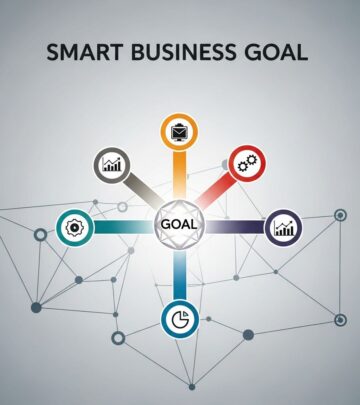
Measures, also called Key Performance Indicators (KPIs), are quantitative or qualitative metrics tied to each objective that track actual versus desired outcomes. Effective KPIs are objective, time-bound, focused on results rather than activities, and widely understood across the organization. Measures provide the mechanisms for monitoring progress toward strategic objectives and enabling data-driven decision-making.
Initiatives
Initiatives are the specific programs, projects, or activities that organizations create to achieve their strategic objectives. These might include training programs, technology implementations, process improvements, or market development campaigns. Initiatives represent the action steps required to move from current performance to desired performance levels.
Indicators
Indicators help organizations determine whether they are on track to achieve their objectives and targets. These progress markers provide early warning signals about performance trajectory and enable course corrections before issues become critical. Indicators often include both leading indicators (predictive measures) and lagging indicators (outcome measures).
Implementing the Balanced Scorecard: Strategic Alignment and Cascading
One of the most powerful features of the Balanced Scorecard framework is its ability to align the entire organization around shared strategic objectives through a process called cascading. Cascading involves translating the organization-wide scorecard into aligned scorecards for business units and departments, and then further down to teams or individuals.
The Three-Tier Structure
Tier 1 represents the enterprise-level or corporate scorecard that articulates the organization’s overall strategy and strategic objectives. Tier 2 consists of business unit or departmental scorecards that translate corporate objectives into more specific goals relevant to particular functions. Tier 3 comprises team or individual action plans that break down objectives into specific tasks and responsibilities. This hierarchical structure creates a clear line of sight between daily work and high-level strategic goals, ensuring that every employee understands how their contributions support organizational strategy.
Benefits of Cascading
The cascading process provides numerous advantages for organizations implementing the Balanced Scorecard. It ensures that the entire organization is focused on strategy and aligned around common objectives. As the scorecard cascades, objectives and performance measures become increasingly specific and operational. Accountability is established at each level by assigning clear ownership for objectives and measures. This alignment is essential for building a strategy-focused organization where departments work collaboratively rather than in silos.
Key Benefits of the Balanced Scorecard
Organizations that effectively implement the Balanced Scorecard framework experience several significant benefits:
Clarify Vision and Strategy
The framework forces organizations to define clear, actionable strategic objectives rather than relying on vague mission statements. This clarity helps leaders communicate strategy throughout the organization and ensure consistent understanding of organizational direction.
Align Teams and Resources
By cascading objectives throughout the organization, the Balanced Scorecard ensures that every department and individual understands how they contribute to strategic goals. This alignment eliminates confusion about priorities and optimizes resource allocation toward high-impact initiatives.
Measure What Matters
The framework helps organizations identify the right KPIs to track progress and drive continuous improvement. Rather than collecting arbitrary metrics, the Balanced Scorecard focuses measurement efforts on indicators that truly matter to organizational success across all four perspectives.
Improve Decision-Making
By consolidating performance data across multiple perspectives into a comprehensive dashboard, the Balanced Scorecard enables leaders to make data-driven decisions based on a complete picture of organizational health. This integrated view reveals connections between different performance dimensions and helps identify root causes of performance issues.
Drive Accountability and Engagement
When individuals understand how their work connects to organizational strategy and have clear performance metrics for their responsibilities, engagement and accountability naturally increase. The framework fosters a culture of performance and strategic focus throughout the organization.
Implementation Strategies and Best Practices
Successfully implementing a Balanced Scorecard requires more than simply choosing metrics. Organizations should follow a structured approach that includes executive alignment, stakeholder engagement, and appropriate technology support.
Establishing Clear Ownership
Creating meaningful accountability requires establishing clear ownership at every level of the strategic hierarchy. Each strategic objective needs designated owners who understand their responsibilities and have the authority to drive progress toward specific targets. Clearly defined ownership ensures that no objectives fall through the cracks and that someone is actively managing each initiative.
Using Technology Platforms
Modern Balanced Scorecard implementations typically leverage technology platforms that integrate data from multiple organizational systems. These platforms consolidate financial metrics from accounting systems, customer satisfaction scores from CRM platforms, process efficiency data from operational tools, and employee development metrics from HR systems. Automation transforms this centralized data into actionable strategic intelligence by eliminating time-consuming manual processes that traditionally consumed weeks before strategic meetings.
Incorporating Advanced Analytics
Many contemporary balanced scorecard platforms incorporate predictive analytics capabilities, helping organizations forecast outcomes and identify risks early. These advanced analytics enable more proactive strategic management and allow organizations to adjust initiatives before performance deteriorates.
Balanced Scorecard in Different Contexts
While the Balanced Scorecard framework originated in the private sector, it has been successfully adapted for use in various organizational contexts. In public or non-profit sectors, the Financial perspective may be reframed as “Stewardship” or “Budget Accountability” to reflect the different nature of financial responsibility in these contexts. Similarly, the Learning and Growth perspective in some modern implementations is called “Organizational Capacity” to reflect the broader range of capabilities required for organizational success beyond traditional learning and development.
Measuring Impact Beyond Progress
Organizations that excel at strategic execution track not just initiative progress—they also measure how these initiatives impact the performance indicators they are designed to improve. This dual focus on implementation and outcome helps teams identify which projects deliver the greatest strategic value and which may need adjustment or elimination. By distinguishing between activity metrics (tracking what we’re doing) and outcome metrics (tracking what we’re achieving), organizations ensure that effort translates into results.
Frequently Asked Questions
Q: What are the four perspectives of a balanced scorecard?
A: The four perspectives are Financial (economic outcomes and resource stewardship), Customer (value creation for customers and stakeholders), Internal Process (operational excellence and efficiency), and Learning and Growth (organizational capacity, people, and culture).
Q: How does cascading work in a Balanced Scorecard?
A: Cascading translates the organization-wide scorecard into aligned scorecards for business units and departments, then further down to teams or individuals. This creates a three-tier structure that ensures organizational alignment from executives to individual contributors.
Q: What is the difference between KPIs and initiatives?
A: KPIs are the quantitative or qualitative metrics used to measure performance against objectives, while initiatives are the specific programs or projects created to achieve those objectives.
Q: Can the Balanced Scorecard be used in non-profit organizations?
A: Yes, the framework can be adapted for non-profit and public sector organizations. The Financial perspective may be reframed as “Stewardship” or “Budget Accountability” to align with the different financial objectives of these sectors.
Q: How often should a Balanced Scorecard be reviewed?
A: Organizations typically review their Balanced Scorecard metrics regularly through strategic review meetings, which may occur monthly, quarterly, or semi-annually depending on organizational needs and the nature of the metrics being tracked.
References
- What is the Balanced Scorecard Framework? — What Matters. 2024. https://www.whatmatters.com/faqs/what-is-the-balanced-scorecard-framework
- Balanced Scorecard Basics — Balanced Scorecard Institute. 2024. https://balancedscorecard.org/bsc-basics-overview/
- The Four Perspectives of the Balanced Scorecard — Balanced Scorecard Institute. 2024. https://balancedscorecard.org/bsc-basics/articles-videos/the-four-perspectives-of-the-balanced-scorecard/
- Key Components of a High-Performing Balanced Scorecard System — Spider Strategies. 2024. https://www.spiderstrategies.com/blog/balanced-scorecard-system/
- Balanced Scorecard – Management Tools — Bain & Company. 2024. https://www.bain.com/insights/management-tools-balanced-scorecard/
- What Is a Balanced Scorecard? — Harvard Business School Online. 2024. https://online.hbs.edu/blog/post/balanced-scorecard
Similar Articles








Read full bio of medha deb