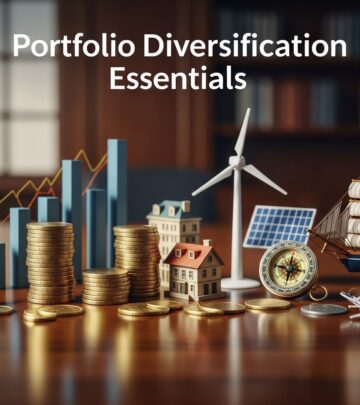
Balanced Portfolio: An Essential Guide For 2025
Discover how balanced portfolios minimize risk, maximize returns, and provide stability through smart diversification strategies.

A
balanced portfolio
combines various asset classes to minimize risk while pursuing steady growth, making it ideal for moderate-risk investors seeking stability and returns.What Is a Balanced Portfolio?
A balanced portfolio strategically allocates investments across multiple asset classes like stocks, bonds, cash, and alternatives to achieve diversification. This approach reduces volatility compared to stock-heavy portfolios while offering higher potential returns than bond-only strategies. By blending growth-oriented assets with income-producing and stable ones, investors can weather market fluctuations effectively.
Unlike aggressive growth portfolios focused on equities, or conservative ones dominated by fixed income, balanced portfolios typically maintain a 60/40 split—60% stocks for growth and 40% bonds for stability—though allocations vary by risk tolerance and goals. Professional managers in balanced funds automatically adjust holdings to maintain this equilibrium, eliminating the need for individual rebalancing.
Why Is a Balanced Portfolio Important?
Diversification is the cornerstone of risk management in investing. A balanced portfolio spreads exposure across uncorrelated assets, ensuring that poor performance in one area—like a stock market downturn—is offset by strength in others, such as bonds or precious metals.
- Risk Reduction: Studies show diversified portfolios lower volatility without sacrificing long-term returns, sometimes enhancing them through better risk-adjusted performance.
- Consistent Returns: By including bonds and cash, balanced portfolios smooth out equity market swings, helping investors avoid panic selling during downturns.
- Adaptability: Life events like job changes or market shifts necessitate rebalancing, which maintains alignment with goals and risk tolerance.
- Future-Proofing: Exposure to alternatives hedges against inflation, geopolitical risks, and economic uncertainty.
For beginners, balanced funds simplify investing by providing instant diversification in one vehicle, backed by expert management.
Benefits of a Balanced Portfolio
The advantages extend beyond basic diversification, offering practical edges for long-term wealth building.
| Benefit | Description | Example Impact |
|---|---|---|
| Easy Diversification | One fund covers multiple assets, avoiding multiple trades | 65% stocks + 35% bonds in a single purchase |
| Beginner-Friendly | Professional managers select optimal holdings | No need for deep market knowledge |
| Automatic Rebalancing | Funds maintain target allocations quarterly | Prevents drift from market performance |
| Lower Volatility | Bonds/cash buffer stock declines | Smoother returns for staying invested |
| Income + Growth | Combines dividends, interest, and appreciation | Balanced risk-return profile |
These benefits make balanced portfolios suitable for those nearing retirement or preferring hands-off strategies, though they may underperform pure equity in bull markets.
How Managed Balanced Portfolios Work
Managed balanced portfolios, often via mutual funds or ETFs, employ professional teams to select and adjust securities. Fund managers monitor markets, rebalance to target ratios (e.g., 60% equities, 40% fixed income), and may tactically shift allocations based on economic forecasts.
Target-date funds, a variant, automatically become more conservative as retirement nears, blending balanced principles with lifecycle adjustments. Investors benefit from economies of scale, lower costs, and expertise without daily oversight.
What Does a Balanced Portfolio Look Like?
Ideal allocations depend on age, goals, and risk tolerance—no universal model exists. A moderate-risk example:
- Stocks (50-60%): For growth; mix U.S., international, large/small-cap.
- Bonds (30-40%): For income/stability; government, corporate, municipals.
- Cash (5-10%): Liquidity; money markets, CDs.
- Precious Metals (10-20%): Inflation hedge; gold, silver.
- Alternatives (up to 10%): Real estate, crypto for uncorrelated returns.
Rebalance annually or after 5-10% drifts to preserve targets.
Asset Allocation in a Balanced Portfolio
Cash
Allocate 5-10% to cash equivalents like money market accounts or CDs for liquidity and opportunities during downturns. Warren Buffett advocates building cash reserves to buy assets cheaply in weak markets.
Bonds
Fixed-income securities (30-40%) provide steady interest and principal protection. They rise when stocks fall, enhancing stability.
Stocks
Equities (50-60%) drive growth via capital appreciation and dividends. Diversify across sectors and regions to mitigate risks.
Gold and Precious Metals
Hold 10-20% in physical gold/silver as ‘insurance’ against inflation and uncertainty, per experts like Jim Cramer. Include in self-directed IRAs.
Alternative Assets
10% in real estate, commodities, or crypto adds diversification. J.P. Morgan strategists recommend meaningful allocations for impact.
Balanced Portfolio Strategies
Core-Satellite: Core (70-80%) in broad balanced funds; satellites (20-30%) in specialized ETFs for targeted exposure.
Blended Approaches: Combine asset classes via target-date or lifecycle funds for optimal risk-return.
For 2026, emphasize diversification amid volatility from rates and geopolitics.
Balanced Portfolio vs. Other Types
| Portfolio Type | Risk Level | Typical Allocation | Best For |
|---|---|---|---|
| Balanced | Moderate | 60% stocks/40% bonds | Steady growth/stability |
| Growth | High | 80-100% stocks | Long horizon, high tolerance |
| Conservative | Low | 20% stocks/80% bonds/cash | Near-term needs |
| Income | Moderate-Low | Heavy bonds/dividend stocks | Current yield |
Balanced suits most, blending pros of others.
Portfolio Review and Rebalancing
Annually review allocations against targets. Rebalance by selling outperformers/buying underperformers to restore balance and control risk. Tools like year-end checklists ensure diversification.
Risks and Limitations
Balanced portfolios sacrifice some upside for stability; they lag pure stocks long-term. Manager risk exists if allocations stray. Always align with personal risk tolerance.
Frequently Asked Questions (FAQs)
What is the ideal allocation for a balanced portfolio?
Typically 50-60% stocks, 30-40% bonds, 10% cash/metals, but customize to goals.
Are balanced funds good for beginners?
Yes, they offer diversification, auto-rebalancing, and expert management.
How often should I rebalance?
Annually or when allocations drift 5-10%.
Should I include gold in a balanced portfolio?
Yes, 10-20% as an inflation hedge.
What’s better for retirement: balanced or target-date funds?
Target-date auto-adjusts; balanced stays fixed—choose based on involvement.
References
- Balanced Portfolio: Choosing Your Electives — U.S. Money Reserve. 2024. https://www.usmoneyreserve.com/news/executive-insights/assets-for-balanced-portfolio/
- Where to Invest Money to Get Good Returns in 2026 — MoneyRates. 2025-12-01. https://www.moneyrates.com/where-to-invest-money.htm
- 4 Benefits Of Investing In Balanced Funds — Bankrate. 2024-06-15. https://www.bankrate.com/investing/benefits-balanced-funds/
- Essential Year-End Investment Checklist — MoneyRates. 2025. https://www.moneyrates.com/investment/essential-year-end-investment-checklist/
- Advanced Asset Allocation Strategies for 2025 — MoneyRates. 2024-11-20. https://www.moneyrates.com/investment/advanced-asset-allocation.htm
Similar Articles








Read full bio of medha deb