Balance Transfers: 6-Step Guide To Maximize Savings
Master balance transfers to slash interest costs and streamline your debt repayment strategy effectively.

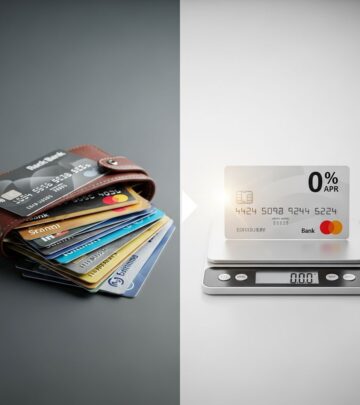
Credit card balance transfers provide a strategic way to manage debt by shifting existing balances from high-interest accounts to cards offering promotional low or zero percent interest rates. This approach can significantly cut down on interest expenses and consolidate multiple payments into one, simplifying financial obligations.
Understanding the Fundamentals of Balance Transfers
A balance transfer involves relocating debt from one credit card or loan to a new credit card, usually one with a more favorable interest rate structure. The primary goal is to leverage introductory offers where the
annual percentage rate (APR)
drops to 0% for a set period, allowing payments to go directly toward the principal rather than interest.This mechanism works because the new card issuer pays off the old balance directly, adding the transferred amount—plus any fees—to your new account. For instance, moving $5,000 from a 15% APR card to a 0% introductory APR card over 12 months could save hundreds in interest, as demonstrated by comparative payment tables showing reduced total costs.
Key Advantages of Using Balance Transfers
- Interest Savings: Promotional 0% APR periods, often lasting 12-21 months, eliminate interest accrual, accelerating debt payoff.
- Debt Consolidation: Combine balances from multiple cards into a single account, reducing the number of payments and potential late fees.
- Credit Score Potential Boost: Paying down debt faster can improve credit utilization ratios, a major factor in credit scoring.
- Simplified Budgeting: One monthly payment makes tracking expenses easier and lowers the risk of missed payments.
Potential Drawbacks and Hidden Costs
While beneficial, balance transfers come with caveats. Most issuers charge a
balance transfer fee
of 3% to 5% of the transferred amount, which can add up on large balances. For example, transferring $10,000 at 4% incurs a $400 upfront cost.Additionally, the promotional rate is temporary. Once it expires, the balance reverts to a standard APR, often 18% or higher, making swift payoff essential. New purchases on the card may accrue interest immediately at higher rates, separate from the transferred balance.
| Scenario | Total Paid (15% APR, 12 months) | Total Paid (0% Intro APR + 4% Fee) | Savings |
|---|---|---|---|
| $5,000 Balance | $5,415 | $5,200 | $215 |
| $10,000 Balance | $10,830 | $10,400 | $430 |
This table illustrates potential savings on a $5,000 balance over 12 months with $100 monthly payments, factoring in a 4% transfer fee.
Eligibility Criteria and Approval Factors
Not everyone qualifies for the best balance transfer offers. Lenders assess creditworthiness using factors like credit score (typically 670+ FICO for top deals), income stability, and debt-to-income ratio. Existing customers may access transfers without hard inquiries, preserving credit scores.
Transfer limits depend on credit lines; a $15,000 debt might only approve $4,000 if the new card’s limit is lower. Balances from the same issuer generally cannot transfer.
Step-by-Step Guide to Executing a Balance Transfer
- Evaluate Your Finances: List all balances, APRs, and minimum payments. Calculate potential savings using online calculators.
- Research Offers: Compare cards for longest 0% periods, lowest fees, and post-promo APRs. Check eligibility via prequalification tools.
- Apply for the Card: Submit application with balance transfer request if offered. Provide old account details.
- Initiate Transfer: Once approved, use app, online portal, or phone to input old account numbers, balances, and billing addresses.
- Monitor Progress: Transfers post in days to weeks. Continue old card payments until confirmation.
- Pay Aggressively: Allocate extra funds to principal during promo period. Set autopay for minimums.
Strategic Tips for Maximizing Savings
- Target debts taking 6+ months to pay off; short-term ones may not offset fees.
- Select cards with no transfer fees or low ongoing APRs if payoff extends beyond promo.
- Avoid new charges on the transfer card to prevent interest mixing.
- Consider rewards cards if planning ongoing use post-payoff.
Common Mistakes to Avoid
Many fail by not paying off before promo ends, racking up retroactive interest. Ignoring fees or over-transferring beyond pay capacity leads to deeper holes. Always verify transfer completion and update budgets accordingly.
Alternatives to Balance Transfers
| Option | Pros | Cons |
|---|---|---|
| Debt Consolidation Loan | Fixed rates, single payment | May require collateral, credit check |
| Personal Loan | Lower rates possible | Shorter terms, origination fees |
| 0% Purchase Cards | No transfer needed | Limited to new spending |
These options suit varying needs; compare based on credit profile.
Frequently Asked Questions (FAQs)
Can I transfer balances from loans, not just cards?
Yes, some cards accept loan balances, but confirm with issuer; process mirrors card transfers.
How long do promotional rates last?
Typically 12-21 months, varying by offer. Review terms carefully.
Does a balance transfer hurt my credit score?
Initial hard inquiry may dip score temporarily, but lower utilization aids long-term.
What if I can’t pay off before promo ends?
Balance shifts to standard APR; plan payments to avoid this.
Can I transfer to an existing card?
Often yes, especially without new inquiry.
Real-World Savings Scenarios
Consider Jane with $8,000 across two cards at 18-22% APR. Transferring to a 18-month 0% card with 3% fee costs $240 upfront. Paying $500/month clears it in 17 months, saving $1,200+ in interest versus status quo.
John’s $3,000 balance at 20% APR: Transfer fee exceeds savings if paid in 3 months; better to pay directly.
Long-Term Debt Management Integration
Incorporate transfers into broader plans: budgeting apps track progress, debt snowball/avalanche methods prioritize payoffs. Post-transfer, build emergency funds to prevent new debt cycles.
References
- What is a Balance Transfer & How Does it Work? — Bank of America Better Money Habits. 2023. https://bettermoneyhabits.bankofamerica.com/en/debt/how-do-balance-transfers-work
- When does a Credit Card Balance Transfer Make Sense? — Fifth Third Bank. 2024-01-15. https://www.53.com/content/fifth-third/en/financial-insights/personal/credit-cards/when-does-a-credit-card-balance-transfer-make-sense.html
- What Is a Balance Transfer? Should I Do One? — NerdWallet. 2025-10-20. https://www.nerdwallet.com/credit-cards/learn/what-is-a-balance-transfer
- How to do a balance transfer—calculate what you’ll save! — Navy Federal Credit Union. 2024. https://www.navyfederal.org/loans-cards/credit-cards/cardholder-resources/balance-transfers.html
- What is a credit card balance transfer? — Citi. 2025. https://www.citi.com/credit-cards/balance-transfer/balance-transfer-credit-cards-101
- What is a Balance Transfer on a Credit Card? — Equifax. 2024-05-10. https://www.equifax.com/personal/education/credit-cards/articles/-/learn/balance-transfer-credit-card/
- What Is a Balance Transfer and Is it Worth it? — Experian. 2025-02-14. https://www.experian.com/blogs/ask-experian/what-is-a-balance-transfer-and-how-does-it-work/
Similar Articles








Read full bio of medha deb