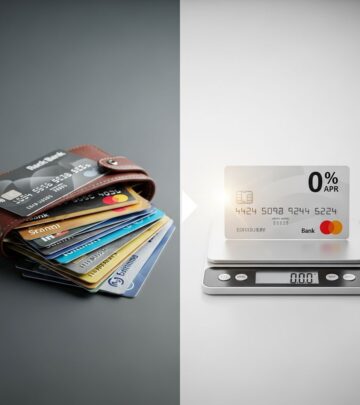
Balance Transfer Savings: The Numbers
Discover how transferring credit card debt to a low-rate card can slash interest costs and speed up payoff with real math examples.

Transferring a credit card balance to a card with a promotional low or zero interest rate offers a powerful way to reduce debt costs. This strategy allows individuals to avoid high ongoing interest charges, directing more of their payments toward the principal balance for faster payoff.
Why Balance Transfers Matter in Debt Management
High-interest credit card debt accumulates quickly, often turning manageable balances into long-term burdens. Average credit card APRs frequently exceed 20%, meaning even modest balances generate significant interest over time. A balance transfer moves this debt to a new card featuring an introductory period of 0% APR, typically lasting 12 to 21 months. During this window, payments reduce the principal directly without interest erosion.
This approach not only cuts total costs but also shortens repayment timelines when paired with consistent payments. Financial calculators from institutions demonstrate these benefits clearly, showing side-by-side comparisons of staying with a high-rate card versus transferring.
Key Components of Balance Transfer Calculations
To assess potential savings, consider these essential factors:
- Current Balance: The total amount owed on the existing card(s).
- Existing APR: The annual percentage rate on the current debt, often 15-30%.
- Monthly Payment: The fixed amount paid each month toward the debt.
- Intro APR Period: Duration of the 0% or low-rate promotion, e.g., 18 months.
- Balance Transfer Fee: Typically 3-5% of the transferred amount.
- Post-Intro APR: The rate applied after the promotional period ends.
Online tools input these variables to project interest paid, payoff time, and net savings. For instance, entering a $5,000 balance at 24% APR with $200 monthly payments reveals prolonged repayment without a transfer.
Real-World Examples: Crunching the Numbers
Let’s examine scenarios using standard calculator logic to illustrate savings.
| Scenario | Balance | Current APR | Monthly Payment | Intro Period | Transfer Fee | Interest Without Transfer | Interest With Transfer | Savings |
|---|---|---|---|---|---|---|---|---|
| A: Modest Debt | $3,000 | 25% | $200 | 18 months | 3% ($90) | $1,250 | $90 | $1,160 |
| B: Larger Balance | $10,000 | 22% | $400 | 15 months | 4% ($400) | $3,800 | $400 | $3,400 |
| C: High Payment | $7,500 | 27% | $500 | 21 months | 3% ($225) | $2,900 | $225 | $2,675 |
In Scenario A, the high APR would add over $1,200 in interest over 18 months, but a transfer limits costs to the fee alone, assuming payoff within the intro period. Larger debts like in B yield even greater absolute savings, though the fee rises proportionally. Aggressive payments in C amplify benefits by clearing debt before rates revert.
Step-by-Step Guide to Using a Balance Transfer Calculator
- Gather Data: Review statements for exact balances and APRs across cards.
- Choose a Tool: Select reputable calculators from credit unions or financial sites.
- Input Current Details: Enter balance, APR, and typical monthly payment.
- Add Transfer Card Info: Specify intro period length and fee percentage.
- Review Outputs: Note projected payoff months, total interest, and net savings.
- Adjust Variables: Test higher payments to fit within intro periods.
These tools often graph debt reduction trajectories, visually confirming faster principal erosion with transfers.
Hidden Costs and Potential Pitfalls
While savings are substantial, fees can erode benefits if not planned. A 5% fee on $10,000 is $500, yet high-APR interest often surpasses this quickly. Ensure payoff completes before intro ends; lingering balances face steep post-promo rates, sometimes 25%+.
Other risks include:
- New purchases accruing interest immediately, unlinked to transferred balances.
- Credit score dips from hard inquiries and utilization shifts.
- Temptation to spend on the new card, compounding debt.
Mitigate by avoiding new charges and automating payments.
Strategies to Maximize Savings
Optimize transfers with these tactics:
- Shop for Low Fees: Target cards under 3% transfer fees.
- Prioritize High-APR Debt: Transfer costliest balances first.
- Increase Payments: Allocate saved interest toward principal.
- Combine with Consolidation: For multiple cards, aggregate into one payment.
- Monitor Promotions: Apply before intro periods expire.
Pairing transfers with budgeting apps tracks progress, ensuring discipline.
When Balance Transfers Outperform Alternatives
Compare to personal loans: Transfers suit short-term payoff with 0% promos, while loans offer fixed rates for longer horizons. Debt consolidation loans at 10-15% APR may beat high credit rates but lack zero-interest phases.
For debts under $5,000, transfers often win; larger sums might favor loans to avoid credit limits.
Frequently Asked Questions
What is the average balance transfer fee?
Fees range from 3% to 5% of the transferred amount, e.g., $150-$250 on $5,000.
Can I transfer balances between cards from the same issuer?
Typically no, as issuers restrict transfers within family brands.
How does a balance transfer affect my credit score?
Short-term dips occur from inquiries and utilization changes, but consistent payments rebuild scores.
What if I don’t pay off during the intro period?
Remaining balances revert to high APRs, potentially with penalty rates.
Are balance transfers available for bad credit?
Limited options exist; focus on secured cards or credit unions.
Long-Term Financial Planning with Transfers
Beyond immediate savings, transfers build habits for debt freedom. Use freed cash flow for emergency funds or retirement contributions. Track via spreadsheets mirroring calculator outputs to stay motivated.
Incorporate into broader plans: After payoff, maintain low utilization under 30% for optimal scores. Explore rewards cards post-debt for ongoing benefits.
Success stories abound—users report clearing $20,000+ debts years ahead of schedule, transforming finances.
References
- Credit Card Balance Transfer Calculator — Kitsap Credit Union. 2025. https://kitsapcu.org/calculators/credit-card-balance-transfer-calculator/
- Balance Transfer Calculator for Credit Cards — Discover. 2025. https://www.discover.com/credit-cards/credit-card-calculator/balance-transfer-calculator/
- Credit Card Balance Transfer Calculator — NerdWallet. 2025. https://www.nerdwallet.com/credit-cards/learn/balance-transfer-calculator
- Balance Transfer Calculator | Pay Debt Off Faster — ELGA Credit Union. 2025. https://www.elgacu.com/borrow/credit-card-balance-transfer-calculator/
- Balance transfer calculator — CalcXML. 2025. https://www.calcxml.com/calculators/balance-transfer
- Credit Card Balance Transfer Calculator — Bankrate. 2025. https://www.bankrate.com/credit-cards/tools/credit-card-balance-transfer-calculator/
Similar Articles








Read full bio of Sneha Tete