Balance Transfer or Personal Loan: Best Debt Relief?
Discover when a balance transfer card beats a personal loan for debt payoff—and vice versa—to slash interest and regain control.
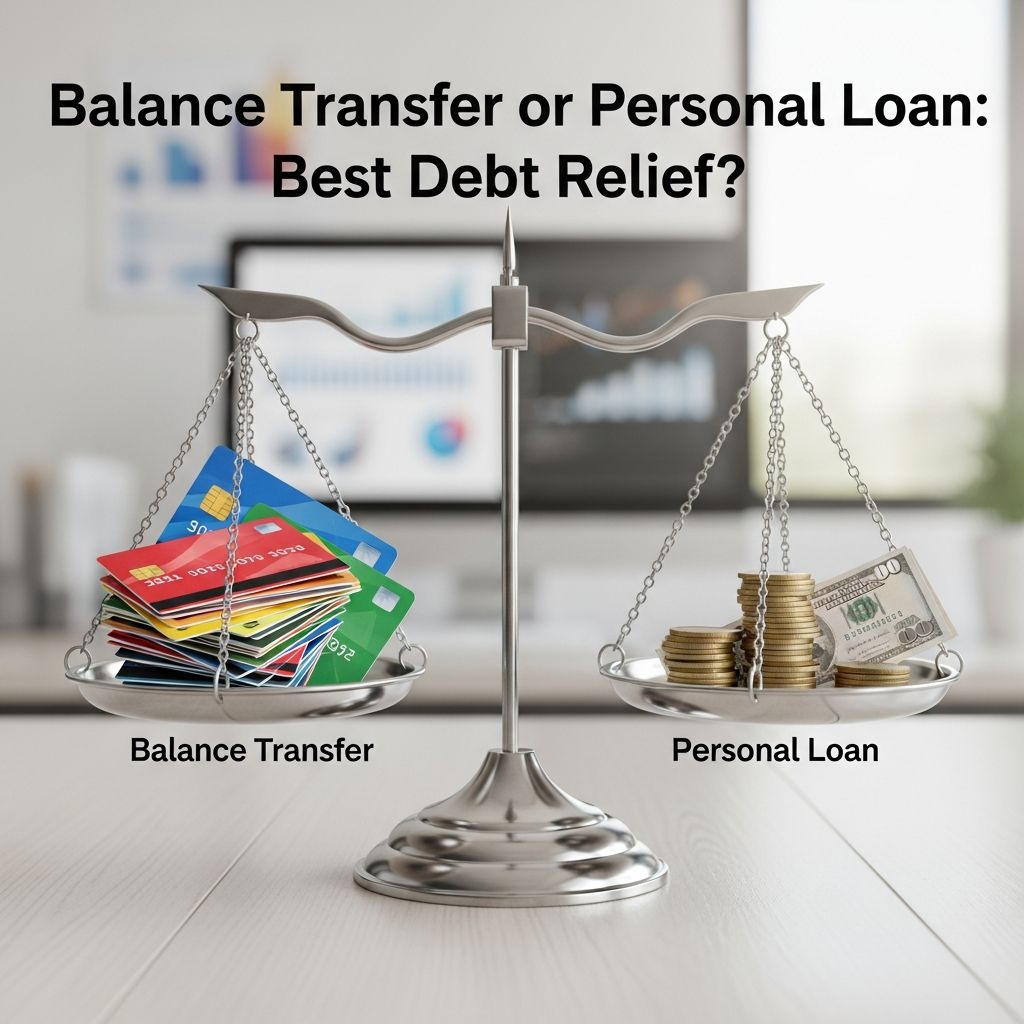
High-interest credit card debt can spiral quickly, but two popular strategies—balance transfers and personal loans—offer paths to consolidation and savings. Balance transfers move debt to a new card with a low or 0% introductory rate for a limited time, while personal loans provide a lump sum at a fixed rate over a longer term. The right choice depends on your debt size, repayment timeline, credit score, and cash flow needs.
Understanding Balance Transfers: Quick Interest Relief
Balance transfers let you shift existing credit card balances to a new card offering a promotional
0% introductory APR
, typically lasting 12 to 21 months. During this window, payments go entirely toward principal, accelerating payoff without interest accrual.However, a transfer fee of 3-5% applies upfront—$900 on a $30,000 balance, for example. Cards often cap transfers at $15,000-$30,000, and post-promo rates jump to 20%+ if unpaid. Minimum monthly payments (2-3% of balance) are required, with full payoff due by promo end to avoid retroactive interest.
- Ideal for: Smaller debts ($5,000-$15,000) you can clear in 12-18 months.
- Key benefit: Potential zero interest, saving thousands vs. 20%+ card rates.
- Risk: Temptation to spend on the new card or miss promo deadline.
Personal Loans: Structured Long-Term Consolidation
Personal loans deliver funds upfront to pay off cards, converting revolving debt into an installment loan with fixed monthly payments and a set term (2-7 years). Rates average 12.5% for good credit but can exceed 30% for lower scores. No promo period exists—interest starts immediately—but predictable payments aid budgeting.
Loan amounts reach $50,000+, accommodating larger debts. Closing old accounts drops credit utilization, boosting scores. Lenders like Discover report 85% of users save money, averaging $428/month via consolidation.
- Ideal for: Larger debts ($20,000+) or those needing 3+ years to repay.
- Key benefit: Fixed terms prevent rate hikes; easier cash flow management.
- Risk: Total interest higher over long terms despite lower rates.
Side-by-Side Comparison: Key Differences
| Feature | Balance Transfer | Personal Loan |
|---|---|---|
| Best Debt Size | Small-medium (<$15K, payoff in 12-21 mo.) | Large (>$20K, 2-7 yr. terms) |
| Interest Rate | 0% intro (12-21 mo.), then 20%+ | Fixed 8-36% from day 1 |
| Fees | 3-5% transfer fee | 0-8% origination (varies) |
| Monthly Payment | Flexible min. (2-3%), high to finish promo | Fixed amount |
| Credit Needed | Good-excellent (670+) | Fair-good (580+ possible) |
| Term Length | Promo only (short-term) | 24-84 months |
This table draws from lender data; actual terms vary by credit/income.
Real-World Cost Scenarios: $30,000 Debt Example
Consider a $30,000 credit card balance at 22% APR.
- Balance Transfer: 18-mo. 0% promo + 3% fee = $900 cost. Pay $1,716/mo. to clear: Total: $30,900 (saves $10K+ vs. card).
- Personal Loan: 12% APR, 60-mo. term = $667/mo. Total interest: $10,040. Total: $40,040, but frees $1K+/mo. liquidity.
Balance transfers win short-term if aggressive payoff is feasible; loans excel for sustainable pacing.
Eligibility and Qualification Factors
Both require income proof and credit checks, capped at 12x monthly income combined with existing debt.
- Balance Transfers: Need good credit (670+ FICO); assessed against total credit exposure.
- Personal Loans: More accessible (down to 580 FICO); pre-qualify without hard pulls at many lenders.
High earners favor loans for multi-debt consolidation; variable income suits transfers’ flexibility.
Pros and Cons Breakdown
Balance Transfer Advantages
- Immediate interest pause accelerates principal reduction.
- Simpler for disciplined short-term payers.
- No new debt type on credit report.
Balance Transfer Drawbacks
- Short window risks high post-promo rates.
- Fees erode savings; limits restrict large debts.
- Requires discipline to avoid new charges.
Personal Loan Advantages
- Fixed payments/ rates for budgeting certainty.
- Higher limits; improves credit utilization.
- Accessible to fair-credit borrowers.
Personal Loan Drawbacks
- Higher total interest over time.
- Origination fees (1-8%).
- Less flexibility if income drops.
When to Choose Each Option
- Pick Balance Transfer if: Debt <$15K, can pay off in promo period, strong credit, need quick relief.
- Pick Personal Loan if: Debt >$20K, need 3+ years, want fixed payments, fair credit, consolidating non-card debt.
- Hybrid Approach: Transfer small balances short-term, loan for the rest.
Assess via: Can you pay high monthly to beat promo? Need structure? Simulate via calculators.
Frequently Asked Questions (FAQs)
Is a balance transfer or personal loan better for credit scores?
Both can boost scores by lowering utilization. Loans add installment debt (diversifies mix); transfers preserve revolving history but risk if unpaid.
Can I use a personal loan for non-credit card debt?
Yes—medical bills, auto loans, etc. Balance transfers mainly for cards.
What if my credit is poor?
Loans more viable (secured options exist); transfers often denied.
Does debt consolidation stop interest?
Transfers pause it promo-only; loans charge fixed rate immediately.
How soon can I apply?
Both offer instant online approvals; funds/transfers in 1-7 days.
Steps to Get Started Safely
- Check credit score/reports.
- Calculate total debt/affordable payments.
- Pre-qualify/compare rates (no hard inquiry).
- Avoid new debt during payoff.
- Track progress; refinance if rates drop.
Debt relief succeeds with discipline—pair either with budgeting to prevent recurrence.
References
- The Difference Between a Balance Transfer vs Personal Loan — Standard Chartered Bank. 2023. https://www.sc.com/sg/stories/financial-tips/balance-transfer-versus-personal-loan/
- Personal Loan vs. Balance Transfer: Which Saves You More — BHG Financial. 2024-10-15. https://bhgfinancial.com/personal-loans/debt-consolidation/personal-loan-vs-balance-transfer-which-saves-you-more
- Balance transfer vs. personal loan vs. HELOC — CBS News. 2024-08-20. https://www.cbsnews.com/news/balance-transfer-vs-personal-loan-vs-heloc-which-works-for-credit-card-debt/
- Balance transfer vs. personal loan: Which will work best for you? — Credit Karma. 2024. https://www.creditkarma.com/credit-cards/i/balance-transfer-vs-personal-loan
- Balance Transfer or Personal Loan: Which Is Right for You? — Discover. 2025-01-10. https://www.discover.com/personal-loans/resources/consolidate-debt/personal-loans-vs-balance-transfers/
- Balance Transfer vs. Personal Loan: What’s the Difference? — Citi. 2024. https://www.citi.com/personal-loans/learning-center/basics/balance-transfer-vs-personal-loan
- Balance Transfer Card or Personal Loan: Which Is Best? — NerdWallet. 2025-02-28. https://www.nerdwallet.com/personal-loans/learn/debt-consolidation-credit-card-balance-transfer
Similar Articles








Read full bio of Sneha Tete