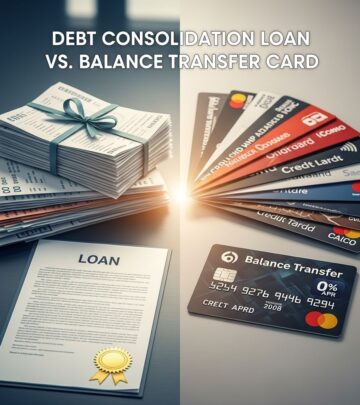
Balance Transfer or Personal Loan: Best Debt Option
Discover which debt relief strategy—balance transfer or personal loan—saves more money and fits your financial goals perfectly.

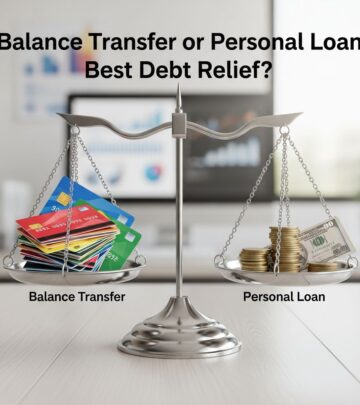
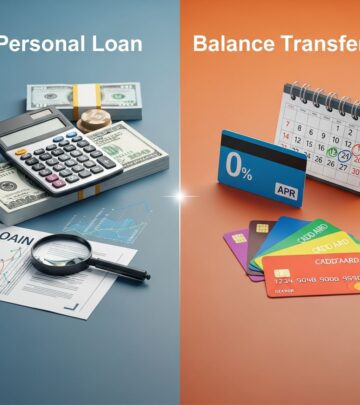
High-interest credit card debt can quickly spiral out of control, but two popular strategies—balance transfers and personal loans—offer paths to relief. Balance transfers move debt to a new credit card with a promotional low or zero interest rate, while personal loans provide a lump sum at a fixed rate for structured repayment. Choosing between them depends on your debt amount, repayment timeline, and financial discipline.
Understanding Balance Transfers for Debt Management
Balance transfers involve shifting existing credit card balances to a new card offering an introductory
0% APR
period, typically lasting 12 to 21 months. During this window, payments go entirely toward the principal, maximizing savings if you pay off the debt quickly.These offers appeal to those with smaller balances who can commit to aggressive monthly payments. For instance, on a $10,000 transfer with a 3% fee ($300), paying $833 monthly over 12 months clears the debt interest-free after the fee. However, success requires discipline, as the standard APR—often over 20%—kicks in post-promo.
- Ideal for debts under $15,000 payable within 12-18 months.
- Provides revolving credit flexibility for variable incomes.
- Commonly capped by available credit limits.
Personal Loans: A Structured Path to Debt Freedom
Personal loans deliver a fixed lump sum disbursed directly to creditors or your account, repaid in equal installments over 2-7 years. Rates average 12.5% for good credit, far below credit card averages, with no promo expiration risk.
This option suits larger debts or those needing lower monthly payments to preserve cash flow. A $30,000 loan at 12% APR over 60 months yields $667 payments, totaling $40,040 including interest—higher than a quick balance transfer but with predictable budgeting. Many lenders allow pre-qualification without credit hits.
- Fixed rates and payments simplify financial planning.
- Accessible for fair credit with rates up to 36%.
- Boosts credit utilization by closing revolving accounts.
Key Differences: A Side-by-Side Comparison
To decide effectively, examine how these tools stack up across critical factors. The table below highlights distinctions based on typical market offerings.
| Feature | Balance Transfer | Personal Loan |
|---|---|---|
| Interest Rate | 0% intro (12-21 months), then 20%+ | Fixed 8-36% from day one |
| Repayment Term | Promo period only; min payments | 24-84 months, fixed installments |
| Fees | 3-5% transfer fee | 0-6% origination fee |
| Loan Amount | Limited by credit line ($5k-$15k typical) | $1k-$100k+ possible |
| Credit Needed | Good to excellent (670+ FICO) | Good to fair (600+ FICO) |
| Best For | Quick payoff of small debts | Large debts, long-term structure |
This comparison shows balance transfers excel in short-term savings for disciplined payers, while personal loans offer longevity and scale.
Financial Scenarios: Which Option Wins?
Consider a $15,000 credit card balance at 22% APR. Option one: Balance transfer card with 18-month 0% APR and 3% fee ($450). Monthly payment: $850 to clear in time; total cost: $15,450.
Option two: $15,000 personal loan at 11% APR over 36 months. Monthly: $497; total interest: $2,892; overall: $17,892. The transfer saves $2,442 if paid off promo-period, but failure incurs high ongoing interest.
For $40,000 debt, transfers often hit limits, making loans essential: 60-month term at 12.5% means $888 monthly vs. unsustainable $2,222 on a card. High earners favor loans for liquidity.
Pros and Cons of Each Debt Relief Strategy
Balance Transfer Advantages and Drawbacks
Pros: Immediate interest pause accelerates payoff; no new debt accumulation if managed well.
Cons: Temptation to spend on the card; steep post-promo rates; fees add upfront cost.
Personal Loan Advantages and Drawbacks
Pros: Predictable payments aid budgeting; consolidates multiple debts; improves credit mix.
Cons: Interest accrues immediately; longer terms increase total cost; origination fees.
Eligibility and Qualification Tips
Balance transfers demand strong credit (670+ FICO) and low utilization for approval. Lenders assess total commitments, often capping at 30-50% of income.
Personal loans are more forgiving: fair credit qualifies at higher rates, with income proof key. Pre-qualify via soft pulls to shop rates. Both evaluate debt-to-income (DTI under 36% ideal).
- Improve odds: Pay down utilization below 30%; check reports for errors.
- Documents: ID, income stubs, bank statements.
Real-World Savings and Credit Impact
85% of Discover loan users saved money consolidating, averaging $428 monthly. Transfers drop utilization instantly, boosting scores 50-100 points if paid timely. Loans close accounts but add installment history, netting positive scores long-term.
Hybrid approach: Use transfer for part, loan for rest, but avoid overextending.
Steps to Choose and Apply Successfully
- Calculate total debt and minimum payments.
- Project affordability: Can you pay 100% in promo period?
- Compare rates via pre-qualifications.
- Apply for one at a time to minimize inquiries.
- Automate payments; track progress monthly.
Frequently Asked Questions
Can I use a balance transfer for non-credit card debt?
Typically no—limited to credit cards or loans on eligible cards.
Do personal loans affect credit score?
Hard inquiry dings temporarily (5-10 points), but payoff improves profile.
Is 0% balance transfer truly free?
No, 3-5% fees apply; post-promo rates are high.
Which is cheaper long-term?
Transfers if paid fast; loans for extended repayment.
Can I refinance a personal loan later?
Yes, if rates drop or credit improves.
Final Thoughts on Smart Debt Consolidation
Assess your payoff speed and debt size: swift aggressors pick transfers; others opt for loan stability. Both beat minimum credit card payments, potentially saving thousands. Consult a financial advisor for tailored advice, and prioritize building an emergency fund alongside.
References
- The Difference Between a Balance Transfer vs Personal Loan — Standard Chartered Bank. 2023-06-15. https://www.sc.com/sg/stories/financial-tips/balance-transfer-versus-personal-loan/
- Personal Loan vs. Balance Transfer: Which Saves You More — BHG Financial. 2024-09-10. https://bhgfinancial.com/personal-loans/debt-consolidation/personal-loan-vs-balance-transfer-which-saves-you-more
- Balance transfer vs. personal loan vs. HELOC — CBS News. 2024-11-05. https://www.cbsnews.com/news/balance-transfer-vs-personal-loan-vs-heloc-which-works-for-credit-card-debt/
- Balance Transfer VS. Personal Loan: Which One Wins? — Arro Finance. 2024-03-20. https://www.arrofinance.com/blog/balance-transfer-or-personal-loan-what-is-the-right-fit-for-you
- Balance transfer vs. personal loan: Which will work best for you? — Credit Karma. 2024-07-12. https://www.creditkarma.com/credit-cards/i/balance-transfer-vs-personal-loan
- Balance Transfer or Personal Loan: Which Is Right for You? — Discover. 2024-10-01. https://www.discover.com/personal-loans/resources/consolidate-debt/personal-loans-vs-balance-transfers/
Similar Articles








Read full bio of medha deb