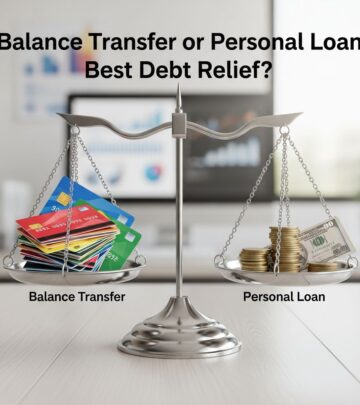
Balance Transfer Cards vs. Debt Loans: Best Choice?
Discover which debt relief option—balance transfer cards or consolidation loans—saves you more on interest and fits your financial goals in 2026.
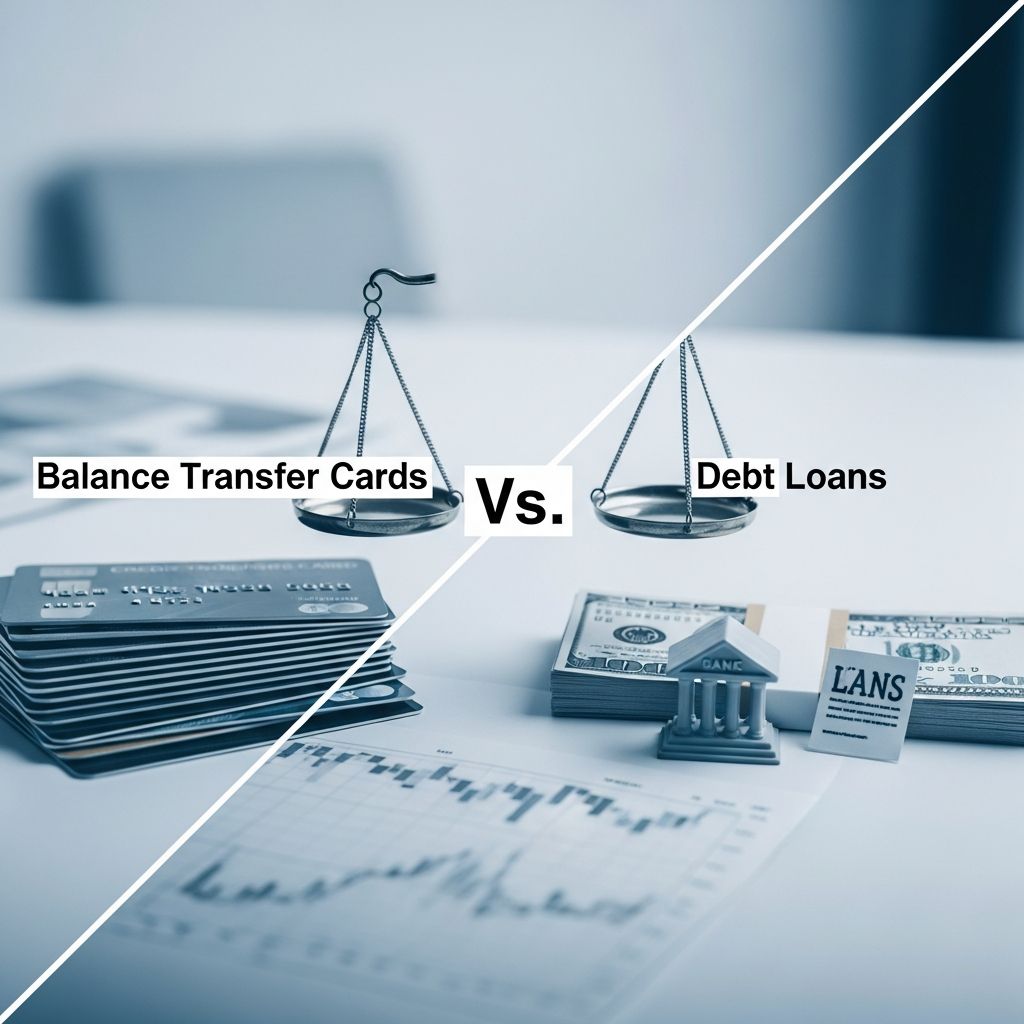
High-interest credit card debt can trap many households in a cycle of payments that barely dent the principal. Two popular strategies to break free are balance transfer credit cards and debt consolidation loans. Balance transfer cards let you move existing balances to a new card with a temporary 0% introductory APR, while debt consolidation loans provide a lump sum to pay off debts at a fixed rate over time. The optimal choice hinges on your debt amount, credit profile, repayment speed, and financial discipline.
Understanding Balance Transfer Credit Cards
Balance transfer cards allow you to shift high-interest credit card balances to a new card offering a promotional 0% APR period, typically lasting 6 to 21 months. During this window, no interest accrues, enabling faster principal reduction if you make consistent payments. After the promo ends, the card reverts to a standard APR, often 20% or higher, making full payoff before expiration critical.
These cards suit disciplined borrowers who can aggressively repay within the intro period. Credit limits determine transferable amounts, usually capping at $10,000 or less for most offers. Approval generally requires good to excellent credit scores (670+ FICO), as issuers prioritize low-risk applicants for prime promotions.
Key Advantages of Balance Transfer Cards
- Interest Savings: 0% APR promo accelerates payoff without interest drag.
- Spending Flexibility: Retain an open revolving credit line for ongoing use and potential rewards.
- Quick Setup: Transfers process in 1-3 weeks, faster than some loans.
Potential Drawbacks
- 3-5% balance transfer fees add upfront costs (e.g., $300 on $10,000 transfer).
- High post-promo APRs punish incomplete payoffs.
- Limited to credit card debt; not ideal for other unsecured debts.
Exploring Debt Consolidation Loans
Debt consolidation loans, often personal loans, deliver a lump sum to clear multiple debts, replacing them with one fixed-rate installment loan. Terms range 2-7 years with APRs in the high single to mid-teens for qualified borrowers. Payments are predictable, including principal and interest portions from day one.
These loans appeal to those with larger debts ($10,000+) or needing extended repayment. Funding arrives same-day or next business day from online lenders. While excellent credit unlocks lowest rates (around 8-12%), fair credit (580-669) applicants may still qualify at higher rates.
Benefits of Consolidation Loans
- Fixed Terms: Defined payoff date prevents indefinite debt carryover.
- Higher Limits: Borrow up to $50,000+ to tackle substantial balances.
- Versatile Use: Pay off credit cards, medical bills, or other unsecured debts.
Common Risks and Fees
- Origination fees (1-8%) reduce net proceeds.
- Interest accrues over full term, potentially exceeding promo-period savings.
- Temptation to re-accumulate card debt after payoff.
Side-by-Side Comparison
Evaluating these options requires weighing factors like debt size, credit, and lifestyle. The table below summarizes core differences based on 2026 market data.
| Feature | Balance Transfer Cards | Debt Consolidation Loans |
|---|---|---|
| Ideal Debt Amount | <$10,000 | $10,000+ |
| Credit Needed | Good-Excellent (670+) | Fair-Good (580+) |
| Intro Rate | 0% for 6-21 months | Fixed APR 8-20% from start |
| Fees | 3-5% transfer fee | 0-8% origination fee |
| Repayment Term | Promo period only | 2-7 years fixed |
| Debt Types | Credit cards mainly | Multiple unsecured debts |
When to Choose Each Option
Select a balance transfer card if you have under $10,000 in credit card debt, strong credit for 0% offers, and a plan to pay off within 12-18 months. Variable income suits this flexibility, as minimum payments adjust.
Opt for a consolidation loan with larger debts, steady income for fixed payments, or fair credit limiting card approvals. It’s superior for mixing debt types or preferring a set endpoint over promo uncertainty.
Hybrid approach: Use a transfer card for quick wins on small balances, then a loan for remnants. Always calculate total costs—promo savings vs. loan interest over time.
Real-World Cost Examples
Assume $15,000 at 22% APR. Balance transfer (18-month 0% promo, 4% fee): Pay $833/month to clear; total cost $600 fee. Loan (5-year, 12% APR, 3% fee): $333/month; total interest ~$5,000. Shorter payoff favors transfers; longer needs loans.
Eligibility and Approval Insights
Credit score drives outcomes. Excellent credit (740+) accesses top 0% cards and sub-10% loans. Fair credit leans toward loans with broader approval. Prequalify without hard inquiries to gauge rates. Debt-to-income under 36% boosts odds for both.
Steps to Implement Debt Relief
- Assess Total Debt: List balances, APRs, minimums.
- Check Credit: Pull free reports from AnnualCreditReport.com.
- Compare Offers: Use prequal tools from issuers/lenders.
- Calculate Payoff: Ensure affordability post-fees.
- Execute Transfer/Loan:
- Commit to Budget: Automate payments; cut non-essentials.
Pay off old accounts immediately.
Frequently Asked Questions
Can I use a balance transfer for non-credit card debt?
Typically no; most cards limit to credit card balances. Loans offer broader flexibility.
Do consolidation loans hurt credit scores?
Short-term dip from inquiries/new account, but payoff lowers utilization, boosting scores long-term.
What if I can’t pay off before promo ends?
Deferred interest may apply, or high APR kicks in. Avoid unless confident.
Are there zero-fee options?
Rare for transfers; some loans waive origination—shop carefully.
How do I avoid new debt post-consolidation?
Close old cards or remove from wallet; build emergency fund.
Long-Term Debt Management Tips
Beyond tools, adopt habits like 50/30/20 budgeting, credit monitoring, and side hustles. Negotiate rates with creditors or explore nonprofit counseling via NFCC.org. Track progress monthly to stay motivated.
References
- 2026 Guide to Balance Transfer Cards vs. Consolidation Loans — MoneyLion. 2026. https://www.moneylion.com/learn/balance-transfer-cards-vs-consolidation-loans
- Debt consolidation loan vs. balance transfer credit card — Fortune. 2023-10-15. https://fortune.com/article/personal-loan-vs-balance-transfer-credit-card/
- Debt consolidation loan vs. balance transfer credit card — Bankrate. 2024-05-20. https://www.bankrate.com/loans/personal-loans/balance-transfer-credit-card-vs-personal-loan/
- Debt Consolidation Loan vs. Balance Transfer — Credible. 2024-08-12. https://www.credible.com/personal-loan/debt-consolidation-loans/debt-consolidation-vs-balance-transfer
- Balance Transfer vs. Debt Consolidation Loan: Which Is Best? — Experian. 2025-02-10. https://www.experian.com/blogs/ask-experian/should-i-get-a-balance-transfer-card-or-debt-consolidation-loan/
Similar Articles








Read full bio of medha deb