Bad Credit Business Loans: 5 Steps To Secure Approval
Unlock funding options for your business despite poor credit—explore loans, alternatives, and strategies to boost approval odds.
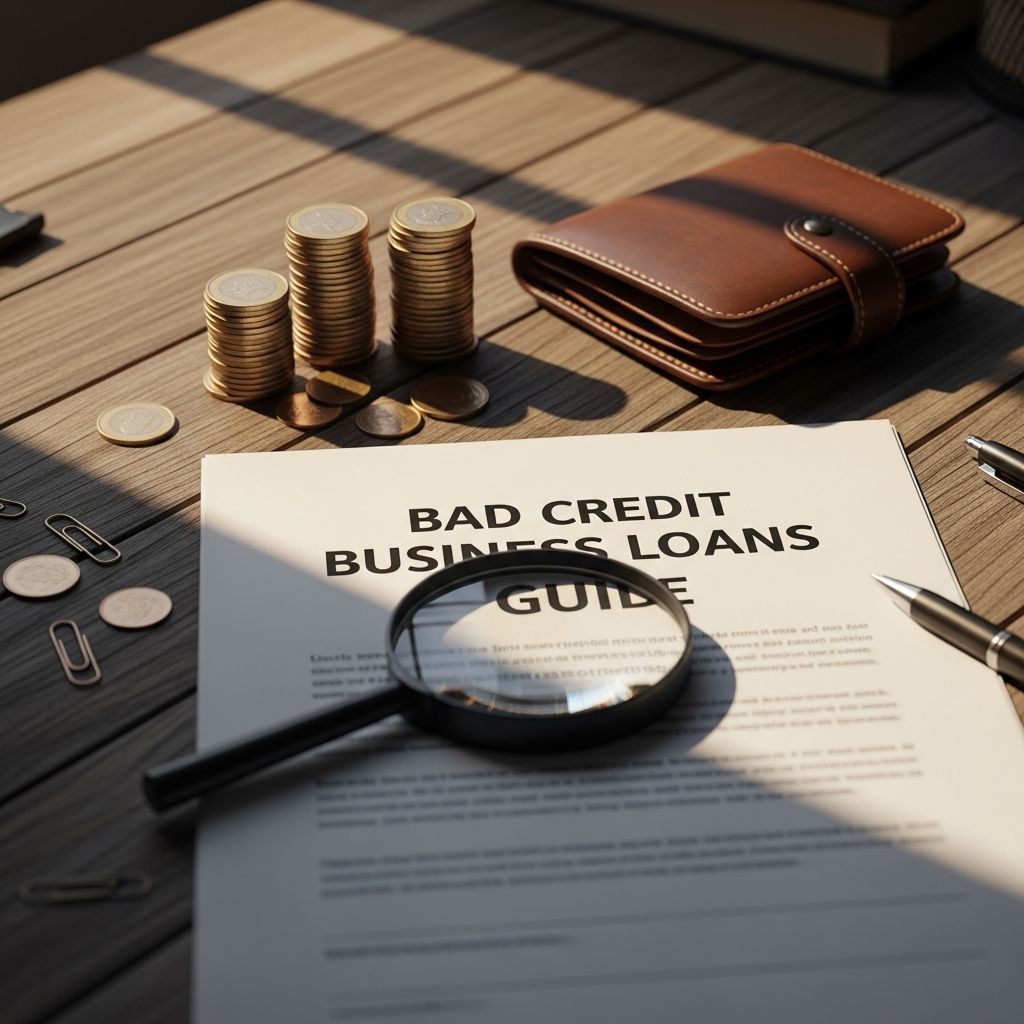
Bad Credit Business Loans Guide
Securing financing for a small business when facing poor credit presents significant hurdles, yet viable pathways exist through specialized lenders and government-backed programs. This guide outlines actionable strategies, loan types, and preparation steps to help entrepreneurs access capital despite credit scores below 600.
Defining Poor Credit in Business Lending
A FICO score ranging from 300 to 599 qualifies as poor credit, making traditional bank loans difficult to obtain. Lenders view these scores as high-risk indicators of potential default. For startups lacking business credit history, personal scores become the primary evaluation metric, with scores under 500 deemed very poor and limiting options to secured products or alternatives.
Business credit scores, such as Dun & Bradstreet ratings above 80, matter for established firms, but new ventures rely heavily on personal FICO profiles where 661+ signifies good credit. Understanding your exact score via free reports from major bureaus is the first step toward targeted applications.
Primary Loan Options for Low Credit Scores
Alternative lenders dominate the bad credit space, prioritizing revenue and cash flow over scores. These providers offer faster approvals but at higher costs.
- Short-term loans: Ideal for urgent needs, requiring scores as low as 500 with daily/weekly repayments tied to sales.
- Merchant cash advances (MCAs): Advances on future card sales, accessible with scores under 550 if revenue exceeds thresholds.
- Invoice financing: Borrow against unpaid invoices, bypassing credit checks for cash-strapped firms.
- Equipment financing: The asset itself secures the loan, usable even by startups.
Lines of credit function like revolving funds, available from 600+ scores with six months in business and $50,000 annual revenue. Online platforms match applicants to these based on profiles.
Government-Backed Financing: SBA Pathways
The U.S. Small Business Administration (SBA) supports loans via partnered lenders, often accommodating credit challenges if other criteria align. Key programs include:
| Program | Max Amount | Credit Flexibility | Best For |
|---|---|---|---|
| Microloans | $50,000 | Startup-friendly | New businesses |
| 7(a) Loans | $5M | Considers full profile | Growth capital |
| 504 Loans | $5.5M | Asset-based | Real estate/equipment |
Eligibility hinges on business purpose, repayment ability, and size standards rather than perfect credit. Even poor scores qualify if cash flow demonstrates viability. Intermediaries like nonprofits provide microloans to underserved owners.
Alternative Funding Beyond Traditional Loans
When loans prove elusive, diversify with non-debt options to bridge gaps.
- Crowdfunding platforms raise capital via campaigns, no repayment needed if rewards-based.
- Grants from federal programs target specific industries without equity dilution.
- Peer-to-peer lending connects borrowers directly to investors via apps.
- Family/friend loans offer flexible terms, though documentation prevents disputes.
Business credit cards, secured versions for sub-600 scores, provide ongoing access with deposits mitigating risk. These build history while funding operations.
Steps to Secure Approval Despite Poor Credit
Systematic preparation elevates applications from rejections to offers.
- Check and monitor scores: Pull personal/business reports; dispute errors promptly.
- Strengthen business metrics: Demonstrate steady revenue, positive cash flow—lenders prioritize these over scores.
- Craft a robust plan: Detail loan use, projections, and repayment strategy to instill confidence.
- Offer collateral or guarantees: Assets or personal backing reduce lender risk.
- Shop multiple lenders: Use marketplaces for pre-qualifications without hard pulls.
For scores 500-550, target short-term products; 550-620 opens medium-term; 620+ accesses SBA. Startups under one year lean on personal cards or microloans.
Improving Credit for Future Financing
Parallel to seeking funds, rebuild profiles for better rates long-term.
- Pay bills on time, reducing utilization below 30%.
- Register for DUNS, pay vendors net-30 to build business scores.
- Seek credit-builder loans or secured cards.
- Avoid new inquiries; space applications.
Progress from poor to fair (601-660) unlocks more options within months. Consistent habits yield compounding gains.
Risks and Best Practices for High-Cost Borrowing
Bad credit loans carry APRs 20-50%+ due to risk premiums—assess affordability against cash flow. Default worsens scores; prioritize lenders transparent on fees.
Define loan purpose clearly: growth vs. survival. Compare via tables:
| Factor | Traditional Banks | Alternatives |
|---|---|---|
| Min Score | 670+ | 500+ |
| Approval Speed | Weeks | Days |
| Rates | Low | High |
| Revenue Req. | High | Moderate |
Mitigate by starting small, proving repayment, then scaling to prime products.
Common Scenarios by Credit Band
- Under 500: Secured cards, MCAs if revenue strong.
- 500-550: Invoice factoring, equipment loans.
- 550-620: Short/medium-term from alt lenders.
- 620-650: Lines of credit, SBA micros.
- 650+: Broader access including banks.
Frequently Asked Questions
Can startups get loans with bad credit?
Yes, via SBA Microloans up to $50,000 or alternatives like crowdfunding, though personal guarantees often apply.
Is an EIN sufficient for business loans?
No, lenders require personal credit, revenue, and business history alongside EIN.
What if my score is 500?
Possible with alt lenders focusing on cash flow, but expect high rates and short terms.
Do collateral needs vary?
Yes, equipment loans use assets; MCAs none, but factor sales.
How to qualify for SBA with poor credit?
Meet size standards, show repayment ability; credit is one factor.
References
- Startup Business Loans With Bad Credit and No Collateral — SoFi. 2026. https://www.sofi.com/learn/content/startup-business-loans-bad-credit/
- Best Business Loan Options For Bad Credit — Lendio. 2026. https://www.lendio.com/blog/get-business-loan-with-bad-credit
- Business Loans for Bad Credit — National Funding. 2026. https://www.nationalfunding.com/solutions/bad-credit-small-business-loans/
- Best Types of Business Loans for Bad Credit — Credibly. 2026. https://www.credibly.com/guides/business-loans-for-bad-credit/
- Compare Business Loans for Bad Credit in 2026 — Nav. 2026. https://www.nav.com/resource/business-loans-bad-credit/
- Loans | U.S. Small Business Administration — SBA.gov. 2026. https://www.sba.gov/funding-programs/loans
Similar Articles







Read full bio of Sneha Tete