Backdoor Roth IRA: Step-By-Step Guide For 2025
Unlock Roth IRA benefits for high earners: Learn the backdoor strategy, steps, rules, and tax implications for tax-free retirement growth.

A
backdoor Roth IRA
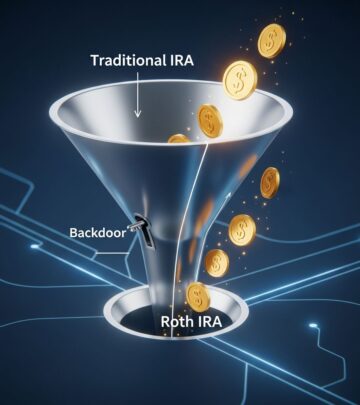
is a powerful strategy that allows high-income earners to contribute to a Roth IRA despite exceeding the standard income limits for direct contributions. By making nondeductible contributions to a traditional IRA and then converting them to a Roth IRA, individuals can access tax-free growth and qualified withdrawals, enhancing long-term retirement savings.What is a Backdoor Roth IRA?
The backdoor Roth IRA isn’t a unique account type but a two-step process designed for those whose modified adjusted gross income (MAGI) exceeds Roth IRA contribution thresholds. Direct Roth IRA contributions are restricted based on income: for 2024, full contributions phase out for single filers above $146,000 MAGI and joint filers above $230,000. High earners bypass this via the backdoor method, funding a traditional IRA with after-tax dollars and converting to Roth, yielding tax-free earnings thereafter.
This approach leverages the fact that traditional IRA contributions have no income limits for nondeductible funding, while Roth conversions have none at all. The result: post-tax money enters the Roth, grows tax-free, and can be withdrawn tax-free after age 59½ and a five-year holding period.
Who is Eligible for a Backdoor Roth IRA?
Anyone with earned income can use this strategy, but it’s ideal for high earners ineligible for direct Roth contributions. Contribution limits apply universally: $7,000 for 2024 ($8,000 if 50+), or 100% of compensation, whichever is less. No age restrictions exist for conversions, making it viable across working years.
- High-income professionals: Doctors, executives, or tech workers over MAGI limits.
- Spousal contributions: Non-working spouses can participate via working spouse’s income.
- Existing IRA holders: Possible, but pro rata rules complicate if pre-tax balances exist (detailed below).
Eligibility hinges on having compensable income; passive income doesn’t qualify.
Income Limits for Direct Roth IRA Contributions
Direct Roth contributions phase out based on MAGI and filing status. For 2024:
| Filing Status | Full Contribution MAGI | Phase-Out Range |
|---|---|---|
| Single/Head of Household | < $146,000 | $146,000 – $161,000 |
| Married Filing Jointly | < $230,000 | $230,000 – $240,000 |
| Married Filing Separately | $0 | $0 – $10,000 |
Data from IRS guidelines via Morningstar. Exceeding these triggers the backdoor need. Note: Limits adjust annually for inflation; 2025 figures rise to $6,500 base ($7,500 for 50+), but strategy remains relevant.
Steps to Complete a Backdoor Roth IRA Contribution
Execute promptly to minimize tax exposure and comply with deadlines. Contributions for a given year must occur by tax filing due date (e.g., April 15, 2025, for 2024).
- Contribute to Traditional IRA: Open or use existing; fund nondeductibly up to annual limit. Confirm after-tax status to avoid deductions if pre-tax IRAs exist.
- Convert to Roth IRA: Use trustee-to-trustee transfer, 60-day rollover, or same-trustee move. Convert soon after contribution to limit earnings (taxable).
- Report on Taxes: File IRS Form 8606 for nondeductible basis and conversion. Notify tax advisor.
Repeat annually for ongoing contributions. Total process often completes in days.
Key Rules and Considerations
- Nondeductible Contributions: Treat as after-tax to establish basis; deductible claims trigger taxes on conversion if mixed.
- Conversion Methods: Direct transfers preferred to avoid withholding; 60-day rule risks penalties if missed.
- Deadlines: Contributions by April 15; conversions anytime, but same-year ideal for simplicity.
- No Income Limit on Conversions: Unlimited amount convertible, but taxes apply pro rata.
The Pro Rata Rule Explained
The
pro rata rule
aggregates all traditional, SEP, and SIMPLE IRAs (excluding 401(k)s) to calculate taxable conversion portion. Formula: Taxable % = (Pre-tax balance / Total IRA balance) × Converted amount.Example: $90,000 pre-tax + $10,000 after-tax = $100,000 total. Converting $10,000: 90% ($9,000) taxable.
Avoidance strategies:
- Clean Slate Approach: Roll pre-tax IRAs into 401(k) before backdoor.
- Separate Accounts: New IRA for after-tax only, but aggregation still applies.
Form 8606 tracks basis across years.
Tax Implications of Backdoor Roth IRA
If executed “cleanly” (no pre-tax mix), conversions are tax-free since basis matches amount converted. Earnings pre-conversion are taxable as ordinary income. Future Roth growth/withdrawals: tax-free if qualified.
| Scenario | Tax on Conversion | Future Withdrawals |
|---|---|---|
| Clean Backdoor | $0 (basis covers) | Tax-free (qualified) |
| Pro Rata Mix | Partial tax | Tax-free on basis portion |
| Early Withdrawal | N/A | Contributions free; earnings taxed + 10% penalty pre-59½ |
State taxes may apply; consult professionals.
Pros and Cons of Backdoor Roth IRA Strategy
Pros
- Tax-free growth forever.
- Bypasses income limits.
- Flexible withdrawals: contributions anytime penalty-free.
- Hedge against future tax hikes.
Cons
- Pro rata complexity if IRAs exist.
- Upfront tax on mixed conversions.
- Annual paperwork (Form 8606).
- Not ideal if tax bracket likely lower in retirement.
Alternatives to Backdoor Roth IRA
- Mega Backdoor Roth: Via 401(k) after-tax contributions (if plan allows).
- Direct Roth if Eligible: Lower income? Contribute normally.
- Roth 401(k): Employer plans often lack income limits.
- Taxable Brokerage: No tax shelter, but liquidity.
Weigh based on plan features and goals.
Frequently Asked Questions (FAQs)
Can I do a backdoor Roth IRA if I have a 401(k)?
Yes; 401(k)s don’t aggregate with IRAs for pro rata. Use to isolate pre-tax funds.
Is a backdoor Roth IRA reversible?
Recharacterizations ended in 2018; conversions are permanent.
How soon after contribution should I convert?
Immediately to minimize taxable earnings.
Does it work for spouses?
Yes, if combined income allows traditional contribution eligibility.
What if I miss the tax filing deadline?
Contributions still count for prior year if deposited timely; file amended return.
Final Thoughts
The backdoor Roth IRA empowers high earners to build tax-advantaged wealth. Success demands meticulous execution, pro rata awareness, and tax reporting. Consult a financial advisor or CPA to tailor to your situation, ensuring compliance and optimization.
References
- Key Rules for a Backdoor Roth IRA Contribution — Morningstar. 2024. https://www.morningstar.com/personal-finance/key-rules-backdoor-roth-ira-contribution
- Backdoor Roth IRA: How Does it Work? — Farther. 2024. https://www.farther.com/resources/foundations/backdoor-roth-ira-how-does-it-work
- Backdoor Roth IRA: What It Is, How to Set It Up — NerdWallet. 2024. https://www.nerdwallet.com/retirement/learn/backdoor-roth-ira
- Backdoor Roth IRA: Is it right for you? — Fidelity Investments. 2024. https://www.fidelity.com/learning-center/personal-finance/backdoor-roth-ira
- Pro-Rata rules for Roth conversions (Backdoor Roth) — TaxSlayer Support. 2024. https://support.taxslayer.com/hc/en-us/articles/14776395451021-Pro-Rata-rules-for-Roth-conversions-Backdoor-Roth
- Backdoor Roth: Is It Right for You? — Charles Schwab. 2024. https://www.schwab.com/learn/story/backdoor-roth-is-it-right-you
- What a backdoor Roth IRA is & how to use it — Empower. 2024. https://www.empower.com/the-currency/money/backdoor-roth-ira-good-move
Similar Articles








Read full bio of medha deb