Backdoor Roth IRA: Strategy for High Earners
Master the tax-efficient conversion strategy that bypasses Roth IRA income limits for affluent investors.

For individuals with substantial income, traditional pathways to Roth Individual Retirement Accounts often become inaccessible due to strict income thresholds established by the Internal Revenue Service. However, a legal and increasingly popular workaround exists that allows affluent investors to circumvent these restrictions and enjoy the long-term tax benefits associated with Roth accounts. This financial strategy, commonly referred to as a backdoor Roth conversion, has become an essential tool in the retirement planning arsenal for high-income professionals, entrepreneurs, and investors seeking tax-efficient wealth accumulation.
Understanding the mechanics of this approach, along with its advantages, limitations, and compliance requirements, is crucial for anyone considering this strategy. This comprehensive guide explores the intricacies of backdoor Roth conversions and provides practical insights for implementing this sophisticated financial maneuver.
Understanding the Core Concept Behind Backdoor Roth Conversions
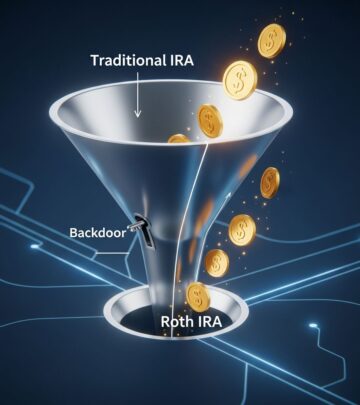
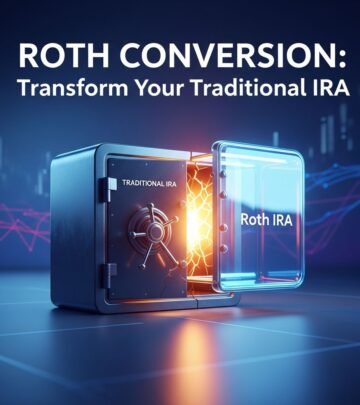
A backdoor Roth conversion is not a distinct category of retirement account, but rather a multi-step strategy that enables individuals to fund a Roth IRA indirectly when they would otherwise be prohibited from doing so through conventional means. The strategy leverages the absence of income restrictions on Roth conversions, even though direct contributions to Roth accounts face strict income limitations.
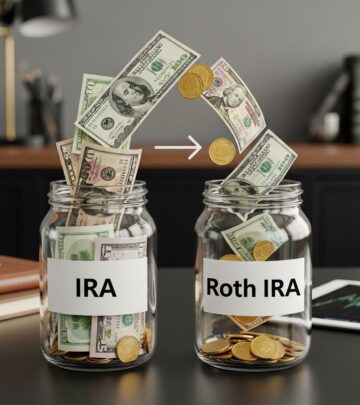
The fundamental principle underlying this approach involves contributing funds to a traditional IRA without claiming a tax deduction—essentially making an after-tax contribution—and subsequently converting those funds into a Roth IRA. Since the original contribution was made with after-tax dollars, the conversion process generates minimal or no additional tax liability, allowing individuals to effectively transfer funds into a Roth account regardless of their income level.
Current Income Restrictions That Necessitate Backdoor Conversions
The IRS enforces income-based eligibility requirements for direct Roth IRA contributions, creating the need for backdoor strategies. For the 2026 tax year, these limitations vary based on filing status:
| Filing Status | Modified Adjusted Gross Income Range | Contribution Eligibility |
|---|---|---|
| Single filer | Less than $153,000 | Full contribution ($7,500 or $8,600 if 50+) |
| Single filer | $153,000 – $168,000 | Reduced contribution |
| Single filer | $168,001 or more | No contribution allowed |
| Married filing jointly | Less than $242,000 | Full contribution ($7,500 or $8,600 if 50+) |
| Married filing jointly | $242,000 – $252,000 | Reduced contribution |
| Married filing jointly | $252,001 or more | No contribution allowed |
These income thresholds affect millions of successful professionals and business owners who would otherwise benefit from Roth IRA’s tax-free growth and withdrawal features.
Step-by-Step Execution of a Backdoor Roth Conversion
Implementing a backdoor Roth conversion involves a straightforward two-phase process that most investors can execute without substantial difficulty:
Phase One: Opening and Funding a Traditional IRA
The initial step requires establishing a traditional IRA account, either new or existing, and contributing funds up to the annual contribution limit without claiming a tax deduction. For 2026, the contribution limit is $7,500 for individuals under age 50 and $8,600 for those age 50 and older. It is essential to document that this contribution is nondeductible by filing IRS Form 8606 when submitting your tax return.
Phase Two: Converting Funds to a Roth IRA
After the traditional IRA account has been funded, typically within days or weeks, the account holder initiates a conversion by transferring the after-tax contribution to an existing or newly established Roth IRA. Most financial institutions facilitate this conversion process electronically, and there are no restrictions on timing or frequency of conversions.
Annual Contribution Constraints and Earning Requirements
While backdoor Roth conversions offer a pathway around income limits, they remain subject to several important constraints. Individuals can perform this strategy annually, but must adhere to these requirements:
- Earned income must equal or exceed the contribution amount being converted
- Annual contributions cannot surpass the standard IRA contribution limit ($7,500 for those under 50, $8,600 for age 50+)
- The pro-rata rule must be carefully evaluated and planned for
The earned income requirement ensures that backdoor conversions align with overall contribution limits across all retirement accounts and prevent individuals from contributing beyond their means.
The Pro-Rata Rule: A Critical Consideration
One of the most significant challenges associated with backdoor Roth conversions involves the pro-rata rule, an IRS regulation that can substantially diminish the tax efficiency of the strategy for certain individuals. This rule mandates that any conversion from a traditional IRA be treated as coming proportionally from all traditional IRA accounts combined, including both pre-tax and after-tax contributions.
Consider a practical scenario: An investor has accumulated $93,000 in a pre-tax traditional IRA from previous contributions or rollovers. If this individual makes a $7,500 nondeductible contribution to a traditional IRA, creating a total balance of $100,500, and immediately converts the $7,500, the IRS would treat 92.5% of the conversion as coming from the pre-tax funds. This means approximately $6,937.50 of the $7,500 conversion would be taxable as ordinary income, eliminating most of the tax benefits of the backdoor strategy.
Individuals considering this approach must evaluate their existing IRA balances before proceeding. If substantial pre-tax IRA funds exist from previous contributions, rollovers from employer retirement plans, or inherited IRAs, the pro-rata rule may render the backdoor strategy impractical or uneconomical.
Tax Implications and Optimization Strategies
When executed properly, a backdoor Roth conversion generates minimal tax consequences in the year of execution. The nondeductible contribution to the traditional IRA creates a cost basis that offsets the conversion, provided no other pre-tax IRA balances exist.
However, if pre-tax IRA balances are present, the pro-rata rule creates a mixed taxation scenario where only the portion attributable to nondeductible contributions avoids immediate taxation. To optimize tax efficiency:
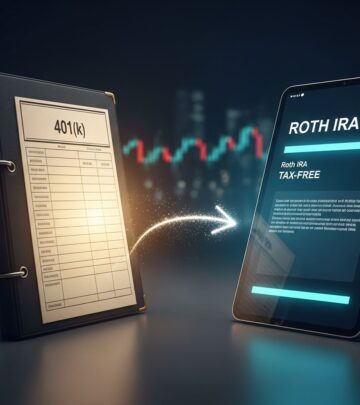
- Roll over any existing pre-tax IRA balances into an employer retirement plan (401(k), 403(b)) if your plan allows it, eliminating them from the pro-rata calculation
- Time conversions to align with years when other income is minimized
- Coordinate backdoor conversions with other tax planning strategies to manage overall tax liability
- Consult with a tax professional before executing the strategy if you have any pre-tax IRA balances
Comparing Direct Contributions Versus Backdoor Conversions
Individuals below the income phase-out thresholds have the option to contribute directly to a Roth IRA, which streamlines the process and eliminates concerns about the pro-rata rule. For those exceeding the income limits, the backdoor method is the only viable pathway. Understanding which approach applies to your situation is essential:
- Direct Roth contribution: Available to those within income limits; simpler process; no pro-rata rule concerns
- Backdoor conversion: Available to all income levels; requires two-step process; subject to pro-rata rule if pre-tax balances exist
Advantages of Roth IRA Accounts and Tax-Free Growth
Both direct contributions and backdoor conversions lead to the same end result: funding a Roth IRA, which offers substantial retirement planning benefits. These advantages include:
- Tax-free investment growth: Earnings accumulate without annual taxation, allowing compound growth to work more powerfully over decades
- Tax-free qualified withdrawals: After meeting holding period requirements (typically five years of Roth ownership and attaining age 59½), withdrawals of both contributions and earnings are completely tax-free
- No required minimum distributions: Unlike traditional IRAs and employer-sponsored plans, Roth IRAs never require forced distributions during the account holder’s lifetime, allowing greater flexibility and control over retirement withdrawals
- Legacy benefits: Roth IRAs can be passed to heirs with inherited distributions being entirely tax-free to beneficiaries
- Penalty-free contribution withdrawals: Contributions (though not earnings) may generally be withdrawn at any time without penalty or taxation, providing emergency liquidity
When Backdoor Conversions May Not Be Appropriate
While backdoor Roth conversions offer substantial benefits for many high-income earners, the strategy is not universally advantageous for all situations:
- If you earn within the income limits for direct Roth contributions, the simpler direct contribution method is preferable and avoids unnecessary complexity
- If you maintain substantial pre-tax IRA balances and cannot roll them into an employer plan, the pro-rata rule may eliminate the tax benefits of conversion
- If your current tax bracket is significantly lower than your anticipated retirement tax bracket, converting to a Roth may not provide optimal tax efficiency
- If you lack sufficient earned income to support the contribution amount, the strategy violates IRS requirements
Professional Guidance and Tax Compliance
Because backdoor Roth conversions involve multiple steps and potential tax complications, particularly regarding the pro-rata rule, consulting with a qualified tax professional or financial advisor is strongly recommended. These professionals can evaluate your complete financial picture, including existing IRA balances, anticipated income, and long-term tax strategies, to determine whether a backdoor conversion makes sense for your situation.
Proper documentation is equally important. When you make a nondeductible contribution to a traditional IRA, you must file IRS Form 8606 with your tax return to establish the after-tax nature of the contribution. This documentation creates a record of your cost basis and prevents disputes with the IRS regarding the taxability of future conversions.
Frequently Asked Questions About Backdoor Roth Conversions
Can I perform a backdoor Roth conversion every year?
Yes, there are no income limits on conversions themselves, though you must have earned income supporting the contribution and stay within annual contribution limits. Many high-income earners execute this strategy annually as part of their retirement savings plan.
What is the timeline for completing a conversion?
While you can convert immediately after funding the traditional IRA, there is no requirement to rush. Most professionals recommend converting within 30 to 60 days to minimize potential investment gains that could increase tax liability.
Does the IRS officially endorse backdoor Roth conversions?
The IRS has not issued explicit guidance officially endorsing or forbidding the strategy, though the mechanism for conversions is well-established in tax law. The strategy remains legal and widely practiced, though it’s prudent to work with qualified tax professionals for proper execution and documentation.
Can I convert more than the annual contribution limit?
For each year’s backdoor conversion, you are limited to the annual contribution limit ($7,500 or $8,600 depending on age). However, there is technically no limit on the total amount you can convert from existing traditional IRA balances through standard Roth conversions, though pro-rata rule implications would apply.
Conclusion: Evaluating Backdoor Roth Conversions in Your Strategy
Backdoor Roth conversions represent a powerful strategy for high-income earners seeking to maximize tax-free retirement savings. By understanding the mechanics, income limitations, pro-rata rule implications, and proper execution procedures, individuals can determine whether this approach aligns with their financial objectives. The combination of tax-free growth, tax-free withdrawals, and absence of required minimum distributions makes Roth accounts exceptionally valuable for long-term wealth accumulation. However, the strategy’s complexity demands careful evaluation and often benefits from professional guidance to ensure optimal results and IRS compliance.
References
- Can You Perform a Backdoor Roth Every Year? — IRA Financial. 2026. https://www.irafinancial.com/blog/can-you-perform-a-backdoor-roth-every-year/
- Backdoor Roth IRA: What it is and how to set it up — Vanguard. 2026. https://investor.vanguard.com/investor-resources-education/article/how-to-set-up-backdoor-ira
- Backdoor Roth IRA: Is it right for you? — Fidelity Investments. 2026. https://www.fidelity.com/learning-center/personal-finance/backdoor-roth-ira
- What is a Backdoor Roth IRA and How Does it Work? — Equifax. 2026. https://www.equifax.com/personal/education/personal-finance/articles/-/learn/backdoor-roth-ira/
- Backdoor Roth: Is It Right for You? — Charles Schwab. 2026. https://www.schwab.com/learn/story/backdoor-roth-is-it-right-you
Similar Articles








Read full bio of medha deb