Backdoor Roth IRA: Definition, Strategy & How It Works
A comprehensive guide to backdoor Roth IRAs for high-income earners seeking tax-free retirement savings.
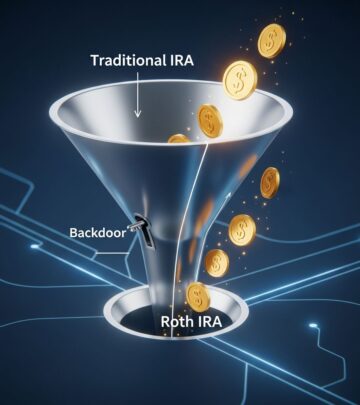
A backdoor Roth IRA is a strategic approach that enables high-income earners to circumvent income restrictions and contribute to a Roth IRA. This method involves making a nondeductible contribution to a traditional IRA and subsequently converting those funds to a Roth IRA. Unlike direct Roth IRA contributions, which are subject to income limits that phase out eligibility for higher earners, backdoor Roth conversions have no income restrictions. This strategy has become increasingly popular among affluent investors seeking to maximize tax-free retirement savings opportunities.
Understanding the Backdoor Roth Strategy
The backdoor Roth IRA strategy represents a workaround to Roth IRA income limits imposed by the Internal Revenue Service. While traditional IRAs allow contributions regardless of income level, Roth IRAs restrict direct contributions based on modified adjusted gross income (MAGI). For individuals whose earnings exceed these thresholds, the backdoor method provides an alternative pathway to access Roth IRA benefits, including tax-free growth and qualified withdrawals in retirement.
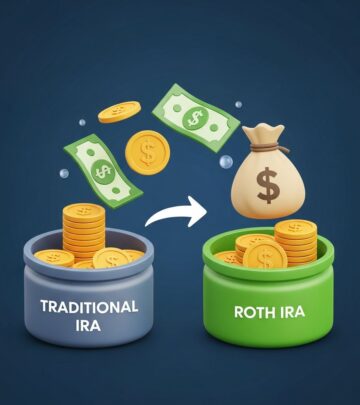
The fundamental principle behind this strategy is straightforward: contribute after-tax dollars to a traditional IRA, then convert those funds to a Roth IRA. Since the conversion involves funds that have already been taxed, the tax burden is minimal or nonexistent, depending on whether the traditional IRA contains pre-tax or after-tax balances.
Direct Roth IRA Income Limits
To understand why backdoor Roth IRAs exist, it is essential to recognize the income restrictions on direct Roth IRA contributions. The IRS establishes annual income thresholds based on filing status and modified adjusted gross income. For 2025, the income limits for direct Roth IRA contributions are as follows:
| Filing Status | MAGI Range | Contribution Limit (2025) |
|---|---|---|
| Single, Head of Household | Less than $150,000 | $7,000 ($8,000 if age 50+) |
| Single, Head of Household | $150,000–$164,999 | Reduced contribution |
| Single, Head of Household | $165,000+ | $0 |
| Married Filing Jointly | Less than $236,000 | $7,000 ($8,000 if age 50+) |
| Married Filing Jointly | $236,000–$245,999 | Reduced contribution |
| Married Filing Jointly | $246,000+ | $0 |
When an individual’s MAGI exceeds these limits, they become ineligible to make direct contributions to a Roth IRA. However, there are no income restrictions on Roth conversions, making the backdoor strategy an attractive option for high earners.
How the Backdoor Roth IRA Works
The backdoor Roth conversion process involves several sequential steps that must be executed properly to avoid adverse tax consequences. Understanding each step is critical for successful implementation of this strategy.
Step 1: Establish or Identify a Traditional IRA
The first step involves establishing a traditional IRA if you do not already have one. If you have existing traditional IRAs, you will need to consider the aggregation rules discussed later in this article. Open the account with a financial institution such as a brokerage firm, bank, or investment company.
Step 2: Make a Nondeductible Contribution
Next, contribute funds to the traditional IRA on a nondeductible basis. For 2025, you can contribute up to $7,000 ($8,000 if you are age 50 or older) to a traditional IRA, subject to having sufficient earned income. The contribution must not exceed your earned income for the year. This contribution is made with after-tax dollars, and you do not claim a tax deduction for it.
The deadline for making a 2025 IRA contribution is April 15, 2026, though some contributions can be made through the tax-filing deadline. It is important to note that extensions of the filing deadline do not extend the IRA contribution deadline.
Step 3: Complete the Roth Conversion
After the nondeductible contribution settles in your traditional IRA, you then convert that amount (or a portion of it) to a Roth IRA. This conversion can typically be completed relatively quickly, often within days of the contribution. Most financial institutions allow you to perform a trustee-to-trustee transfer, which simplifies the process and ensures compliance with IRS regulations.
Step 4: Report on Form 8606
You must file IRS Form 8606 with your tax return to report the nondeductible contribution and the subsequent conversion. This form tracks the after-tax basis in your IRAs to prevent double taxation of those amounts in the future. Failing to file Form 8606 can result in penalties and complications with future distributions or conversions.
The Pro Rata Rule: A Critical Consideration
One of the most significant challenges with backdoor Roth conversions is the pro rata rule. This IRS regulation requires that any conversion from a traditional IRA be treated as coming proportionally from all your traditional IRA accounts combined, including both pre-tax and after-tax contributions.
For example, if you have $93,000 in a pre-tax traditional IRA and make a $7,000 nondeductible contribution (totaling $100,000), and then immediately convert your $7,000 contribution, the IRS treats 93% of the conversion as taxable pre-tax money and 7% as nondeductible after-tax money. This means you would owe taxes on approximately $6,510 of the conversion, significantly reducing the tax efficiency of the strategy.
The pro rata rule aggregates all traditional IRAs, SEP IRAs, and SIMPLE IRAs for calculation purposes but does not include employer-sponsored retirement plans such as 401(k)s, 403(b)s, or 457 plans. For this reason, many financial advisors recommend rolling pre-tax balances from traditional IRAs into an employer-sponsored plan before performing a backdoor Roth conversion.
Key Advantages of Backdoor Roth IRAs
The backdoor Roth IRA strategy offers several compelling benefits for high-income earners:
Tax-Free Growth: Once funds are converted to a Roth IRA, all investment gains and growth occur tax-free. Unlike traditional IRAs, where distributions are taxed as ordinary income, Roth IRA growth is never subject to federal income tax.
Tax-Free Withdrawals: Qualified distributions from a Roth IRA are entirely tax-free. After meeting the five-year holding period and attaining age 59½, you can withdraw funds without paying taxes or penalties. This is substantially different from traditional IRAs, where all distributions are taxed as ordinary income.
No Required Minimum Distributions: Unlike traditional IRAs, Roth IRAs do not require you to take distributions at any point during your lifetime. This provides greater flexibility in retirement and allows your investments to continue growing tax-free for as long as you live.
Legacy Planning Benefits: Roth IRAs are excellent for estate planning. Your heirs inherit the account income-tax-free, and while they must take distributions, those distributions are not subject to income tax.
No Income Restrictions on Conversions: Unlike direct Roth contributions, there are absolutely no income limits on Roth conversions. Regardless of how high your income is, you can perform a backdoor Roth conversion.
Potential Drawbacks and Considerations
While the backdoor Roth strategy offers significant benefits, several potential drawbacks warrant consideration:
Pro Rata Tax Implications: As discussed, the pro rata rule can substantially increase your tax liability if you have existing pre-tax IRA balances. This is the most common pitfall of the strategy.
Conversion Tax Liability: While backdoor Roth conversions themselves should generate minimal tax if you have only after-tax contributions, any earnings accumulated in the traditional IRA before conversion will be subject to taxation. It is important to convert quickly to minimize this accumulation.
Income Recognition: The conversion amount is added to your income for the year, potentially pushing you into a higher tax bracket or causing other tax consequences such as reduced deductions or increased Medicare premiums.
Five-Year Rule Complexity: While contributions to a Roth IRA can be withdrawn tax- and penalty-free at any time, earnings cannot be withdrawn without penalty before age 59½ unless an exception applies. Additionally, the five-year holding period for tax-free conversions can complicate early withdrawal scenarios.
Form 8606 and Tax Reporting
Form 8606 is essential for proper reporting of backdoor Roth conversions. This form tracks several important items: your nondeductible contributions to traditional IRAs, distributions from traditional IRAs when you have basis in the account, and Roth conversions. Filing Form 8606 ensures that the IRS understands the tax treatment of your conversion and prevents the same after-tax dollars from being taxed twice.
Failure to file Form 8606 when required can result in penalties. Additionally, the IRS may assess additional taxes and penalties if there is a discrepancy between your reported contributions and your actual contribution history.
Who Should Consider a Backdoor Roth IRA?
The backdoor Roth strategy is most appropriate for individuals in the following situations:
High-Income Earners: Individuals whose income exceeds Roth IRA contribution limits are natural candidates for this strategy. Self-employed individuals and business owners with substantial incomes benefit particularly from this approach.
Those with Limited Pre-Tax IRA Balances: The strategy works most efficiently when you have minimal or no pre-tax traditional IRA balances. If you have substantial pre-tax IRAs, you may still benefit but will face larger tax bills due to the pro rata rule.
Long-Term Investors: Because the strategy requires meeting the five-year holding period and waiting until age 59½ for penalty-free withdrawal of earnings, it is best suited for investors with a long investment horizon.
Tax-Conscious Retirees: Those seeking to minimize their lifetime tax burden and who value tax-free retirement income should strongly consider this strategy.
Frequently Asked Questions
Q: Are there income limits for backdoor Roth conversions?
A: No, there are no income limits for Roth conversions. While direct Roth IRA contributions have income restrictions, the conversion process itself has no limitations regardless of how high your income is.
Q: How much can I contribute through a backdoor Roth IRA each year?
A: For 2025, you can contribute up to $7,000 annually ($8,000 if age 50 or older) through a backdoor Roth conversion, subject to having sufficient earned income. However, there is no limit to how much you can convert from a traditional IRA to a Roth IRA.
Q: What is the pro rata rule, and how does it affect backdoor Roth conversions?
A: The pro rata rule requires that conversions from traditional IRAs be treated as coming proportionally from both pre-tax and after-tax sources across all your traditional IRAs combined. If you have significant pre-tax IRA balances, a large portion of your conversion will be taxable.
Q: Can I withdraw my backdoor Roth contribution immediately?
A: You can withdraw your contributed amount (not earnings) from a Roth IRA at any time without penalty or taxes. However, earnings must remain in the account until age 59½ to avoid the 10% penalty, unless an exception applies.
Q: Do I need to file Form 8606 for a backdoor Roth conversion?
A: Yes, you must file Form 8606 with your tax return to properly report the nondeductible contribution and conversion. Failure to do so can result in penalties and complications with future transactions.
Q: Can I perform a backdoor Roth conversion if I have a 401(k)?
A: Having a 401(k) does not prevent you from doing a backdoor Roth conversion. However, if you have pre-tax balances in traditional IRAs, the pro rata rule will still apply to any conversion. Rolling traditional IRA balances into your 401(k) before converting can help avoid pro rata complications.
Q: What is the five-year rule for Roth conversions?
A: For each Roth IRA conversion, you must wait five years before withdrawing the converted amount penalty-free. Additionally, to withdraw earnings tax-free, you must be age 59½ and have held the Roth IRA for at least five years.
References
- Key Rules for a Backdoor Roth IRA Contribution — Morningstar. 2024. https://www.morningstar.com/personal-finance/key-rules-backdoor-roth-ira-contribution
- Backdoor Roth IRA: What it is and how to set it up — Vanguard. 2025. https://investor.vanguard.com/investor-resources-education/article/how-to-set-up-backdoor-ira
- Backdoor Roth IRA: What It Is, How to Set It Up — NerdWallet. 2025. https://www.nerdwallet.com/retirement/learn/backdoor-roth-ira
- Backdoor Roth IRA: Is it right for you? — Fidelity Investments. 2025. https://www.fidelity.com/learning-center/personal-finance/backdoor-roth-ira
- Publication 590-A: Contributions to Individual Retirement Arrangements (IRAs) — Internal Revenue Service. 2024. https://www.irs.gov/publications/p590a
Similar Articles








Read full bio of Sneha Tete