Credit Card Convenience Fees: 5 Smart Ways To Avoid Them
Discover proven strategies to sidestep hidden credit card convenience fees and keep more money in your pocket during everyday payments.
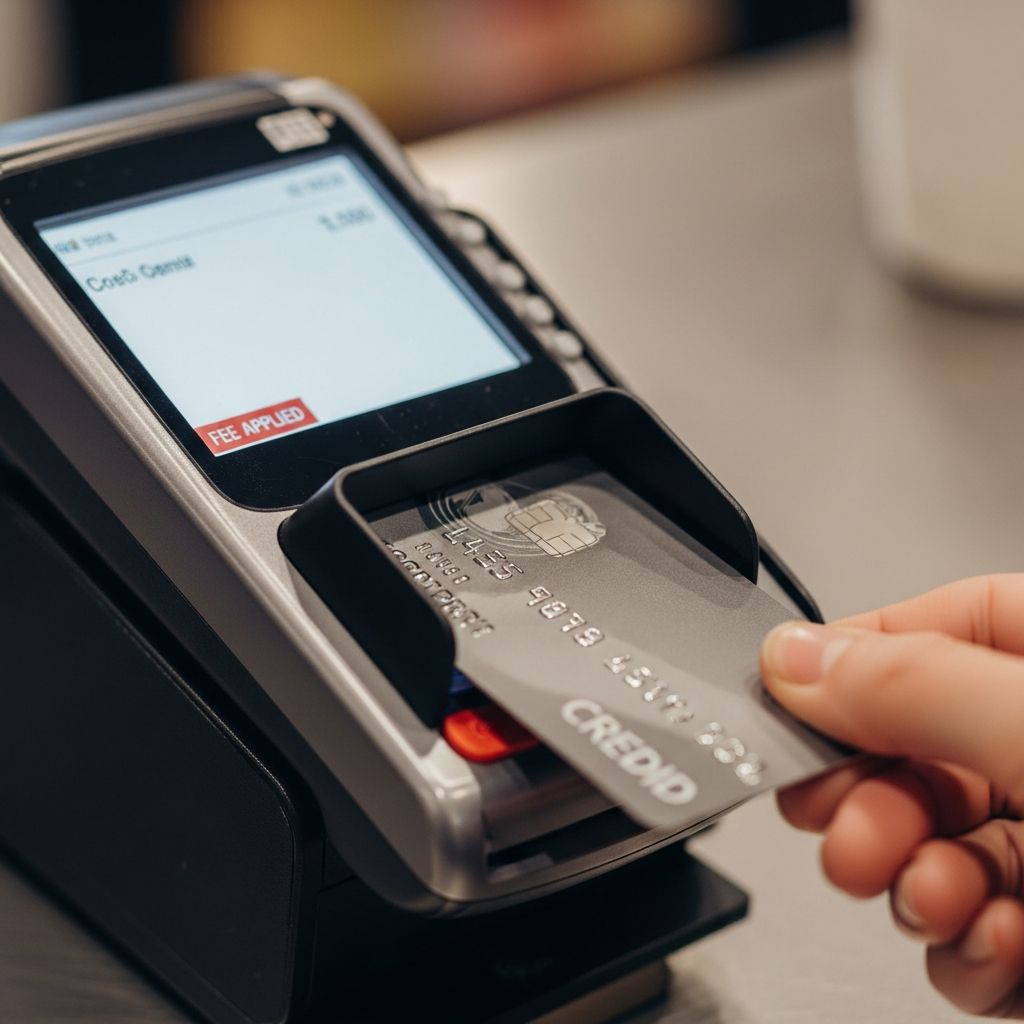
Credit card convenience fees add unexpected costs to payments for rent, taxes, utilities, and more, but consumers can often bypass them entirely through informed choices and alternative methods. These fees, typically flat charges for using cards outside standard channels, stem from merchant processing expenses but are avoidable with proactive steps.
Understanding the Basics of Convenience Fees
Convenience fees arise when businesses allow payments via credit card or specific channels like phone or online, beyond their primary methods such as cash, check, or ACH transfers. Unlike surcharges, which are percentage-based add-ons for any card use, convenience fees remain fixed amounts applied uniformly across qualifying transactions.
Merchants impose these to offset processing costs, often 2% or higher per transaction, making cards uneconomical for infrequent use. For instance, a landlord preferring checks might add a $5 fee for online card payments, framing it as a service for expedited options.
- Fees must be disclosed upfront before completion, allowing opt-out.
- They apply only to non-standard channels, not in-person card-present scenarios.
- No percentage calculation; always a set dollar figure.
Key Differences: Convenience Fees vs. Surcharges vs. Service Fees
Distinguishing these fee types prevents surprises and aids avoidance. Use this table for quick comparison:
| Fee Type | Structure | Application | Card Network Rules | Legal Notes |
|---|---|---|---|---|
| Convenience Fee | Flat fixed amount | Non-standard channels (phone, web) | Visa: No registration needed; uniform for channel | Legal in all 50 states; FTC requires upfront disclosure |
| Surcharge | Percentage (up to 4%) | Any credit card use | Visa: Merchant registration; no debit/prepaid | Banned in CT, MA, ME, PR; state caps elsewhere |
| Service Fee | Flat or %; tiered possible | Specific merchants (gov/edu) | Visa: Limited MCCs; recurring OK | Often for CNP; separate transactions allowed |
This breakdown highlights convenience fees as the most avoidable for consumers opting for preferred payment paths.
Common Scenarios Where Fees Appear
Fees frequently hit in these high-impact areas:
- Rent and Housing: Landlords charge for card payments over ACH or checks to cover 2-3% processing hits.
- Government Taxes: IRS-approved processors add fees for card use on federal/state returns.
- Utilities and Bills: Power, water companies tack on for phone/online cards versus auto-debit.
- P2P Transfers: Apps may fee credit funding over bank links.
- Medical/Professional Services: Doctors or lawyers for non-office-hour cards.
Proactively checking billing portals reveals fee disclosures, empowering choices.
Effective Ways to Dodge Convenience Fees
Avoidance boils down to selecting fee-free methods or negotiating alternatives. Here’s a prioritized list:
- Opt for ACH or Bank Transfers: Link your bank account for direct debits—zero fees for most utilities/rent.
- Use Debit or Prepaid Cards: Often exempt from surcharges; check policies.
- Mail Checks: Traditional but reliable for rent/taxes; request fee waivers for consistency.
- Enroll in Auto-Pay: Standard channels rarely fee; set up via bank for reliability.
- Negotiate with Providers: Long-term tenants/utilities customers can request card acceptance sans fees.
For unavoidable cases, compare fee sizes: a $3 flat fee beats 3% on large bills.
Navigating Card Network Policies
Each network sets binding rules merchants must follow:
- Visa: Flat fees OK for non-normal channels; no recurring; pre-disclosure mandatory.
- Mastercard: Similar to Visa; service fees for qualified merchants allow more flexibility.
- American Express/Discover: Fees capped at processing cost; must match competitors.
Consumers benefit by using networks with stricter consumer protections or fee-free alternatives.
State Laws and Regional Variations
While convenience fees are nationwide-legal, surcharges face bans in Connecticut, Maine, Massachusetts, and Puerto Rico. Other states cap at 2-4%; always verify local rules via attorney general sites. Multi-state businesses risk violations on out-of-state collections.
Post-2024 FTC rule mandates all junk fees upfront, boosting transparency.
Pros and Cons of Paying Fees Anyway
| Pros | Cons |
|---|---|
| Earn rewards/points on large bills | Direct cost hit, especially recurring |
| Payment flexibility (phone/online) | Potential credit utilization spikes |
| Builds card history | May encourage merchant discrimination |
Weigh rewards value against fees; e.g., 2% cashback vs. $5 fee on $200 rent nets loss.
Future Trends in Payment Fees
With FTC scrutiny and digital wallets rising, fees may decline. Buy-now-pay-later and bank-integrated apps offer fee-free paths. Monitor for 2026 updates as networks adapt to regulations.
Frequently Asked Questions (FAQs)
Are credit card convenience fees legal everywhere?
Yes, in all 50 states, but must be disclosed upfront per FTC rules. Surcharges banned in select areas.
Can I dispute a convenience fee?
If undisclosed or policy-violating, contact issuer; otherwise, it’s contractual.
Do debit cards incur convenience fees?
Rarely; surcharges explicitly exclude them.
How much can fees be?
Flat amounts only for convenience; no caps, but must reflect true costs.
What’s the best alternative for tax payments?
ACH via IRS Direct Pay—free and instant.
By prioritizing standard payment channels and staying informed on rules, consumers reclaim control over fees, saving hundreds yearly on essentials.
References
- Guide On Charging Credit Card Convenience Fees — PDCflow. 2023. https://www.pdcflow.com/credit-card-payments/guide-on-charging-credit-card-convenience-fees/
- Credit Card Surcharges, Convenience Fees, Processing Fees — NerdWallet. 2024-12. https://www.nerdwallet.com/credit-cards/learn/credit-card-convenience-fees-surchargeslegal
- What Is a Convenience Fee on a Credit Card? — Experian. 2024. https://www.experian.com/blogs/ask-experian/how-to-avoid-credit-card-convenience-fees/
- Credit Card Convenience Fees Explained — Swipesum. 2024. https://www.swipesum.com/insights/convenience-fees
- Convenience Fees, Service Fees, and Surcharge Fees — Arkansas Attorney General. 2024. https://arkansasag.gov/divisions/public-protection/finances/convenience-fees-service-fees-and-surcharge-fees/
- Surcharging, Convenience Fees & Cash Discounting Explained — Gravity Payments. 2024. https://gravitypayments.com/blog/the-differences-between-surcharging-convenience-fees-and-cash-discounting/
- Credit card surcharge laws by state explained for 2025 — LawPay. 2025. https://www.lawpay.com/about/blog/credit-card-surcharge-rules/
Similar Articles








Read full bio of Sneha Tete