Average Savings Account Balance
Discover how much Americans truly have saved, why medians matter more than averages, and strategies to boost your own emergency fund.

In an era of economic uncertainty, understanding the typical savings account balance provides critical insight into household financial health. Recent data highlights a stark divide between median and average figures, influenced heavily by age, income, and location. This analysis draws from authoritative surveys to paint a comprehensive picture, helping you benchmark your own progress.
Decoding Median vs. Average: The True State of Savings
The
median
savings balance across U.S. transaction accounts—encompassing savings, checking, and money market accounts—stands at $8,000, while theaverage
soars to $62,410 as of 2022 Federal Reserve data. This discrepancy arises because high-net-worth individuals skew the mean upward, making the median a more representative figure for most households.| Metric | Balance |
|---|---|
| Median | $8,000 |
| Average (Mean) | $62,410 |
Why does this matter? The median reflects the middle ground: half of Americans have more, half less. For everyday planning, it offers a realistic target rather than an inflated ideal.
Age Breakdown: Savings Peaks and Valleys
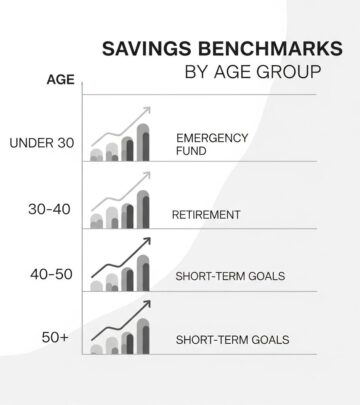
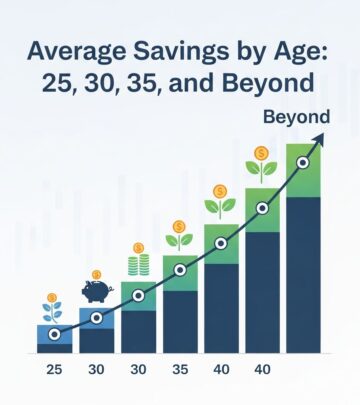
Savings accumulation follows life stages. Younger adults under 35 hold an average of $20,540 in transaction accounts, building from entry-level jobs and student debt payoffs. Balances climb steadily, peaking for ages 65-74 at $100,250, when careers wind down and nest eggs mature.
- Under 35: $20,540 average – Early career focus on debt reduction.
- 35-44: Rising to support family expenses.
- 45-54: Mid-career growth phase.
- 55-64: Pre-retirement acceleration.
- 65-74: $100,250 peak – Retirement proximity boosts totals.
These trends underscore the power of compound time: starting early yields the highest rewards later.
Income’s Dominant Role in Savings Disparities
Income exerts the strongest influence on balances. The lowest bracket (under $13,400 annually) medians just $900, while top earners ($245,400+) average $111,600—over 120 times higher. This gap highlights how disposable income directly fuels savings potential.
Amid average monthly household expenses of $6,080 per Consumer Expenditure Survey data, low earners struggle to allocate beyond necessities. Higher brackets benefit from surplus after taxes and bills, enabling aggressive saving.
Emergency Savings: A National Shortfall
Only 46% of U.S. adults maintain emergency funds covering three months of expenses—roughly $18,240 to $36,480 based on typical costs. This vulnerability exposes millions to financial shocks like job loss or medical bills.
Building such a buffer requires discipline: aim for 3-6 months in a high-yield savings account to outpace inflation and low personal savings rates, which dipped to 3.8% in December 2024 and 4.5% in January 2026.
Regional Variations: State-by-State Savings Snapshot
Savings differ sharply by state, mirroring economic divides. While national transaction medians hover at $8,000, retirement-focused savings average $80,000 nationwide—about one year’s income.
Massachusetts tops lists with $150,000 median retirement savings and 74.8% account utilization, driven by high incomes and tech hubs. Conversely, Mississippi lags at $35,000 median and 41.8% adoption, reflecting lower wages and rural economies.
| State | Median Retirement Savings | Account Utilization |
|---|---|---|
| Massachusetts | $150,000 | 74.8% |
| Mississippi | $35,000 | 41.8% |
| National Average | $80,000 | Varies |
States like Maryland lead in 401(k) usage (65%), while Montana excels in IRAs (46.4%), showing diverse retirement strategies. Transaction savings follow similar patterns, with urban, high-cost areas fostering larger buffers.
Broader Economic Context: Savings Rates in Flux
The U.S. personal savings rate—personal savings as a percentage of disposable income—has trended low. From 3.8% in late 2024 to 4.5% in early 2026, it signals cautious consumer behavior amid inflation and debt. Historical peaks during crises (e.g., 2020 pandemic) contrast current lows, urging proactive rebuilding.
Factors like rising credit card balances and stagnant wages erode progress, as noted in recent surveys where millions juggle emergencies without reserves.
Practical Steps to Elevate Your Savings
Achieving or surpassing the $8,000 median demands strategy:
- Automate transfers: Post-paycheck deposits to savings ensure consistency.
- Seek high-yield accounts: Rates above 4-5% APY beat traditional 0.01%.
- Cut non-essentials: Redirect $100 monthly from subscriptions to savings.
- Build incrementally: Target $1,000 first, then expand to 3-6 months’ expenses.
- Leverage windfalls: Tax refunds or bonuses go straight to emergency funds.
Track via apps integrating bank data for real-time motivation. Over time, these habits bridge gaps seen in national data.
Demographic Deep Dive: Beyond Age and Income
Education correlates with balances: college graduates average higher due to better-paying roles. Homeownership adds stability, freeing rental costs for savings. Gender gaps persist, with men slightly ahead, though closing via workforce equity.
Urban vs. rural divides amplify trends—city dwellers face higher costs but access better jobs, netting larger pots overall.
Retirement Savings: The Long-Term Companion to Daily Accounts
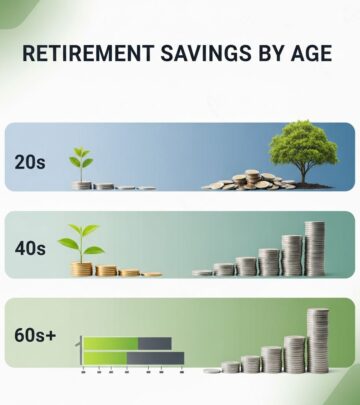
While transaction accounts focus on liquidity, retirement vehicles like 401(k)s and IRAs build wealth. National medians at $80,000 equate to one year’s income, but disparities echo transaction patterns. Prioritize employer matches for instant 50-100% returns before emergency funds if debt-free.
FAQs: Common Savings Questions Answered
What is a good savings account balance?
Aim for 3-6 months’ expenses ($18k-$36k for averages), starting from the $8,000 median benchmark.
Why is median lower than average?
Wealthy outliers inflate averages; median shows typical households.
How much do I need by age?
Under 35: $20k+; peak at 65-74: $100k in transactions.
Which state saves most?
Massachusetts at $150k median retirement.
What’s the current savings rate?
4.5% in Jan 2026.
Conclusion: Empowering Your Financial Future
U.S. savings averages mask realities—$8,000 medians signal room for growth amid low emergency preparedness. By understanding demographic drivers and adopting proven tactics, individuals can outpace national figures, securing resilience against uncertainties.
References
- The Average Savings Account Balance In The U.S. — Bankrate. 2022. https://www.bankrate.com/banking/savings/savings-account-average-balance/
- Average Retirement Savings by State: 2026 Ranking — 401k Specialist Magazine. 2026. https://401kspecialistmag.com/average-retirement-savings-by-state-2026/
- The average savings account balance in the US — SCNow (Motley Fool Money reference). N/A. https://scnow.com/news/nation-world/business/personal-finance/article_7a776b3f-64c6-5f18-bb79-e84eeb73f094.html
- Personal savings rate in U.S. 2015-2026 — Statista. 2026. https://www.statista.com/statistics/246268/personal-savings-rate-in-the-united-states-by-month/
- New data shows how Americans are managing their money — Bankrate (YouTube). N/A. https://www.youtube.com/watch?v=NZUYF0Uqz4U
Similar Articles








Read full bio of medha deb