Average Savings Account Balance in the U.S.
Discover how much Americans save by age, income, and household type.

Understanding how much money Americans have in their savings accounts provides valuable insight into the nation’s financial health and personal wealth accumulation patterns. Whether you’re assessing your own financial standing or planning for the future, knowing the average and median savings balances can help you benchmark your progress and set realistic goals.
How Much Does the Average Household Have in Savings?
The distinction between average and median savings balances is crucial for understanding American household finances. According to the latest Federal Reserve Survey of Consumer Finances (SCF) data from 2022, the median bank account balance in the United States is $8,000, while the mean (average) balance is significantly higher at $62,410. This substantial difference occurs because a relatively small number of households with very large account balances skew the average upward. For most people, the median figure provides a more accurate representation of typical household savings.
The difference between these two metrics highlights an important financial reality: while some Americans accumulate substantial wealth, the typical household maintains a more modest savings balance. This gap underscores income inequality and varying financial circumstances across the country.
Savings by Household Type
Household composition significantly influences how much families save. The SCF data reveals distinct patterns based on family structure:
| Household Type | Median Bank Account Balance | Mean Bank Account Balance |
|---|---|---|
| Single with one or more children | $2,400 | $16,800 |
| Single without children (under 55) | $4,000 | $19,320 |
| Couple with one or more children | $12,500 | $73,890 |
| Couple without children | $16,000 | $103,140 |
Single parents have the lowest median savings balance at $2,400, reflecting the financial pressures of raising children on a single income. In contrast, couples without children maintain the highest median balance at $16,000. This disparity emphasizes how dependent children and dual incomes affect financial capacity.
Average Savings by Age
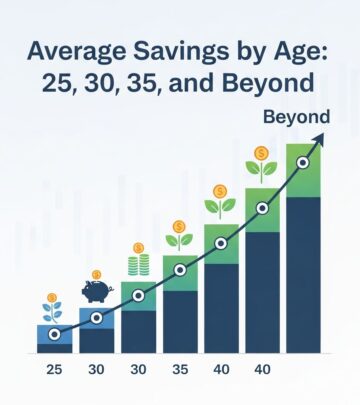
Age is one of the most significant factors influencing savings accumulation. Younger adults typically have less time to build wealth, while older adults benefit from decades of earning and saving. The pattern shows a clear upward trajectory as people age, though there are some notable variations:
| Age Group | Median Bank Account Balance | Mean Bank Account Balance |
|---|---|---|
| Under 35 | $5,400 | $20,540 |
| 35-44 | $7,500 | $41,540 |
| 45-54 | $8,700 | $71,130 |
| 55-64 | $17,000 | $119,800 |
| 65-74 | $27,750 | $100,250 |
Adults under 35 average just $20,540 in transaction accounts, while those aged 65-74 reach peak balances at $100,250. This substantial difference reflects the compounding effect of time, career progression, and increased earning potential over decades. The data demonstrates that building significant savings requires consistency and time.
Average Savings by Income
Income level represents the strongest correlation with savings capacity. The wealthier an individual or household, the greater their ability to accumulate reserves. The disparity between income brackets is striking:
| Income Bracket | Median Bank Account Balance | Mean Bank Account Balance |
|---|---|---|
| $0-$34,599 | $900 | $7,860 |
| $35,600-$59,499 | $2,550 | $16,410 |
| $59,500-$91,899 | $7,400 | $25,200 |
| $91,900-$153,099 | $15,760 | $44,070 |
| $153,100-$245,399 | $33,800 | $76,940 |
| $245,400+ | $111,600 | $353,030 |
The highest income bracket ($245,400+) has a median balance of $111,600, which is more than 120 times higher than the lowest income bracket ($900). This dramatic differential illustrates how income disparities translate directly into wealth accumulation. Those earning the least struggle to maintain even basic savings, while high earners can build substantial financial reserves.
Since the 2013 SCF study, most income groups have seen their median account balances increase progressively. One notable exception is the lowest income bracket, which experienced a $40 decrease in median balance, suggesting persistent financial challenges for the lowest-earning Americans.
Key Savings Statistics for 2025
Recent data reveals important trends about how Americans are approaching savings and financial security:
Emergency Savings Gap: Only 46% of U.S. adults have enough emergency savings to cover three months of expenses, according to Bankrate’s 2025 Emergency Savings Report. This means more than half the population lacks adequate financial cushions for unexpected hardships. Additionally, about 19% of Americans have no emergency savings at all, though this represents an improvement from 27% in 2024.
Credit Card Debt vs. Savings: More than one-third (33%) of U.S. adults have more credit card debt than money in emergency savings accounts. This concerning trend reflects how debt burdens limit savings capacity for many households.
Savings Momentum: For the first time in Bankrate’s polling history, more Americans reported increasing their savings (30%) than decreasing them (27%) compared to the previous year, suggesting a potential shift toward improved financial behavior.
Retirement Savings Concerns: More than half (57%) of Americans working full-time, part-time, or temporarily unemployed feel behind on their retirement savings, highlighting anxiety about long-term financial security.
Emergency Savings Withdrawals in 2025
When Americans do access their emergency savings, withdrawal amounts vary considerably. According to Bankrate’s data, among those who pulled from emergency savings in the past 12 months (as of February 2025), the most common withdrawal was between $1,000 and $2,499, affecting 26% of those who tapped their reserves. Other common withdrawal amounts included $500-$999 (22%) and less than $500 (18%). These patterns suggest that most emergency withdrawals address moderate financial disruptions rather than catastrophic events.
Maximizing Your Savings Account Returns
While understanding average balances provides useful context, maximizing your savings potential requires selecting accounts that offer competitive interest rates. The national average savings account yield is just 0.62% APY, according to Bankrate’s November 2025 survey. However, the best high-yield savings accounts offer rates exceeding 4% APY, which is more than six times higher than the national average.
Online-only banks frequently provide superior interest rates compared to traditional brick-and-mortar institutions. Many online banks maintain minimum opening requirements of $100 or less while paying high APYs on all balances, making them accessible to most savers. By choosing a high-yield savings account, you can dramatically increase your interest earnings without taking on additional risk.
Frequently Asked Questions
Q: What is the difference between median and average savings?
A: The median represents the middle value when all balances are arranged in order, while the average is calculated by dividing total savings by the number of accounts. The median often provides a more accurate picture of typical household savings because it’s not skewed by extremely high balances.
Q: Why do savings increase with age?
A: Savings typically increase with age due to longer working careers, accumulated experience leading to higher earnings, and time for compound interest to work. Younger adults have had less opportunity to build wealth, while those nearing retirement age have accumulated decades of savings.
Q: How much emergency savings should I have?
A: Financial experts generally recommend maintaining three to six months of living expenses in an easily accessible emergency fund. Currently, only 46% of Americans have achieved the three-month threshold, indicating this remains an aspirational goal for many.
Q: Does income really affect savings that much?
A: Yes, income is the strongest correlation with savings capacity. The highest income bracket maintains median balances over 120 times larger than the lowest bracket, demonstrating that earning capacity fundamentally determines savings potential.
Q: Should I use a high-yield savings account?
A: High-yield savings accounts are highly recommended if your primary savings goal is to earn interest safely. With rates six times higher than traditional accounts and low or no minimum balance requirements, they provide superior returns for emergency funds and short-term savings goals.
Q: What happens to savings after age 70?
A: Savings balances typically decline after age 70 as retirees begin drawing from their accumulated wealth to fund living expenses, healthcare, and other retirement needs.
References
- The Average Savings Account Balance In The U.S. — Bankrate. 2025. https://www.bankrate.com/banking/savings/savings-account-average-balance/
- Average Savings Account Interest Rate For November 2025 — Bankrate. November 29, 2025. https://www.bankrate.com/banking/savings/average-savings-interest-rates/
- Survey of Consumer Finances — Board of Governors of the Federal Reserve System. 2022. https://www.federalreserve.gov/consumerscommunities/consumerfinances.htm
- How Much Money Does the Average American Have in Their Bank Account — National Consumer Health Statistics. 2025. https://nchstats.com/average-american-savings-account/
- Bankrate’s 2025 Annual Emergency Savings Report — Bankrate. February 2025. https://www.bankrate.com/banking/savings/emergency-savings-report/
Similar Articles








Read full bio of medha deb