Average Closing Costs By State In 2025: State-By-State Guide
Compare state-by-state closing costs for home purchases and refinances in 2025.
Average Closing Costs By State In 2025
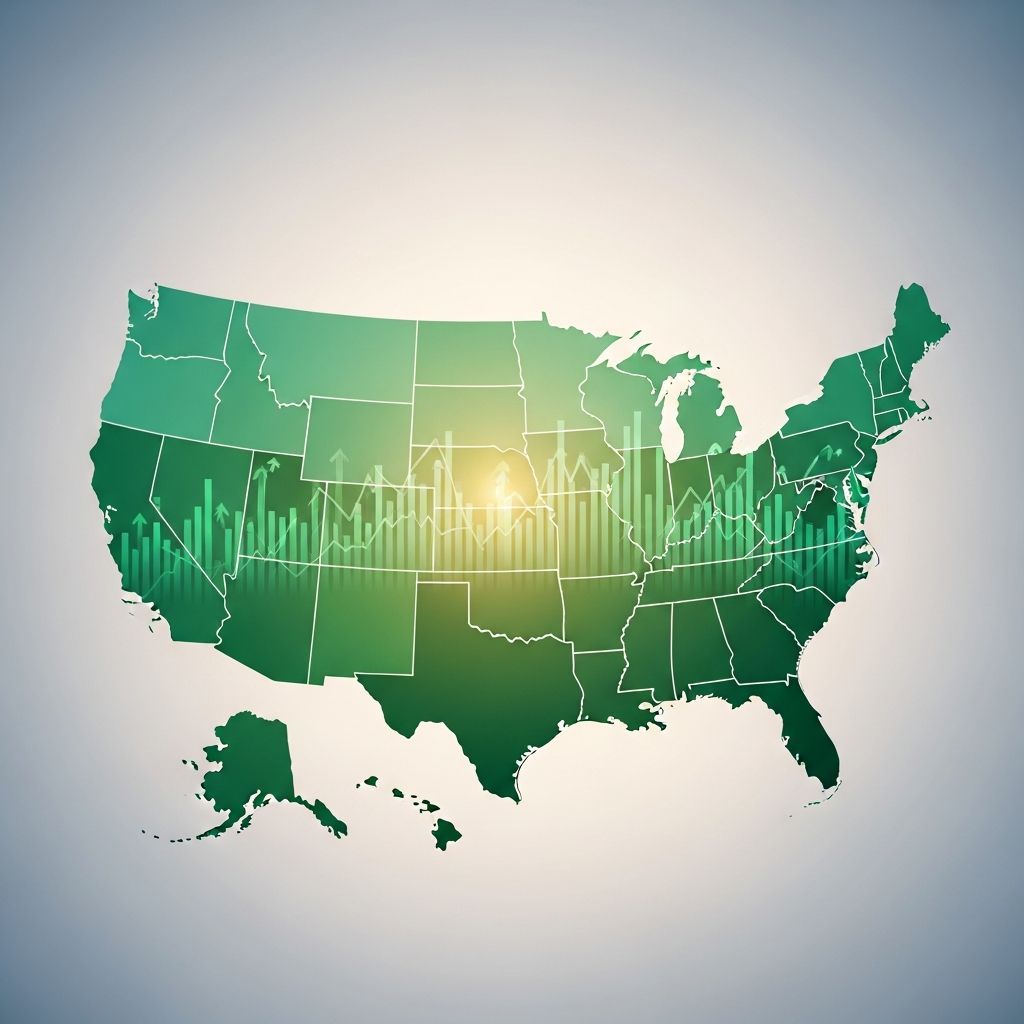
When purchasing a home, closing costs represent one of the most significant expenses you’ll encounter beyond the down payment. These fees encompass various services required to finalize your mortgage and complete the real estate transaction. Understanding how closing costs vary across different states can help you budget more effectively and make informed decisions about your home purchase.
What Are Closing Costs?
Closing costs are the fees and expenses required to complete a real estate transaction. They typically include loan origination fees, appraisal costs, title insurance, attorney fees, and various other charges associated with finalizing your mortgage. According to current data, mortgage closing costs typically total about 2% to 5% of your total loan amount. For a $350,000 loan, this means closing costs could range from $7,000 to $17,500.
These costs are paid primarily at closing—the final step in the home buying process where you sign documents and officially take ownership of the property. It’s important to note that closing costs do not include real estate agent commissions, which are typically paid separately by the seller.
How Much Do Closing Costs Average Nationwide?
According to the most recent data available, closing costs for homebuyers purchasing a single-family home in the United States average $4,661. However, this figure can vary dramatically depending on your location, the purchase price of your home, and whether you’re buying or refinancing.
For those refinancing their mortgages, average closing costs are considerably lower at $2,403, reflecting the reduced complexity of the refinancing process compared to a full home purchase.
States With the Highest Closing Costs
Closing costs are not uniformly distributed across the country. Several states consistently rank among the highest due to various factors including state regulations, local taxes, and regional real estate practices.
Washington, D.C. leads the nation with the highest average closing costs at $17,545, representing 2.39% of the typical home sale price. This significantly exceeds the national average and reflects the unique regulatory environment and high property values in the nation’s capital.
New York ranks second with average closing costs of $13,738, or 2.47% of the home purchase price. The high closing costs in New York are attributed to state-specific fees, transfer taxes, and attorney requirements that are more stringent than in many other states.
Delaware comes in third place with average closing costs exceeding $12,157, representing 2.99% of the sale price. Delaware’s position among the highest-cost states is largely due to its title insurance requirements and specific state regulations.
Other states with notably high closing costs include:
Maryland — $9,218 (2.03% of sale price)
Vermont — $8,597 (2.20% of sale price)
Florida — $8,492 (1.82% of sale price)
Pennsylvania — $8,259 (2.36% of sale price)
States With the Lowest Closing Costs
On the opposite end of the spectrum, several states offer significantly lower closing costs for homebuyers, making them more affordable markets for real estate transactions.
South Dakota has the lowest average closing costs in the nation at $1,551, representing just 0.46% of the home purchase price. This makes South Dakota an exceptionally affordable market for closing expenses.
Iowa ranks second among the lowest-cost states with average closing costs of $1,640, or 0.64% of the sale price. Iowa’s lower costs reflect its more streamlined real estate processes and minimal state-specific fees.
Missouri comes in third with average closing costs of $1,740, representing 0.6% of the home purchase price. Missouri’s affordability for closing costs has made it an attractive market for cost-conscious homebuyers.
Other states with among the lowest closing costs include:
Indiana — $1,810 (0.70% of sale price)
Kentucky — $2,475 (0.91% of sale price)
North Carolina — $2,480 (0.56% of sale price)
Arkansas — $2,440 (0.84% of sale price)
Regional Variations and Why They Matter
The significant difference between the highest and lowest closing cost states—ranging from $1,551 in South Dakota to $17,545 in Washington, D.C.—highlights the importance of understanding your state-specific expenses. These variations stem from multiple factors:
State Regulations and Taxes: Different states impose varying transfer taxes, recording fees, and other state-mandated charges that directly impact closing costs.
Title Insurance Requirements: Some states require title insurance as a condition of mortgage lending, while others make it optional, affecting your final closing costs.
Attorney Involvement: Certain states, particularly in the Northeast, require attorney involvement in real estate transactions, adding to closing expenses.
Local Market Conditions: Areas with higher property values and more competitive real estate markets often see higher closing costs due to increased appraisal fees and other market-based charges.
Understanding the Components of Your Closing Costs
To better manage your closing costs, it’s helpful to understand what expenses make up this total figure. Common components include:
Loan Origination Fees: Charged by lenders for processing your mortgage application and underwriting your loan.
Appraisal Fees: Required to assess the property’s value, typically ranging from $300 to $700.
Title Insurance: Protects your ownership interest in the property and lender’s interest in the mortgage.
Attorney Fees: Required in many states for legal representation during the closing process.
Recording and Transfer Fees: Official charges for recording your deed and transferring property ownership.
Home Inspection: Verifies the property’s condition and identifies any potential issues.
Survey Fees: May be required to confirm property boundaries and lot size.
Strategies to Reduce Your Closing Costs
While closing costs are necessary expenses, there are several strategies you can employ to minimize them:
Shop Around: Different lenders charge varying fees for loan origination and other services. Comparing multiple offers can save you thousands of dollars.
Negotiate With the Seller: In some cases, you can negotiate seller concessions to cover a portion of your closing costs, particularly in buyer’s markets.
Consider No-Cost Loans: Some lenders offer mortgages with no closing costs, though these typically come with higher interest rates to compensate the lender.
Bundle Services: Using a single lender for your mortgage and title insurance, or hiring a real estate attorney who also handles the closing, can sometimes reduce overall costs.
Ask About Discounts: Some lenders offer discounts for customers with existing accounts, automatic payment setup, or other loyalty programs.
Frequently Asked Questions About Closing Costs
Q: Are closing costs the same for purchases and refinances?
A: No. Refinance closing costs average $2,403, significantly less than the $4,661 average for home purchases. Refinances don’t require appraisals, surveys, or other purchase-specific fees.
Q: Can I negotiate closing costs with my lender?
A: Yes. Lender-specific fees are often negotiable, and comparing offers from multiple lenders can result in substantial savings. However, government-mandated fees and third-party charges are typically non-negotiable.
Q: What’s included in the 2% to 5% estimate?
A: This range includes lender fees, appraisals, title insurance, attorney fees, and recording charges. It typically excludes real estate agent commissions and some prepaid items like property taxes and homeowner insurance.
Q: Why is Washington, D.C. so much higher than other areas?
A: Washington, D.C.’s high closing costs reflect unique regulatory requirements, mandatory attorney involvement, title insurance standards, and the region’s elevated property values that increase overall transaction fees.
Q: How can I lower my closing costs before purchase?
A: Request a Loan Estimate from multiple lenders, ask about loan products with reduced fees, negotiate seller concessions, consider purchasing a less expensive property, or increase your down payment to reduce the loan amount.
Q: Are there hidden closing costs I should know about?
A: Your lender is required to provide a detailed Loan Estimate within three days of your application. Review this carefully for all fees. Additionally, check for prepaid items like property taxes and insurance that aren’t technically “closing costs” but are due at closing.
Q: Do I have to pay closing costs?
A: Closing costs are standard for all real estate transactions. However, you can negotiate with the seller to cover some or all of them, or choose a lender offering no-cost mortgages (though these have higher interest rates).
References
- Today’s Mortgage Closing Costs, Listed For All 50 States — The Mortgage Reports. 2016. https://themortgagereports.com/21677/chart-2016-mortgage-closing-costs-listed-by-state
- Mortgage Closing Costs: What are they, and how much will you pay? — Bankrate. 2025. https://www.bankrate.com/mortgages/what-are-closing-costs/
- Average Closing Costs By State In 2025 — Bankrate. 2025. https://www.bankrate.com/real-estate/average-closing-costs-by-state/
Similar Articles








Read full bio of medha deb