Autopay’s Role in Building Credit Scores
Discover how setting up automatic payments can safeguard your credit health by ensuring timely bills and avoiding costly mistakes.

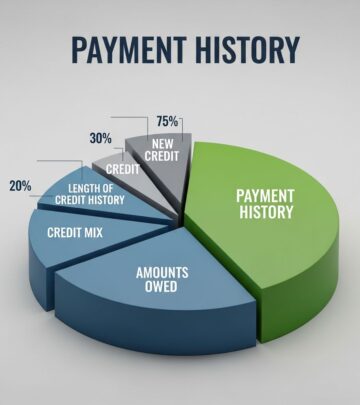
Automatic payments, or autopay, serve as a reliable tool for maintaining financial discipline. By scheduling recurring bill deductions from your bank account, autopay ensures funds transfer on predetermined dates, reducing the risk of oversight. While autopay itself does not directly elevate credit scores, its primary value lies in fostering consistent on-time payments, a cornerstone of credit evaluation models. Payment history constitutes approximately 35% of FICO scores, the most widely used metric in lending decisions. Thus, autopay indirectly supports score improvement by eliminating delays that could otherwise harm your profile.
Understanding Credit Scores and Payment Factors
Credit scores quantify your creditworthiness, drawing from data in reports maintained by bureaus like Experian, Equifax, and TransUnion. These scores range typically from 300 to 850, with higher values signaling lower risk to lenders. Key components include payment history (35%), amounts owed (30%), length of credit history (15%), new credit (10%), and credit mix (10%) for FICO models.
Within this framework, timely payments stand out as the dominant influencer. Lenders review whether bills arrive by due dates; delays beyond 30 days trigger negative reports that linger for seven years, progressively diminishing in impact over time. Autopay mitigates this by automating the process, aligning payments precisely with deadlines and preserving positive history streaks.
- On-time payments build trust: Consistent adherence demonstrates reliability to future creditors.
- Late marks erode scores sharply: A single 30-day delinquency can drop scores by 60-110 points, depending on prior history.
- Recovery takes time: Subsequent perfect payments gradually offset damage, but prevention via autopay proves more efficient.
How Autopay Functions Across Bill Types
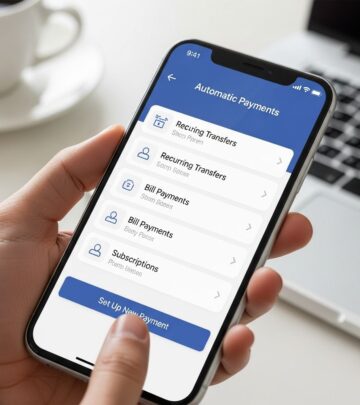
Most financial institutions, credit card issuers, and service providers offer autopay options. For credit cards, select minimum payments, full balances, or fixed amounts via online portals or apps. Banks like Capital One provide flexible AutoPay, allowing adjustments anytime. Utility companies, phone carriers, and even rent portals increasingly support similar features, often integrating with bank bill-pay services.
Setup typically involves linking a checking account, choosing payment amounts, and confirming due date alignments. Payments process electronically, usually via ACH transfers, debiting funds 1-2 days before billing cycles end to account for processing times.
| Bill Type | Autopay Availability | Credit Reporting Impact |
|---|---|---|
| Credit Cards | High (most issuers) | Directly reported; boosts history |
| Loans (auto, personal) | Common | Reported; prevents delinquencies |
| Utilities/Phone | Widespread | Limited unless using Boost services |
| Rent/Mortgage | Variable | Rare reporting; potential via new tools |
Indirect Benefits to Credit Health
Autopay excels at consistency, indirectly fortifying credit through unwavering on-time records. Experian notes that autopay establishes “stellar payment history with minimal effort,” countering forgetfulness that plagues manual payers. For newcomers to credit, it accelerates positive profile development without requiring constant vigilance.
Moreover, avoiding late fees preserves cash flow, preventing debt spirals. A $40 late fee on a credit card compounds with interest, inflating balances and utilization ratios—the second-largest score factor. By paying promptly, autopay keeps utilization low, often under the recommended 30% threshold.
Payment history accounts for 35% of FICO scores and 40% of VantageScore, making on-time automation invaluable for score stability.
Potential Pitfalls and Mitigation Strategies
Despite advantages, autopay carries risks. Insufficient funds top the list: failed debits incur overdraft fees ($35 average) plus creditor penalties, mimicking manual lapses. Fluctuating balances during high-spend periods, like holidays, amplify this threat.
Overspending ranks second. Autopay’s hands-off nature may foster complacency, leading to unchecked charges. PNC warns it “may cause you to ignore your credit card account and lead to overspending”. Fraud detection suffers too; passive monitoring misses unauthorized transactions.
- Monitor balances weekly: Review statements for discrepancies or large purchases.
- Buffer accounts: Maintain 1.5x typical payment in linked checking.
- Hybrid approach: Autopay minimums, manually pay extras.
- Alerts enabled: Set notifications for payments, low funds, and due dates.
Best Practices for Effective Implementation
Optimize autopay by aligning schedules meticulously. Schedule debits 3-5 days pre-due date to buffer processing delays. Opt for full-balance payments where affordable, sidestepping interest and preserving history perfection. For variable spenders, fixed minimums plus manual top-ups balance safety and flexibility.
Designate autopay for high-stakes accounts first—credit cards, loans—before non-reporting bills. Tools like Experian Boost extend benefits to utilities, instantly adding positive data to Experian reports for FICO uplifts. Regularly audit setups: update expired cards, verify amounts post-purchases.
Combine with budgeting apps for holistic oversight. Track spending patterns to anticipate shortfalls, pausing autopay temporarily if needed during income dips.
Real-World Impact: Case Studies and Data
Data underscores autopay’s efficacy. Users report 20-50 point gains after 6-12 months of perfect history post-lates, per Experian insights. CBS highlights expert consensus: consistent autopay bolsters scores via payment history dominance.
Consider a profile with one prior late: switching to autopay yields progressive recovery, as fresh on-time records dilute negatives. New users see faster prime score attainment (670+), easing access to favorable rates.
Alternatives and Complementary Tools
Not all bills suit autopay. Manual calendars or reminders suit irregular expenses. Bank bill-pay services offer scheduling without direct debits, adding oversight layers.
Credit-builder loans or secured cards pair well, automating small payments to seed history. Free services like Experian Boost scan banks for on-time utilities, amplifying non-traditional data.
Frequently Asked Questions
Does autopay directly improve my credit score?
No, but it ensures on-time payments, indirectly supporting scores via strong history.
Can autopay cause overdraft fees?
Yes, if funds are insufficient; maintain buffers and monitor closely.
How soon do late payments affect scores?
After 30 days past due; they remain 7 years but fade over time.
Is autopay safe for all billers?
Generally yes for trusted issuers; verify terms and enable fraud alerts.
Can I cancel autopay anytime?
Typically yes, via account portals, but confirm with providers.
Long-Term Financial Strategy Integration
Incorporate autopay into broader plans: pair with debt snowball methods, prioritizing high-interest cards. As scores rise, refinance opportunities emerge, lowering costs. Track progress via free annual reports or apps, adjusting as life changes—job shifts, expenses—dictate.
Ultimately, autopay transforms reactive bill management into proactive credit stewardship, paving paths to superior lending terms and financial freedom.
References
- Do Automatic Payments Help My Credit Scores? — Capital One. 2022-05-05. https://www.capitalone.com/learn-grow/money-management/do-automatic-payments-help-credit-score/
- How Does Credit Card Autopay Work? — Experian. (Recent update inferred). https://www.experian.com/blogs/ask-experian/how-does-credit-card-autopay-work/
- Should I Set Up Automatic Payments for My Credit Card? — PNC Bank. (Recent). https://www.pnc.com/insights/personal-finance/spend/should-i-set-up-autopay-for-credit-card.html
- Can Automatic Bill Payments Help My Credit Score? — Experian. (Recent). https://www.experian.com/blogs/ask-experian/can-automatic-bill-payments-help-my-credit-score/
- Here’s when you should — and shouldn’t — use autopay for your bills — CBS News. (Recent). https://www.cbsnews.com/news/autopay-credit-card-bills/
Similar Articles








Read full bio of medha deb