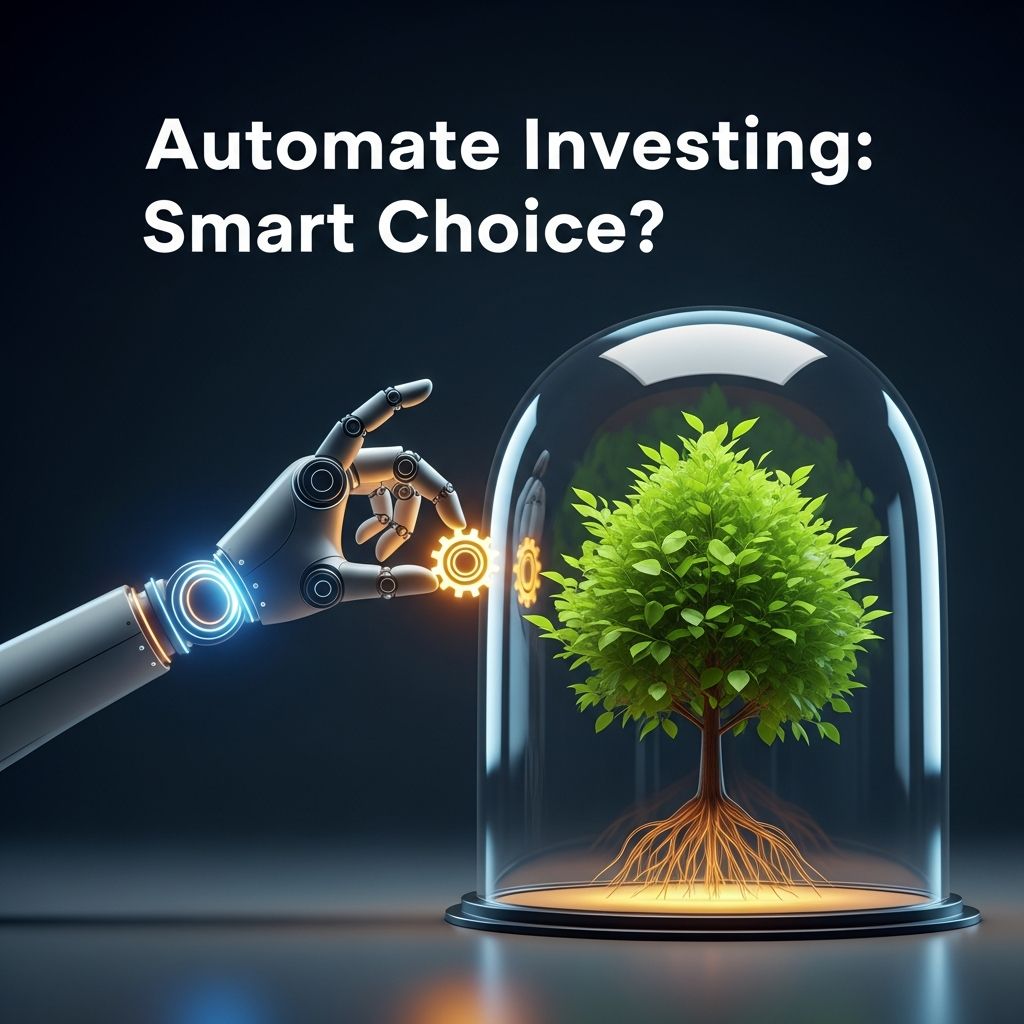
Automate Investing: Smart Choice?
Explore how automated investing boosts consistency and growth while navigating risks like volatility and tech glitches for smarter wealth building.
Automated investing leverages algorithms and platforms to manage portfolios without constant human input, promoting steady wealth accumulation through consistent contributions and rebalancing.
Understanding Automated Investing Basics
Automated investing, often powered by robo-advisors, uses technology to execute trades, diversify assets, and adjust portfolios based on predefined rules. This method contrasts with manual trading by relying on data analysis rather than gut feelings, enabling 24/7 market monitoring. Users input goals, risk levels, and timelines, after which systems handle allocations across stocks, bonds, and ETFs.
Common platforms include those linked to retirement accounts like 401(k)s or individual brokerage services. Contributions occur automatically from paychecks or bank accounts, embodying dollar-cost averaging—investing fixed amounts regularly to mitigate timing risks. A 2021 poll showed 84% of auto-enrolled workers saved sooner, highlighting its nudge toward discipline.
Key Advantages Driving Adoption
Automation shines in efficiency and accessibility. Fees average 0.25%-0.40% annually versus 1% for human advisors, saving thousands over decades on a $100,000 portfolio.
- Time Efficiency: No need for endless research; platforms manage everything, freeing users for life priorities.
- Consistency via Dollar-Cost Averaging: Regular investments smooth out market highs and lows, fostering long-term growth.
- Emotional Discipline: Algorithms ignore panic selling or greed-driven buys during volatility.
- Tax Strategies: Features like tax-loss harvesting sell losers to offset gains, reducing tax burdens automatically.
- Accessibility: Mobile apps enable real-time monitoring and auto-deposits, ideal for busy professionals.
These perks compound: lower costs plus automatic rebalancing keep portfolios aligned with goals, potentially outperforming inconsistent manual efforts.
Potential Drawbacks and Hidden Pitfalls
Despite benefits, automation isn’t flawless. Systems demand oversight to avoid drifts in asset allocation as markets shift.
| Risk Category | Description | Mitigation |
|---|---|---|
| Technological Failures | System crashes or coding bugs miss trades or execute wrongly. | Rigorous testing and backups. |
| Market Volatility | Algorithms falter in unprecedented shocks outside training data. | Market-neutral strategies. |
| Operational Hurdles | Compliance and data inaccuracies lead to poor decisions. | Quality data feeds and regulatory adherence. |
| Overdraw Risks | Auto-pulls from checking accounts cause fees if funds are low. | Buffer balances and alerts. |
| Lack of Personalization | Struggles with complex needs like estate planning. | Hybrid human-AI models. |
Implementation costs can exceed benefits if not scaled properly; a process taking humans 10 hours quarterly might demand 500 hours to automate. “Black box” AI opacity hides decision logic, amplifying model risks.
Who Benefits Most from Automation?
Beginners and passive investors thrive here. Those with steady incomes suit dollar-cost averaging in retirement plans. Tech-savvy millennials favor low-fee robo-platforms for diversification without expertise.
However, high-net-worth individuals or those with unique situations—like business owners needing succession planning—may require human insight. Hybrid models blend automation’s efficiency with advisor expertise for balance.
Steps to Launch Automated Investing
- Assess Goals and Risk: Define timelines, tolerance, and targets.
- Select Platform: Compare fees, features, and insurance (e.g., SIPC coverage).
- Fund Account: Link bank for auto-transfers, starting small.
- Monitor Quarterly: Review allocations, rebalance if drifted.
- Adjust as Needed: Update for life changes like marriage or job shifts.
Start with employer 401(k) matches for free gains before branching to IRAs or taxable accounts.
Real-World Performance Insights
Automation excels in steady markets via rebalancing, but volatility tests adaptability. Market-neutral approaches at firms like BOTS Capital aim for returns irrespective of direction. Tax optimization adds 0.5-1% annual value for taxable accounts.
Over 10 years, a $10,000 auto-invested portfolio at 7% return grows to ~$19,672, versus less with irregular contributions. Compounding underscores consistency’s power.
Future Trends Shaping Automation
AI integration promises advanced risk tools and predictive analytics. Regulatory evolution demands compliance-by-design. Human oversight remains vital amid tech advances. Expect hybrids dominating, merging AI speed with judgment.
Frequently Asked Questions
What is a robo-advisor?
A digital platform using algorithms for portfolio management, rebalancing, and tax strategies at low cost.
Is automated investing safe?
Yes, with FDIC/SIPC protections, but risks like system errors persist—diversify and monitor.
How much to start automating?
Many platforms require $0-$500; employer plans need none beyond contributions.
Does it beat stock picking?
Often yes for average investors, via diversification and discipline over timing attempts.
Can I switch from manual to auto?
Absolutely—transfer assets to robo-platforms seamlessly.
Final Thoughts on Making It Work
Automated investing suits those prioritizing consistency over control. Pair with periodic reviews and hybrids for complex needs. By weighing pros against risks, you harness technology for enduring wealth.
References
- What risks should you weigh when investing through automation? — BOTS Capital. 2023. https://en.bots.io/nieuws/what-risks-should-you-weigh-when-investing-through-automation/
- The Truth About Automated Investment: Is It Right For Your Portfolio? — Vyzer. 2024. https://vyzer.co/blog/knowledgebase/the-truth-about-automated-investment-is-it-right-for-your-portfolio
- 5 Risks of Investment Management Automation — Empaxis. 2023. https://www.empaxis.com/blog/investment-management-automation-good-bad
- Should You Automate Your Investing? — Experian. 2024. https://www.experian.com/blogs/ask-experian/should-you-automate-investing/
- Opportunities and Risks of Artificial Intelligence in Investment Markets — Consumer Federation of America. 2024-10-01. https://consumerfed.org/wp-content/uploads/2024/10/Opportunities-and-Risks-of-Artificial-Intelligence-in-Investment-Markets-Formatted-Final.pdf
Similar Articles








Read full bio of Sneha Tete