Auto LTV Ratio Guide
Master the loan-to-value ratio for smarter car financing decisions and better loan terms.
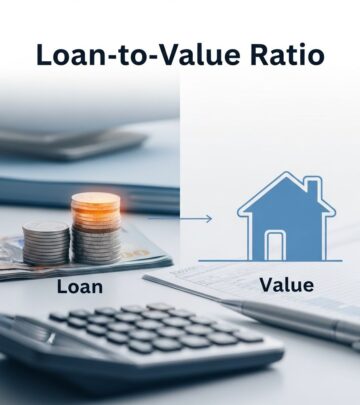
The loan-to-value (LTV) ratio is a critical metric in auto financing that measures the loan amount against a vehicle’s worth. Lenders rely on it to assess risk since the car serves as collateral. A lower LTV signals less risk, often leading to favorable terms, while higher ratios can complicate approvals and increase costs.
Defining Loan-to-Value in Vehicle Loans
In the context of car purchases, LTV represents the percentage of the vehicle’s value covered by the loan. It helps both borrowers and lenders gauge financial exposure. For instance, borrowing $25,000 for a $30,000 car yields an 83% LTV, indicating the lender finances most but not all of the value. This ratio influences everything from interest rates to down payment requirements.
Unlike mortgages, auto LTVs allow more flexibility, with caps often at 120-150% to cover fees or negative equity. Understanding this empowers buyers to negotiate better deals and avoid pitfalls like being underwater on a loan.
Step-by-Step LTV Calculation
Computing your auto LTV is straightforward with these steps:
- Determine the loan amount: For new loans, this is your requested principal; for refinances, check your balance via statements or online portals.
- Assess vehicle value: Use independent sources like Kelley Blue Book or J.D. Power for actual cash value (ACV), not just the sales price. New cars may use MSRP, while used ones rely on wholesale values.
- Apply the formula: Divide loan amount by vehicle value, then multiply by 100: LTV = (Loan Amount ÷ Vehicle Value) × 100.
- Interpret the result: Below 100% means positive equity; above signals potential negative equity.
Example: A $20,000 loan on a $25,000 car gives (20,000 ÷ 25,000) × 100 = 80% LTV. Adding $3,000 in taxes pushes it to 92%.
Why Lenders Prioritize LTV Ratios
Lenders view high LTVs as risky because repossessed vehicles may not cover the full debt if sold at auction. A 100%+ LTV means the car alone can’t repay the loan, heightening default losses. Consequently:
- Approval odds drop for LTVs exceeding 125%, as lenders cap exposure.
- Rates rise with higher ratios to offset risk; sub-80% LTVs often secure prime rates.
- Down payments increase for elevated LTVs, protecting lender interests.
Recent trends show used car LTVs peaking due to market dynamics, underscoring lenders’ caution.
Ideal LTV Targets for Borrowers
| LTV Range | Implications | Typical Lender Response |
|---|---|---|
| <80% | Strong equity position | Best rates, easy approval |
| 80-100% | Balanced risk | Standard terms, minimal scrutiny |
| 100-125% | Increased risk | Higher rates, larger down payment |
| >125% | High risk (negative equity) | Denials common, strict conditions |
Aiming for under 100% ensures you own more equity than debt from day one, shielding against depreciation.
How Vehicle Depreciation Alters LTV Over Time
Cars lose value rapidly—often 20-30% in the first year—impacting LTV dynamically. Principal payments reduce the numerator, but depreciation can widen the gap early on:
- Early loan phase: Fast depreciation may push LTV above 100%, creating an upside-down situation.
- Mid-term: Payments accelerate equity buildup as depreciation slows.
- Late term: LTV drops predictably toward zero.
Monitoring via tools like online calculators helps track this shift and informs decisions like refinancing.
Navigating Negative Equity and High LTVs
Negative equity occurs when loan balance exceeds vehicle value, common with rolled-over debt from trade-ins. Example: Owing $19,000 on a $10,000 trade-in adds $9,000 to a new $21,000 car loan, spiking LTV. Lenders limit absorption—e.g., 110% LTV caps negative equity rollovers.
Strategies to mitigate:
- Increase down payment to lower initial LTV.
- Select higher-value vehicles for more rollover room.
- Shorten loan terms for faster equity gain.
- Refinance when LTV improves.
Strategies to Achieve Favorable LTV Ratios
Proactive steps can optimize your position:
- Leverage trade-ins wisely: Ensure trade value offsets negative equity without inflating new LTV.
- Shop multiple valuations: Compare KBB, NADA, and dealer appraisals for accurate ACV.
- Minimize add-ons: Pay taxes and fees upfront to keep loan amount low.
- Build credit: Strong scores pair with low LTV for premium offers.
- Consider gap insurance: Protects against total loss in high-LTV scenarios.
Pre-calculating LTV arms you for negotiations, potentially saving thousands in interest.
LTV’s Broader Role in Auto Refinancing
Refinancing uses current LTV to secure better rates. Improved equity (lower LTV) from payments or appreciation boosts eligibility. However, persistent high LTVs may require waiting or equity injections. Lenders re-evaluate using updated valuations, so timing matters amid fluctuating markets.
Common Pitfalls and How to Avoid Them
Borrowers often overlook:
- Sales price vs. ACV: Loans base on value, not negotiated price—overpaying hikes LTV.
- Including extras: Fees pushing LTV over 100% trigger penalties.
- Ignoring trends: Used car values vary; recent peaks demand caution.
Always verify LTV pre-purchase with lender quotes.
Frequently Asked Questions
What is a good auto LTV ratio?
Under 80-100% is ideal for best terms; above 125% risks denial or high costs.
Can LTV exceed 100%?
Yes, up to 150% for some lenders to cover fees or equity gaps, but it increases costs.
How does LTV affect interest rates?
Lower LTVs yield lower rates due to reduced risk.
Does LTV matter for used cars?
Absolutely—wholesale values often lower than retail, tightening LTV.
How to lower high LTV?
Increase down payment, pay fees cash, or choose shorter terms.
Key Takeaways for Savvy Financing
Mastering auto LTV equips you to secure advantageous loans, build equity faster, and sidestep common traps. Prioritize accurate valuations, minimize borrowing, and monitor changes for long-term wins.
References
- Car Loan-to-Value Ratio Explained: Why LTV Matters — NerdWallet. 2023. https://www.nerdwallet.com/auto-loans/learn/car-loan-to-value-ratio-explained-why-ltv-matters
- Loan-To-Value Ratio: Car Loan Terminology Explained — Capital One. 2024. https://www.capitalone.com/cars/learn/getting-a-good-deal/loantovalue-ratio-car-loan-terminology-explained/1599
- What is Loan-to-Value (LTV)? — Affinity Federal Credit Union. 2024. https://www.affinityfcu.com/financial-wellbeing/blog/auto-buying/what-is-loan-to-value
- Auto Loan-to-Value Ratio Explained — Experian. 2024-04-18. https://www.experian.com/blogs/ask-experian/auto-loan-to-value-ratio/
- What is Loan-to-Value (LTV) When Financing a Vehicle — Wheeler Auto Center. 2023. https://www.wheelerautocenter.com/what-is-LTV.html
- Auto lenders drive used car loan-to-value ratios to new peaks — Dealership Guy. 2025-08-27. https://news.dealershipguy.com/p/auto-lenders-drive-used-car-loan-to-value-ratios-to-new-peaks-2025-08-27
Similar Articles








Read full bio of Sneha Tete