Auto Loan Rates Guide 2026
Unlock the best auto loan rates in 2026: Compare lenders, understand credit impacts, and calculate costs to finance your next vehicle smartly.
Financing a vehicle purchase requires careful consideration of interest rates, loan terms, and personal creditworthiness to minimize long-term costs. In 2026, average auto loan rates vary significantly based on factors like credit scores and vehicle type, with opportunities for borrowers to secure competitive APRs from credit unions and banks.
Current Landscape of Auto Loan Interest Rates
Auto loan rates in 2026 reflect economic conditions, inflation trends, and lender competition. New car loans typically carry lower rates than used vehicles due to lower risk for lenders. For instance, superprime borrowers (credit scores 781-850) can access new car APRs around 4.66%, while used car rates average 7.70%. National averages for 60-month new car loans hover near 6.96%, with used car equivalents at higher levels.
Credit unions often lead with the lowest starting rates, such as 3.39% for new cars through specific services, compared to national banks at 5.5%-7.5%. Dealer financing, while convenient, tends to range from 6.0%-9.0%, sometimes with promotional incentives.
Factors Influencing Your Auto Loan Rate
Several elements determine the APR offered on an auto loan. Understanding these can help borrowers improve their terms.
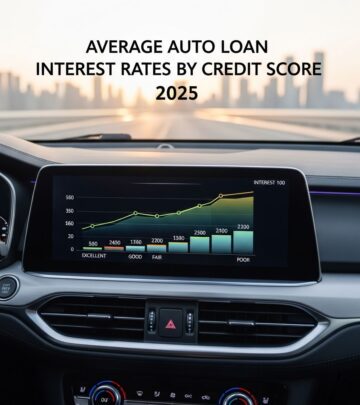
- Credit Score: The primary driver, with tiered rates: Superprime (781+) at 4.66% new/7.70% used; Prime (661-780) at 6.27%/9.98%; Nonprime (601-660) at 9.57%/14.49%; Subprime (501-600) at 13.17%/19.42%; Deep subprime (300-500) at 16.01%/21.85%.
- Loan Term: Shorter terms (24-36 months) often yield lower rates but higher monthly payments. Longer terms like 72-84 months reduce monthly costs but increase total interest.
- Vehicle Type and Age: New cars qualify for better rates; used cars, especially private-party purchases, face higher APRs.
- Down Payment: Larger down payments reduce lender risk, potentially lowering rates.
- Lender Type: Credit unions prioritize members with rates 4.5%-6.0%; banks offer broader access at slightly higher costs.
Top Lenders and Their Competitive Rates
Comparing lenders reveals standout options for different needs. Here’s a breakdown of leading providers based on starting APRs, terms, and features as of 2026.
| Lender | Starting APR | Terms (Months) | Loan Amount | Best For |
|---|---|---|---|---|
| PenFed Credit Union | 3.39% (new, with service) | 36-84 | Up to $150k | Rate discounts via car-buying service |
| Southeast Financial CU | 3.50% | 12-84 | Up to $100k | Short-term loans |
| Digital Federal CU (DCU) | 4.99% (with discounts) | Up to 84 | Up to 130% vehicle value | Used cars |
| Capital One | 5.00% (60-mo new) | 24-84 | Starting $4k | Overall flexibility |
| PNC Bank | 7.69% (autopay) | 12-84 | $5k-$100k | Private-party purchases |
PenFed stands out for new car buyers using their TrueCar-powered service, dropping rates to 3.39% from higher base levels. Southeast Financial offers competitive short loans starting at 3.50% for scores above 600.
New vs. Used Car Financing: Key Rate Differences
New vehicles benefit from manufacturer incentives and lower depreciation risk, yielding rates like 5.00% from Capital One for 60 months. Used cars see higher averages: 5.46% starting for 60 months at Capital One, climbing to 7.70% for superprime borrowers.
Private-party used car loans often carry the highest rates, such as PNC’s 7.69%, due to valuation challenges. Borrowers can finance up to 130% of a used car’s value with DCU, aiding those needing extra funds.
Impact of Loan Terms on Payments and Total Cost
Loan duration profoundly affects affordability. For a $40,000 loan, here’s how terms alter payments and interest using average rates.
| Term | Monthly Payment | Total Interest |
|---|---|---|
| 24 months | $1,599 | $3,375 |
| 36 months | $1,113 | $5,068 |
| 48 months | $871 | $6,807 |
| 60 months | $727 | $8,593 |
| 72 months | $631 | $10,424 |
| 84 months | $563 | $12,302 |
Shorter terms save thousands in interest but demand higher monthly outlays. Tools like Navy Federal’s calculator help simulate scenarios.
Strategies to Secure the Lowest Possible Rates
Borrowers can optimize rates through proactive steps:
- Boost Credit Score: Pay down debt and correct errors before applying; even 20-50 point gains shift tiers.
- Shop Multiple Lenders: Prequalify without hard inquiries to compare offers from credit unions, banks, and online platforms.
- Increase Down Payment: 20% or more signals commitment and reduces principal.
- Opt for Shorter Terms: If budget allows, cut interest accrual.
- Leverage Discounts: Autopay, membership perks, or car-buying services like PenFed’s can shave 0.25%-0.50% off APR.
- Time Your Purchase: End-of-month or year-end dealer promotions may bundle low rates.
Credit Score Tiers and Expected Rates
Rates scale sharply by FICO score bands. Bankrate notes averages like 6.83% for 48-month new cars overall.
| Credit Tier | New Car APR | Used Car APR |
|---|---|---|
| Superprime (781-850) | 4.66% | 7.70% |
| Prime (661-780) | 6.27% | 9.98% |
| Nonprime (601-660) | 9.57% | 14.49% |
| Subprime (501-600) | 13.17% | 19.42% |
| Deep Subprime (300-500) | 16.01% | 21.85% |
Min scores for top lenders range from 580-600, opening doors for fair-credit buyers.
Comparing Lender Types: Pros and Cons
Each financing source suits different profiles.
| Type | Rate Range (60-mo, 730+) | Pros | Cons |
|---|---|---|---|
| Credit Unions | 4.5%-6.0% | Low rates, member perks | Membership required |
| National Banks | 5.5%-7.5% | Convenient access | Higher fees possible |
| Dealers | 6.0%-9.0% | Instant approval | Markup risks |
Common Pitfalls in Auto Financing
Avoid these to prevent overpaying:
- Skipping rate shopping, accepting the first offer.
- Ignoring total loan costs beyond monthly payments.
- Overlooking fees like origination or prepayment penalties.
- Financing beyond affordability, leading to negative equity.
Frequently Asked Questions (FAQs)
What are the best auto loan rates in 2026?
Starting rates as low as 3.39% from PenFed for new cars via their service; 3.50% from Southeast Financial without.
How does credit score affect car loan APR?
Higher scores unlock lower tiers: 4.66% superprime vs. 16.01% deep subprime for new cars.
Is it better to finance new or used cars?
New cars offer lower rates (e.g., 5.00%) but higher prices; used suit budgets despite 7.70%+ APRs.
Should I get preapproved for an auto loan?
Yes, it strengthens negotiation power and reveals personalized rates without credit impact initially.
Can I refinance my auto loan for a better rate?
Absolutely, if rates drop or credit improves, potentially saving thousands over the term.
Final Steps to Smart Auto Financing
Start by checking your credit report, using comparison tools, and applying to 3-5 lenders. Calculate total costs with online simulators to ensure alignment with your budget. In 2026, disciplined shoppers can lock in rates under 5% with strong profiles.
References
- Compare the Best Auto Loan Rates in April 2026 — LendingTree. 2026. https://www.lendingtree.com/auto/
- Best Car Interest Rates 2026: Compare & Save — Broadview FCU. 2026. https://www.broadviewfcu.com/blogs/best-car-interest-rates-compare/
- Auto Loan Rates & Financing in 2026 — Bankrate. 2026-03-25. https://www.bankrate.com/loans/auto-loans/rates/
- Best Auto Loan Rates and Financing: Compare Lenders — NerdWallet. 2026. https://www.nerdwallet.com/auto-loans/best/auto-loans-for-good-fair-and-bad-credit
- Auto Loan Comparison Calculator — Navy Federal Credit Union. 2026. https://www.navyfederal.org/makingcents/tools/car-loan-comparison-calculator.html
Similar Articles








Read full bio of Sneha Tete