Auto Loan Rates In 2025: 5 Credit Tiers And What They Pay
Navigate current auto loan rates, find best lenders, and learn how to secure favorable financing terms.
Auto Loan Rates & Financing in 2025
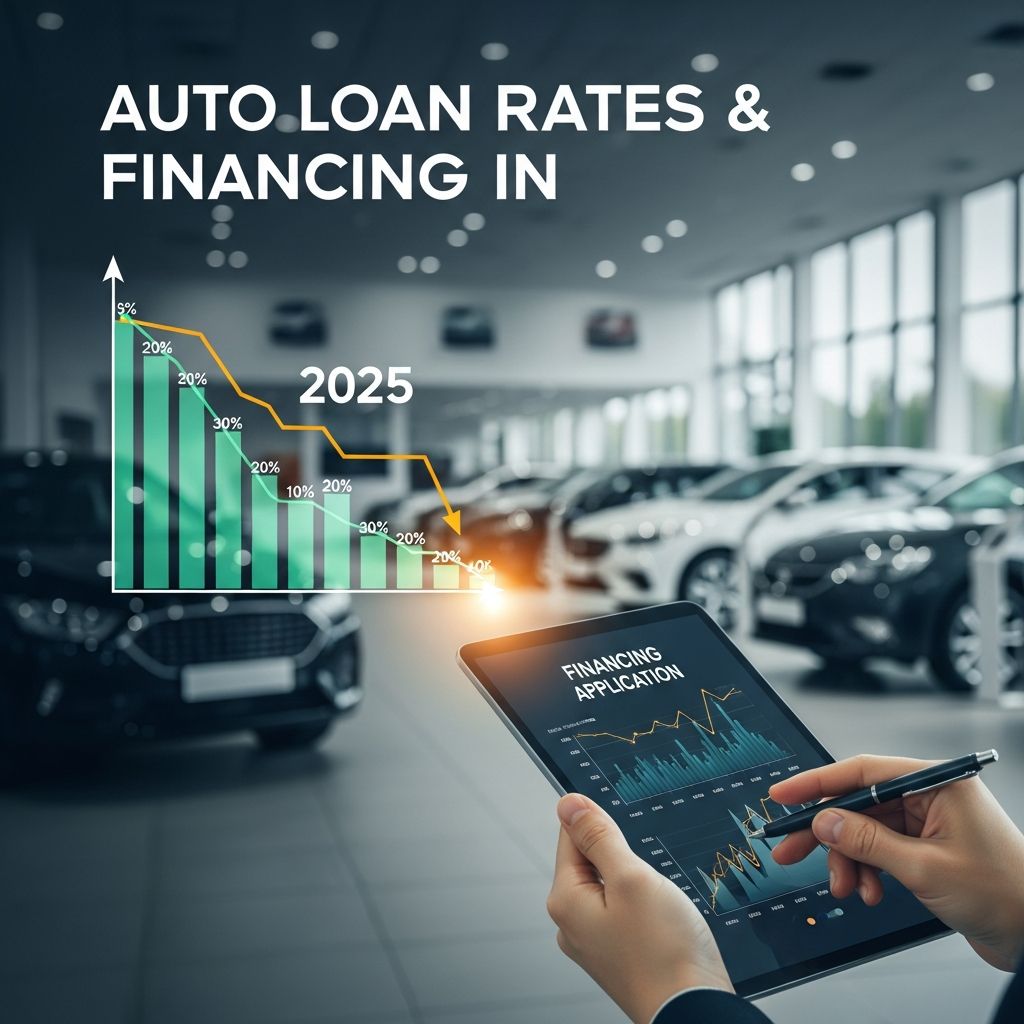
The auto lending landscape continues to evolve as we navigate through 2025. With the Federal Reserve implementing strategic rate cuts and the economy showing varied signals, understanding current auto loan rates and financing options has become more critical than ever for prospective vehicle buyers. Whether you’re purchasing a new car, considering a used vehicle, or exploring refinancing opportunities, knowing how rates work and what factors influence your individual rate can save you thousands of dollars over the life of your loan.
As of November 2025, the average auto loan interest rate sits at 7.05% for a 60-month new car loan, reflecting the current market conditions shaped by Federal Reserve policy, inflation trends, and lender competition. However, your actual rate will depend on numerous personal and financial factors that go well beyond this national average.
Current Auto Loan Rates by Credit Score
One of the most significant factors determining your auto loan rate is your credit score. Financial institutions use credit scores as a primary indicator of lending risk, and the variation across different credit tiers is substantial. Understanding where you fall in the credit score spectrum can help you set realistic expectations for financing:
| FICO Score Range | Credit Tier | New Car Loan Rate | Used Car Loan Rate |
|---|---|---|---|
| 781-850 | Superprime | 5.27% | 7.15% |
| 661-780 | Prime | 6.78% | 9.39% |
| 601-660 | Near Prime | 9.97% | 13.95% |
| 501-600 | Subprime | 13.38% | 18.90% |
| 300-500 | Deep Subprime | 15.97% | 21.58% |
The difference between borrowers with excellent credit and those with poor credit is dramatic. A superprime borrower might secure a new car loan at 5.27%, while a deep subprime borrower could face rates as high as 15.97% for the same vehicle. Over a five-year loan, this difference translates into tens of thousands of dollars in additional interest payments.
How Federal Reserve Policy Impacts Auto Loan Rates
The Federal Reserve doesn’t directly set auto loan rates, but its decisions have a cascading effect throughout the lending industry. When the Federal Reserve adjusts the federal funds rate—the interest rate at which banks lend to each other overnight—it influences the cost at which financial institutions can borrow money, which they pass along to consumers through auto loan rates.
In 2024, the Federal Reserve cut rates three times, helping to bring some relief to borrowers after years of elevated rates. By 2025, the Fed has continued this trend with two additional cuts, bringing the federal funds rate to 3.75-4 percent as of October 2025. However, despite these cuts, auto loan rates have shown an uneven decline and have remained relatively elevated compared to pre-pandemic levels.
It’s important to note that auto loan rates don’t move in lockstep with Federal Reserve decisions. Lenders also consider inflation expectations, market competition, and their own risk assessments when setting rates. This means that even when the Fed cuts rates, auto loan rates may take time to decline or may not decrease as much as borrowers might expect.
Factors Beyond Interest Rates That Affect Your Monthly Payment
While interest rates receive significant attention, they’re only part of the equation determining your total cost of car ownership. Recent analysis from the Federal Reserve reveals a surprising finding: what’s really driven up car payments in recent years hasn’t been the interest rates themselves, but rather car prices and the amounts that borrowers are financing.
The average price of a new car reached $50,080 in September 2025—an all-time high and the first time this benchmark crossed the $50,000 threshold. This increase in vehicle prices directly correlates to larger loan amounts. The Federal Reserve’s research found that a 1 percent shift in the size of the loan directly correlates to a 1 percent change in monthly payments, while interest rates have far less impact on payment increases.
For example, if you financed $41,720 for a new vehicle in the first quarter of 2025 compared to $41,983 in the second quarter, that additional $263 in financed amount would result in proportionally higher monthly payments regardless of interest rate changes. Used vehicle loan amounts similarly increased to $26,795 in the second quarter of 2025.
This means that car shoppers focused solely on securing the lowest interest rate may be overlooking a more effective strategy: negotiating the price of the vehicle itself. A lower purchase price translates directly to a smaller loan amount and lower monthly payments across any interest rate environment.
Best Auto Loan Lenders for Different Credit Profiles
The auto lending market includes numerous options catering to different credit profiles. For borrowers with fair credit seeking to refinance existing loans, several specialized lenders offer competitive options. Caribou, for instance, serves as a comparison platform for fair credit borrowers, helping consumers refinance existing loans to potentially secure better rates or terms. Caribou requires a minimum credit score of 640, positive vehicle equity, and a vehicle with no more than 120,000 miles. The APR ranges from 4.64% to 28.55%, with the lowest rates available to borrowers with excellent credit on 36-month terms.
For those with fair credit seeking to purchase a vehicle, myAutoLoan specializes in serving borrowers with FICO scores starting at 600. The platform requires applicants to be at least 18 years old with gross annual earnings of at least $21,600 for purchase loans. These specialized lenders recognize that many consumers don’t fall into the superprime category but still deserve access to reasonable financing options.
Understanding APR vs. Interest Rate
When shopping for auto loans, you’ll encounter two related but distinct terms: interest rate and annual percentage rate (APR). The interest rate is simply the cost of borrowing the principal amount. The APR, however, includes the interest rate plus any loan fees, providing a more complete picture of the total cost of borrowing.
For example, a lender might advertise a 6% interest rate, but after adding origination fees, documentation fees, and other charges, the actual APR might be 6.5%. Always compare APR figures rather than just interest rates when evaluating loan offers, as APR gives you a true comparison of the total cost across different lenders.
Rate Forecasts for 2025 and Beyond
Bankrate’s Chief Financial Analyst Greg McBride predicts that by the end of 2025, five-year new car loan rates will reach an average of 7.0 percent, while four-year used car loans should settle around 7.75 percent. However, this forecast comes with important caveats, particularly for borrowers with less-than-perfect credit.
McBride notes that while rates may ease for most borrowers in 2025, the high-rate environment will persist for those with subprime and near-prime credit scores. This means that even as average rates decline, the gap between what prime borrowers pay and what subprime borrowers pay may actually widen. For bad-credit borrowers, improving credit scores before applying for an auto loan may yield more savings than waiting for overall rate decreases.
Increased competition between lenders is expected to help drivers get good rates, particularly those with strong credit profiles. Banks are looking to spur loan demand as the economy continues, and the Fed is expected to help by cutting interest rates further. However, the impact of tariffs on vehicle prices—both new and used—could offset some benefits from lower interest rates.
Strategies to Get the Best Auto Loan Rate
Several strategies can help you secure favorable auto loan financing:
Improve Your Credit Score Before Applying: Even small improvements in your credit score can result in significant rate reductions. Take time to pay down existing debt, correct any errors on your credit report, and demonstrate responsible credit behavior before applying for an auto loan.
Shop Around with Multiple Lenders: Different lenders have different underwriting standards and risk assessments. Getting pre-approval offers from multiple banks, credit unions, and online lenders allows you to compare rates and choose the best option.
Consider a Shorter Loan Term: While longer-term loans (60-84 months) result in lower monthly payments, shorter-term loans (36-48 months) typically come with lower interest rates. If your budget allows, a shorter term saves you money in interest.
Negotiate the Vehicle Price: As mentioned earlier, the purchase price has a larger impact on your monthly payment than the interest rate. Negotiate aggressively on the vehicle price, and consider buying a less expensive model to reduce your overall loan amount.
Consider a Larger Down Payment: A substantial down payment reduces the amount you need to finance, resulting in lower monthly payments and sometimes a lower interest rate, as you’re borrowing less relative to the vehicle’s value.
Auto Loan Refinancing Options
If you already have an auto loan at a high interest rate, refinancing can be an excellent strategy to reduce your monthly payment or shorten your loan term. Refinance rates currently range from just over 4% to 30% or more, depending on credit profile and vehicle condition.
The ideal candidate for auto loan refinancing is someone whose credit score has improved since they took out their original loan, or someone who took out a loan when rates were higher and rates have since declined. By refinancing, you could potentially lower your interest rate, reduce your monthly payment, or pay off your loan faster.
When considering refinancing, compare offers from multiple lenders. Be aware of any prepayment penalties on your existing loan and factor in any new fees associated with refinancing. Generally, refinancing makes sense if you can save at least $50-100 per month or reduce your loan term by a year or more.
The Impact of Vehicle Age and Type on Rates
Beyond credit score and loan amount, the specific vehicle you’re financing influences your rate. Lenders assess the age, condition, and type of vehicle when setting rates because these factors affect the vehicle’s value and the lender’s risk if they need to repossess and resell it.
Newer vehicles typically qualify for lower rates than older vehicles. Luxury vehicles may carry different rates than practical sedans. Vehicles with a strong resale value and reliable repair histories may qualify for better rates than vehicles known for depreciation or mechanical issues. When selecting a vehicle, consider how the lender will view it, not just how much you like it.
Credit Requirements for Different Loan Types
Different lenders have varying minimum credit requirements. Traditional banks often require FICO scores of at least 660-680 for conventional auto loans. Credit unions may be more flexible, sometimes working with borrowers in the 600-620 range. Online lenders and specialized subprime lenders serve borrowers with scores below 600, though at significantly higher interest rates.
Beyond credit score, lenders evaluate your debt-to-income ratio, employment history, income stability, and existing debt obligations. A strong credit score combined with stable income and low existing debt obligations will result in the most favorable terms.
Frequently Asked Questions About Auto Loan Rates
Q: What is today’s average auto loan rate?
A: As of November 2025, the average auto loan interest rate for a 60-month new car loan is 7.05%. However, rates vary significantly based on credit score, loan term, vehicle type, and lender. Superprime borrowers may secure rates below 5.3%, while subprime borrowers could face rates exceeding 13%.
Q: How do Federal Reserve rate cuts affect my auto loan rate?
A: Federal Reserve rate cuts typically lead to lower auto loan rates over time, though the relationship isn’t immediate or one-to-one. When the Fed cuts its benchmark rate, banks’ borrowing costs decrease, which they often pass along to consumers through lower loan rates. However, other factors like inflation expectations and lender competition also influence rates.
Q: Is it better to focus on getting a low interest rate or a low car price?
A: While both matter, research shows that vehicle price has a much larger impact on your monthly payment than interest rate. A 1% reduction in loan amount leads to a 1% reduction in monthly payments, while interest rate changes have a smaller effect. Focus on negotiating the best possible vehicle price first, then optimize your financing rate.
Q: Should I refinance my auto loan?
A: Refinancing makes sense if your credit score has improved significantly since you took out your original loan, or if current rates are substantially lower than your current rate. Calculate potential savings by comparing your current rate to available refinance rates, accounting for any new fees. Refinancing typically makes sense if you’ll save at least $50-100 monthly.
Q: Can I get an auto loan with a credit score below 600?
A: Yes, several specialized lenders work with borrowers who have credit scores below 600, including those in the deep subprime category (300-500). However, rates for this category can exceed 20% for used cars. Consider improving your credit score before applying, as even modest improvements can save thousands in interest.
Q: How does down payment size affect my auto loan rate?
A: A larger down payment reduces the loan-to-value ratio, which typically results in a lower interest rate because the lender’s risk decreases. Additionally, financing a smaller amount means lower monthly payments even at the same interest rate. If possible, aim for a down payment of at least 10-20% of the vehicle’s purchase price.
References
- Auto Loan Rate Forecast For 2025 — Bankrate. 2025. https://www.bankrate.com/loans/auto-loans/auto-loan-rate-forecast/
- How Inflation Affects Car Loan Rates — Bankrate. 2025. https://www.bankrate.com/loans/auto-loans/how-inflation-affects-auto-loan-rates/
- When Will Car Interest Rates Start Dropping? — Bankrate. 2025. https://www.bankrate.com/loans/auto-loans/when-will-auto-loan-rates-drop/
- Federal Reserve Monetary Policy Decisions — Board of Governors of the Federal Reserve System. 2025. https://www.federalreserve.gov/newsevents/pressreleases/
- Average New Car Prices in September 2025 — Kelley Blue Book. 2025. https://www.kbb.com/
- Best Auto Loan Refinance Rates for November 2025 — Bankrate. 2025. https://www.bankrate.com/loans/auto-loans/refinance-rates/
Similar Articles








Read full bio of medha deb