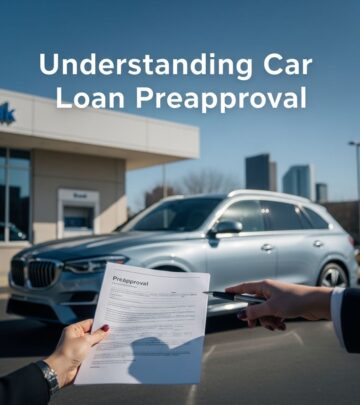
Secure Better Auto Loan Terms: Pre-Approval Strategy
Master the art of obtaining favorable car financing before stepping into a dealership.

The car-buying process involves numerous critical decisions, and one of the most significant choices occurs before you ever step onto a dealership lot. Many prospective vehicle owners wonder whether they should secure financing independently or wait to explore dealership financing options. The evidence overwhelmingly supports obtaining pre-approval through external lenders before visiting a dealership, a strategy that can substantially impact your overall borrowing costs and purchasing flexibility.
Understanding the Financial Advantage of Pre-Dealership Financing
When you approach a dealership without pre-arranged financing, you immediately surrender substantial negotiating leverage. Dealerships typically partner with captive finance companies or maintain relationships with multiple lending institutions to facilitate on-site loan origination. While this convenience may seem attractive, it comes at a measurable cost to consumers.
Dealership finance managers often apply rate markups on top of the wholesale rates provided by their lending partners. These markups—sometimes spanning several percentage points—represent the dealership’s compensation for originating the loan. By securing financing independently, you effectively bypass this intermediary cost structure and access wholesale rates directly. This distinction translates into tangible savings across the loan term, particularly for longer-duration financing arrangements.
The Pre-Qualification Process: Your First Step
Before committing to a formal application, most consumers benefit from understanding their preliminary loan eligibility through pre-qualification. This process involves providing lenders with income and credit score information to receive estimated rate ranges and borrowing capacity.
The critical advantage of pre-qualification is that it typically does not trigger a hard credit inquiry. This distinction allows you to evaluate multiple lending options simultaneously without accumulating multiple hard inquiries that could negatively impact your credit profile. Most financial institutions now offer streamlined online pre-qualification processes requiring minimal time investment, making it practical to compare offers from three to four potential lenders.
Transitioning to Pre-Approval: Securing Concrete Terms
Once you have evaluated pre-qualification offers and identified your preferred lender, the next progression involves submitting a full pre-approval application. Pre-approval represents a more substantial commitment than pre-qualification; it includes a formal hard credit check and results in specific loan terms rather than estimates.
A pre-approval letter provides definitive information regarding your maximum borrowing amount, the annual percentage rate applicable to your loan, and the available loan term options. This documentation serves dual purposes: it clarifies your precise purchasing budget and provides official evidence of your creditworthiness when negotiating with dealership personnel.
Most lenders impose timeframes—typically between 30 and 60 days—during which you must finalize the loan by submitting your complete application after finding a specific vehicle. This window accommodates the vehicle selection and negotiation process without requiring you to identify your specific purchase before submitting pre-approval documentation.
Preparation Steps Before Applying for Auto Financing
Successful pre-approval applications require thorough preparation. Taking proactive steps before submitting formal requests substantially increases approval probability and helps secure the most favorable available terms.
Reviewing Your Credit Profile
Your credit report forms the foundation of lender decision-making. Before applying for any auto loan, obtain a copy of your credit report from all three major bureaus and carefully examine the contents for inaccuracies or fraudulent entries. If you identify errors, begin the dispute process at least 30 days before submitting loan applications to allow adequate time for corrections.
Additionally, review your current debt obligations and calculate your debt-to-income ratio—the percentage of your gross monthly income consumed by existing debts. Lenders heavily weight this metric when evaluating your capacity to manage additional financing.
Gathering Essential Documentation
Lenders require specific documentation to verify your financial stability and identity. Assembling these materials before initiating the pre-approval process accelerates the entire timeline. Essential documents typically include:
- Valid government-issued identification
- Recent pay stubs or alternative income verification documentation
- Tax returns or W-2 forms covering the previous two years
- Bank statements demonstrating available assets
- Proof of residence such as utility bills or lease agreements
- Employment verification letters
Having these materials prepared demonstrates organizational commitment and prevents unnecessary delays during the application review process.
Managing Credit Responsibly During Application
During the period between submitting pre-approval applications and finalizing your purchase, exercise caution regarding new credit activity. Avoid opening additional credit accounts or making substantial purchases, as these actions can negatively influence your credit profile and potentially result in pre-approval withdrawal.
Evaluating Lender Options and Rate Comparisons
Selecting the appropriate lending partner significantly influences both your loan terms and the overall borrowing experience. Different institution types offer varying advantages in the auto lending marketplace.
| Lender Type | Typical Rate Position | Key Advantages | Consideration |
|---|---|---|---|
| Credit Unions | Often most competitive | Member-focused organizations with favorable rates and flexible terms | Membership requirements may apply |
| Traditional Banks | Moderate to competitive | Established institutions with robust technology and widespread availability | May require minimum credit scores |
| Captive Finance Companies | Variable by manufacturer | Direct manufacturer relationships and promotional incentives available | Often higher rates for average credit profiles |
| Online Lenders | Competitive to variable | Streamlined processes with rapid approval decisions | Less regulated; verify reputation carefully |
Research multiple lender websites to compare their advertised rate ranges and qualification requirements. Many lenders provide prequalification quotes via phone inquiries, allowing you to discuss how their specific offerings align with your financial situation without immediately submitting formal applications.
Vehicle Research: Informing Your Budget Decisions
Establishing an appropriate budget requires understanding vehicle market values and associated ownership costs beyond the purchase price. Specialized automotive resources provide transparency regarding typical pricing for vehicles matching your specifications and location.
Platforms like Kelley Blue Book and Edmunds enable detailed market research, revealing average pricing for specific makes and models in your geographic region. These resources also estimate maintenance costs, fuel consumption, and insurance premiums for various vehicles, providing comprehensive budget planning data. Armed with this information, you can establish a realistic purchasing budget that accounts for total ownership costs rather than focusing exclusively on monthly payment amounts.
Negotiation Strategy: Leveraging Your Pre-Approval
Arriving at a dealership with pre-approval documentation fundamentally alters the negotiation dynamic. You transition from a buyer seeking financing approval to a cash buyer from the dealership’s perspective. This position substantially strengthens your negotiating power.
Present your pre-approval letter to the dealership finance manager and request that they attempt to match or exceed your current pre-approved rate. While dealerships do not consistently offer the most competitive rates in the broader lending market, competitive pressure from your external pre-approval may motivate dealership finance teams to improve their initial offers. If dealership financing proves superior to your pre-approval terms, you retain the flexibility to accept their offer. If your external pre-approval remains more favorable, you have established your alternative option and can proceed with confidence.
Expediting the Purchase Timeline Through Pre-Planning
Pre-approval streamlines the entire purchase process by eliminating financing uncertainty. Traditional dealership financing processes can extend the purchasing timeline, sometimes requiring additional documentation or underwriting reviews. When you already possess pre-approval documentation, dealership personnel can proceed directly to vehicle selection and purchase negotiation rather than spending time on loan application processes.
This efficiency becomes particularly valuable when you identify your desired vehicle and wish to complete the purchase expeditiously. Many dealership transactions finalize within one to three days, and pre-approval eliminates financing as a potential complication in this timeline.
Final Loan Review and Documentation
Before finalizing any loan agreement, whether through external pre-approval or dealership financing, thoroughly review all terms and conditions. Verify that the interest rate, loan amount, term length, and monthly payment align with your pre-approval documentation or negotiated agreements.
Additionally, confirm that vehicle information including the Vehicle Identification Number (VIN) and current mileage are accurately reflected in loan documentation. Lenders require proof of comprehensive insurance coverage before funding the loan, so contact your insurance provider to add the new vehicle to your policy and obtain necessary documentation for dealership submission.
Common Questions About Auto Loan Pre-Approval
Does pre-approval guarantee that I will receive the approved amount?
Pre-approval represents a tentative commitment based on the information you provided during the application process. Lenders retain the right to adjust terms if material changes occur between pre-approval issuance and loan finalization, such as job changes or significant credit deterioration. However, assuming your circumstances remain stable, pre-approval provides substantial assurance regarding your borrowing capacity.
How long does pre-approval remain valid?
Pre-approval validity periods typically range from 30 to 60 days, though specific timeframes vary by lender. Verify the expiration date on your pre-approval documentation and plan your vehicle purchase within this window to ensure that your approved terms remain applicable.
Can I switch to dealership financing if I receive a better offer?
Yes, you retain complete flexibility regarding financing choices. Having pre-approval establishes your baseline rate and terms, allowing you to evaluate dealership offers objectively. If dealership financing proves superior, you can accept their offer. Your pre-approval serves as a protective benchmark rather than a binding commitment.
Will multiple pre-approval applications damage my credit score?
Pre-qualifications typically do not impact credit scores because they do not involve hard credit inquiries. However, each pre-approval application does trigger a hard inquiry. While credit scoring models recognize that auto loan shopping typically involves multiple inquiries, most systems treat inquiries occurring within 14 to 45 days as a single shopping event. Consequently, you can prequalify with multiple lenders and apply for pre-approval with three to four institutions without substantially damaging your credit.
References
- Get Preapproval Before Going To The Dealership — Bankrate. 2025. https://www.bankrate.com/loans/auto-loans/car-finance-before-dealership/
- How to Get Approved for a Car Loan: The Ultimate Guide — AutoFanatics USA. https://www.autofanaticsusa.com/blog/get-approved-for-car-loan
- How to Get a Pre-Approved Car Loan — Nissan USA. https://www.nissanusa.com/experience-nissan/news-and-events/how-to-get-pre-approved-car-loan.html
- The Car-Buying Process – Auto Loans — Navy Federal Credit Union. https://www.navyfederal.org/loans-cards/auto-loans/auto-learning-center/car-buying-process.html
- How Do Auto Loan Pre-Approvals Work? — Space Coast Credit Union. https://www.sccu.com/articles/auto/how-do-auto-loan-pre-approvals-work
- How Does Financing Work at a Car Dealership? — Chapford Sales. https://www.chapfordsales.com/how-does-financing-work-at-a-car-dealership/
- What should I know before I finalize a car or auto loan? — Consumer Finance Protection Bureau. https://www.consumerfinance.gov/ask-cfpb/what-should-i-know-before-i-finalize-a-car-or-auto-loan-en-2131/
Similar Articles








Read full bio of Sneha Tete