Auto Loan Payment Calculator: Comprehensive Guide
Master your monthly car payments with comprehensive calculation guides

Purchasing a vehicle is one of the most significant financial decisions most people make in their lifetime. For the majority of car buyers, financing plays a crucial role in making this purchase accessible. To make informed decisions about your automotive investment, understanding how monthly payments are calculated and what factors influence them is essential. Payment estimation tools have become invaluable resources for prospective buyers looking to understand their financial obligations before committing to a purchase.
What Is an Auto Loan Payment Calculator?
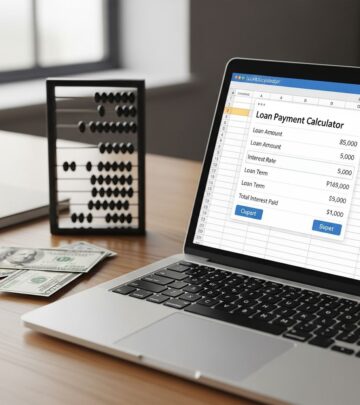
An auto loan payment calculator is a digital tool designed to help potential buyers estimate their monthly vehicle payments based on specific loan parameters. These calculators work by taking key pieces of financial information and applying mathematical formulas to project what your regular payments would look like over the life of the loan. Rather than relying on guesswork or complicated manual calculations, these tools provide quick, accurate estimates that can guide your purchasing decisions.
The primary purpose of these calculators is to offer transparency in the borrowing process. By inputting a few essential details about your intended purchase and financing scenario, you can see exactly what your financial commitment would look like month after month. This clarity allows you to evaluate whether a particular vehicle fits within your budget and financial comfort zone.
Key Variables That Shape Your Monthly Payment
Several interconnected factors determine what your actual monthly payment will be when you finance a vehicle. Understanding each of these variables helps you appreciate why two seemingly similar loans might result in significantly different monthly obligations.
The Loan Principal Amount
The loan principal is the total amount of money you’re borrowing from a lender to purchase your vehicle. This is not necessarily the full price of the car. If you make a down payment, that amount reduces your principal. For example, if a vehicle costs $35,000 and you provide a $7,000 down payment, your loan principal would be $28,000.
The principal is influenced by several components including the vehicle’s purchase price, applicable taxes, documentation fees, and any add-ons like extended warranties. Some buyers choose to roll additional costs into their loan rather than paying them upfront, which increases the principal amount and therefore the total interest paid over the loan’s duration.
Interest Rate and Annual Percentage Rate
The interest rate, often expressed as an Annual Percentage Rate (APR), represents the cost of borrowing money from your lender. This rate varies significantly based on multiple factors including your credit score, the size of your down payment, the loan term you select, and current market conditions.
It’s important to distinguish between the simple interest rate and the APR. While the interest rate reflects just the cost of the borrowed amount, the APR includes both interest and any fees charged by the lender, providing a more complete picture of your borrowing costs. When comparing loan offers from different institutions, the APR gives you a more accurate basis for comparison.
The Length of Your Loan Term
Loan term refers to the number of months you’ll have to repay your borrowed funds. Most auto loans range from 36 to 72 months, though some lenders offer terms as short as 24 months or as long as 84 months. The average new car loan currently extends to approximately 68 months.
Your choice of loan term creates a fundamental trade-off: a longer term results in lower monthly payments because the borrowed amount is spread across more payment periods, but you’ll pay significantly more interest overall. Conversely, a shorter loan term means higher monthly payments but substantially less total interest expense.
How Payment Calculations Work
Auto loan payment calculators use a standardized mathematical formula to determine your monthly obligation. The calculation takes your loan principal, divides it across the number of payment periods, and adds the proportionate interest for each month based on your APR.
The formula accounts for the fact that interest compounds over time. Early in your loan, a larger portion of each payment goes toward interest, with a smaller portion reducing your principal. As you progress through the loan term, this ratio gradually shifts, and more of each payment goes toward paying down the principal amount you borrowed.
Most online calculators perform these complex calculations instantly, allowing you to experiment with different scenarios. You can see how adjusting your down payment, extending or shortening your loan term, or shopping for a better interest rate impacts your monthly obligation.
Evaluating Different Financing Scenarios
One of the greatest advantages of payment calculators is the ability to model various purchasing scenarios before visiting a dealership. This preparation gives you significant negotiating power and helps ensure you’re making a financially sound decision.
Down Payment Impact Analysis
Testing different down payment amounts reveals how this upfront investment affects your long-term costs. A larger down payment reduces your principal, lowering both your monthly payment and the total interest you’ll pay. Financial advisors typically recommend a down payment of at least 20% for new vehicles, as this protects you from owing more than the vehicle is worth if it depreciates quickly.
By using a calculator, you can determine the minimum down payment needed to achieve a monthly payment within your budget, or you can see how much you could save in interest by increasing your down payment above the minimum.
Loan Term Comparison
Testing 36-month, 48-month, 60-month, and 72-month loan terms allows you to visualize the payment-versus-interest trade-off. A payment calculator clearly demonstrates that while a 72-month loan produces significantly lower monthly payments, you’ll pay considerably more in total interest charges compared to a 48-month loan.
Interest Rate Scenarios
Your credit score and financial profile influence the interest rates lenders will offer you. Before shopping, you might explore how a 4% APR differs from a 6% APR on your projected loan. This exercise shows why improving your credit score before applying for an auto loan can result in substantial savings over the loan term.
Factors Beyond Monthly Payment Amount
While understanding your monthly payment is crucial, successful vehicle financing requires consideration of additional costs and financial factors that extend beyond the loan itself.
- Insurance expenses: Your monthly insurance premiums represent a significant ongoing cost separate from your loan payment
- Maintenance and repairs: Older vehicles typically require more maintenance, while newer cars may still be under manufacturer warranty
- Registration and licensing: Annual renewal fees vary by location and vehicle value
- Fuel costs: Vehicle efficiency affects ongoing fuel expenses, which fluctuate with market prices
- Parking and tolls: Urban dwellers may face substantial additional transportation costs
Strategies for Optimizing Your Auto Loan
Pre-Approval and Rate Shopping
Before visiting a dealership, obtain pre-approval letters from multiple lenders including banks, credit unions, and online lending platforms. This pre-approval process typically involves a soft credit inquiry that doesn’t impact your credit score, yet provides you with a specific interest rate and approved loan amount.
Rate shopping should occur within a concentrated two-week period to minimize the impact on your credit score from multiple inquiries. Armed with competitive offers, you can negotiate better terms with dealership financing or simply choose the most favorable option.
Considering Your Budget Holistically
Determine what you can realistically afford by evaluating your income, existing debts, and monthly expenses. Your monthly car payment should fit comfortably within your budget without forcing you to sacrifice other financial priorities or emergency savings.
Some financial advisors suggest that your total monthly vehicle costs (payment plus insurance) shouldn’t exceed 15-20% of your gross monthly income, though this varies based on individual circumstances.
Common Mistakes to Avoid
Understanding what pitfalls other borrowers encounter can help you navigate the financing process more successfully. Many buyers focus exclusively on monthly payment amounts while overlooking total interest costs or becoming emotionally attached to vehicles beyond their financial capacity. Others neglect to account for insurance, maintenance, and other ownership costs when evaluating affordability.
Additionally, some buyers accept dealership financing without exploring alternatives, missing opportunities for better rates. Waiting too long to make rate shopping inquiries, or failing to review loan agreements carefully before signing, can also lead to unexpected expenses or unfavorable terms.
Using Calculators Effectively
To maximize the value of a payment calculator, gather the following information beforehand: the vehicle’s price (or estimated price range), your available down payment amount, your credit profile (which influences interest rate expectations), and your preferred loan term length.
Start with your most realistic scenario, then test variations. See how an additional $2,000 down payment affects your monthly obligation. Explore how a 60-month term compares to a 48-month option. Adjust the interest rate based on different credit scenarios. This comprehensive exploration helps you understand the relationships between different variables and their cumulative impact on your financing costs.
The Role of Calculators in Decision-Making
Payment calculators serve as educational tools that demystify the auto financing process. They empower buyers to approach dealership negotiations from a position of knowledge and confidence. Rather than accepting whatever financing terms a dealer presents, you’ll understand exactly what different loan structures mean for your monthly budget.
These tools also help you answer critical questions: Can I afford this vehicle? What down payment would I need to keep my payment under a certain threshold? How much could I save by improving your credit before applying? What’s the true cost difference between a 48-month and 72-month loan?
Frequently Asked Questions About Auto Loan Calculations
How accurate are online payment calculators?
Payment calculators provide reliable estimates based on the information you input. However, actual payments may vary slightly if your lender charges origination fees or if your final interest rate differs from your estimate. Always review your official loan documents for exact payment amounts.
Can I use a calculator if I have no credit history?
Yes, you can still use calculators by estimating an interest rate based on typical rates for your situation. However, obtaining pre-approval from lenders gives you actual rate quotes rather than estimates.
Should I focus on keeping my monthly payment low?
While monthly payment affordability is important, it’s equally important to consider total interest paid over the loan term. A payment that seems affordable in the short term might represent poor value if it requires a much longer loan term and significantly higher total interest costs.
How do trade-ins affect payment calculations?
Trade-in value reduces your loan principal just like a down payment does. If your trade-in is worth $5,000 and the vehicle costs $30,000, your loan principal would be $25,000 before considering taxes and fees.
References
- Understanding Car Financing: A Step-by-Step Guide — OBX Chevrolet. https://www.obxchevy.com/blogs/8497/understanding-car-financing-a-step-by-step-guide
- How Does Financing a Car Work? — Experian. https://www.experian.com/blogs/ask-experian/how-does-financing-a-car-work/
- Learn How Financing a Car Works — Bank of America. https://www.bankofamerica.com/auto-loans/financing-car/
- Car Finance 101: Everything You Need to Know — Autotrader. https://www.autotrader.com/car-shopping/car-finance
- How Do Car Loans Work? — NerdWallet. https://www.nerdwallet.com/auto-loans/learn/how-do-car-loans-work
Similar Articles








Read full bio of medha deb