Auto Loan Calculator: Estimate Payments & Interest
Use our auto loan calculator to estimate monthly payments, total interest, and find the best loan for your vehicle.

Auto Loan Calculator: Your Complete Guide to Estimating Car Payments
Buying a car is one of the largest financial decisions most people make. Whether you’re purchasing a new vehicle or considering a used car, understanding the true cost of financing is essential. An auto loan calculator is a powerful tool that helps you estimate monthly payments, calculate total interest charges, and make informed decisions about your vehicle purchase. By using this calculator, you can explore different financing scenarios and determine what you can realistically afford.
How to Use This Calculator
Our auto loan calculator simplifies the financing process by requiring just a few key pieces of information. Once you enter these details, the calculator provides comprehensive results to help you understand your loan obligations. Here are the essential inputs you’ll need:
Principal
The principal is the amount of money you plan to borrow to purchase your vehicle. This is the core figure that determines your monthly payments and total interest costs. When calculating the principal, consider your vehicle’s purchase price minus any down payment you plan to make.
Use the calculator to experiment with different principal amounts and see how they affect your payments. Compare the cost of your loan with larger and smaller down payment options to understand the impact of your initial investment. You can also explore how much you might save by avoiding unnecessary dealer fees or paying registration fees upfront rather than rolling them into your loan amount. This flexibility allows you to discover optimal financing strategies before committing to a purchase.
Term
The loan term represents the length of time you have to repay your auto loan, typically measured in months. Common auto loan terms range from 36 to 72 months, though some lenders offer longer or shorter options. Your chosen term significantly affects both your monthly payment amount and the total interest you’ll pay over the life of the loan.
Interest Rate
The interest rate is the percentage you pay per month to borrow money from a lender. This rate directly impacts how much your loan will actually cost beyond the principal amount. Different lenders offer varying interest rates based on market conditions, your creditworthiness, and other factors.
By entering different interest rates into the calculator, you can determine how much a loan will truly cost. This comparison feature is invaluable for shopping around with multiple lenders. You can enter rates from different financial institutions to see how their costs compare side by side. The calculator also helps you calculate the interest charges of buying a new car versus a used car, and you can explore what you could save by raising your credit score before making a purchase.
It’s important to note that while calculating interest rates is helpful, comparing the Annual Percentage Rate (APR) of loans provides a more accurate picture of total loan cost. A loan’s APR includes both fees and interest, giving you a comprehensive view of what you’ll actually pay.
Condition
The condition of the vehicle—whether it’s new or used—can influence various aspects of your loan, including available interest rates and insurance requirements. New cars typically have higher purchase prices but may qualify for promotional financing rates, while used cars often have lower prices but may carry higher interest rates depending on your credit profile.
Understanding the Amortization Schedule
One of the most valuable features of an auto loan calculator is the amortization schedule. This detailed chart provides a complete breakdown of your loan repayment over time and includes crucial information:
- When each payment is due throughout the loan term
- How much of each payment goes toward the loan’s principal
- How much of each payment goes toward interest charges
- The remaining loan balance after each payment
- Your loan’s exact payoff date
The amortization schedule is particularly enlightening because it shows how your payment allocation changes over time. Early payments typically cover more interest, while later payments apply more toward principal. This visual representation helps you understand the true cost of borrowing and motivates you to consider strategies like making extra payments to reduce interest charges.
Comparing Loan Rates
Shopping for the best auto loan rate is crucial to minimizing your borrowing costs. Start shopping for a lender with current market rates to understand what’s available. Updated monthly, rate marketplaces help you compare top lenders quickly in one convenient place. When evaluating loan options, consider at least three different lenders before committing to an auto loan. This comparison process ensures you get the best rate possible and helps you identify any variations in terms, fees, or conditions between lenders.
How to Make the Most of This Calculator
An auto loan calculator serves multiple purposes in your car-buying journey. Understanding these applications helps you use the tool most effectively:
- Determine total car purchase costs – Calculate the complete price you’ll pay for your vehicle, including interest
- Figure out monthly payment estimates – Understand what your budget needs to accommodate
- Calculate total loan costs – See how much interest you’ll pay over the entire loan term
- Compare rate versus term tradeoffs – Decide whether a lower interest rate with longer payments or higher rate with shorter payments makes sense for you
- Calculate loan savings – Determine which financing option saves you the most money
- Determine down payment amounts – Figure out how much to put down upfront to achieve desired monthly payments
Examples of Best Use Cases
Scenario 1: Should you choose a lower rate with a longer term?
Consider this comparison when deciding between two loan options for a $30,000 vehicle:
| Principal | Interest Rate | Term | Monthly Payment | Total Interest |
|---|---|---|---|---|
| $30,000 | 7.02% | 48 months | $719 | $4,496 |
| $30,000 | 6.94%60 months | $593 | $5,591 |
In this example, the longer 60-month term at a slightly lower rate offers lower monthly payments ($593 vs. $719), but you’ll pay more total interest ($5,591 vs. $4,496). The choice depends on your budget flexibility and long-term financial goals.
Scenario 2: Is it worthwhile to make a bigger down payment on a $45,000 car?
Compare these down payment options for the same vehicle:
| Down Payment | Principal | Interest Rate | Term | Monthly Payment | Total Interest |
|---|---|---|---|---|---|
| $9,000 | $36,000 | 6.40% | 60 months | $703 | $6,162 |
| $12,000 | $33,000 | 6.40% | 60 months | $664 | $5,648 |
Increasing your down payment from $9,000 to $12,000 reduces your monthly payment by $39 and saves you $514 in total interest. For most buyers, this additional upfront investment is worthwhile when possible.
Clicking Calculate and Reviewing Results
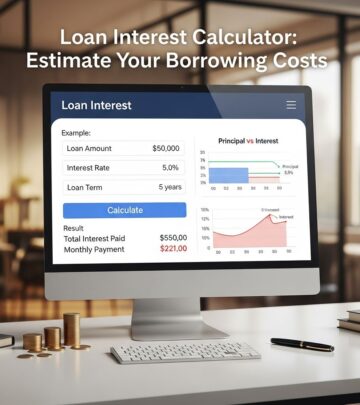
Once you’ve entered all required information into the calculator, simply click the calculate button. The calculator will display your results on the right side of the screen, showing your estimated monthly payment and total interest charges. The results typically include a complete amortization schedule showing the payment breakdown for each month of your loan term.
Practical Applications for Car Buyers
Understanding how to use an auto loan calculator effectively transforms you into a more informed car buyer. Before visiting a dealership, use the calculator to determine a realistic monthly payment you can afford. This number should align with your monthly budget after accounting for other expenses, insurance, gas, and maintenance.
The calculator also helps you evaluate whether purchasing a more expensive vehicle is financially feasible or whether you should consider a lower-priced option. By adjusting the principal amount and observing how monthly payments change, you can find the sweet spot between vehicle quality and affordability.
Additionally, the calculator assists you in understanding the impact of your credit score on financing costs. If you know your current credit score results in a higher interest rate, you might consider delaying your purchase to improve your credit first, then running the calculator again to see potential savings.
Frequently Asked Questions
Q: What information do I need to use an auto loan calculator?
A: You’ll need the vehicle’s purchase price (or the loan amount), your desired down payment, the interest rate you’re being offered, and the loan term in months. Some calculators may also ask whether the vehicle is new or used.
Q: How accurate are auto loan calculator estimates?
A: Auto loan calculators provide accurate estimates based on the information you enter. However, your actual payment may vary slightly depending on factors like exact APR, fees, and your lender’s specific terms. Use the calculator as a planning tool rather than a guaranteed amount.
Q: Can I use the calculator to compare multiple lenders?
A: Yes, absolutely. By entering different interest rates from various lenders, you can compare how each loan would affect your monthly payment and total interest. This helps you identify which lender offers the best overall value.
Q: What does APR mean and why is it different from the interest rate?
A: APR (Annual Percentage Rate) includes both the interest rate and fees, providing a more complete picture of borrowing costs. The interest rate alone doesn’t account for lender fees, origination costs, or other charges, making APR a better tool for true cost comparison.
Q: Should I make a larger down payment or take out a bigger loan?
A: Use the calculator to compare both scenarios. Generally, a larger down payment reduces your monthly payment and total interest paid. However, ensure you maintain emergency savings and don’t overextend yourself financially upfront.
Q: How can I lower my auto loan interest rate?
A: Factors affecting your rate include your credit score (higher scores get lower rates), down payment size, loan term length, and the vehicle’s condition. Consider improving your credit score before applying, making a substantial down payment, and shopping with credit unions for potentially better rates.
Q: What’s the ideal auto loan term length?
A: The ideal term depends on your financial situation. Shorter terms (36-48 months) mean lower total interest but higher monthly payments. Longer terms (60-72 months) offer lower payments but higher total interest. Balance your monthly budget with your willingness to pay interest.
References
- Auto Loan Calculator — Bankrate. 2025-09-05. https://www.bankrate.com/loans/auto-loans/auto-loan-calculator/
- How To Calculate Interest On A Car Loan — Bankrate. https://www.bankrate.com/loans/auto-loans/how-to-calculate-auto-loan-interest-rates/
- State of the Automotive Finance Market Report — Experian. https://www.experian.com/
- Auto Loan Early Payoff Calculator — Bankrate. 2025-06-24. https://www.bankrate.com/loans/auto-loans/early-payment-payoff-calculator/
Similar Articles








Read full bio of Sneha Tete