Personal Auto Insurance and Rental Vehicle Protection
Understand how your existing auto policy shields rental cars from unexpected damage and liability.

When you rent a vehicle for vacation, business travel, or temporary transportation, one of the first questions that arises is whether your existing auto insurance policy will protect you financially if damage occurs. The answer is nuanced and depends primarily on the specific coverage types included in your policy and certain conditions surrounding the rental itself.
Understanding Your Current Coverage Types
Your personal auto insurance policy typically consists of several distinct coverage components, each serving a different purpose. To determine whether your rental protection is adequate, you first need to understand what you currently carry.
Liability Coverage Basics
Liability coverage is the foundational component of virtually every auto insurance policy, as most states legally require it. This coverage pays for medical expenses and property damage you cause to another party when you are at fault in an accident. When you rent a vehicle, your liability coverage generally extends to that rental, protecting you if you injure someone or damage their property while operating the rented car.
The coverage limits for liability typically range from $25,000 to $50,000 per occurrence, though you may have selected higher limits when purchasing your policy. These same limits apply when you are driving a rental vehicle, which means if you cause significant damage or injuries, your liability coverage will protect you up to your policy limit.
Collision Coverage Explained
Collision coverage addresses damage to your vehicle when it makes contact with another vehicle or object, regardless of who is at fault. If your policy includes this coverage, it typically extends to rental vehicles within the United States and Canada. This means if you accidentally hit a light pole, scrape another car, or cause other collision-related damage to your rental, your collision coverage can help pay for repairs.
One critical factor to remember is that your collision coverage includes a deductible, which is the amount you must pay out of pocket before your insurance covers the remaining damage. If your deductible is $500 and rental damage totals $2,500, you would pay $500 and your insurance would cover the remaining $2,000 in eligible claims.
Comprehensive Coverage Protection
Comprehensive coverage protects your vehicle against damage from events other than collisions, such as theft, vandalism, weather events, animal strikes, and natural disasters. Like collision coverage, if your policy includes comprehensive protection, it typically extends to rental vehicles in the U.S. and Canada.
For example, if a rental car is stolen or damaged by hail, fire, or vandalism, comprehensive coverage would help pay repair or replacement costs, subject to your deductible. The typical deductible for comprehensive claims ranges from $100 to $1,000, depending on what you selected when purchasing your policy.
When Your Personal Insurance Covers Rentals
In most scenarios where you have comprehensive and collision coverage on your personal auto insurance policy, that protection travels with you to rental vehicles. This is significant because it means you already have a layer of protection before you even arrive at the rental counter.
The extension of coverage applies to rentals for personal use in the U.S. and Canada in most cases. Your coverage limits and deductibles remain the same when you drive a rental, so understanding your deductible amount is particularly important when considering whether to purchase additional coverage options from the rental company.
Critical Coverage Gaps and Exclusions
While personal auto insurance often extends to rentals, several important exclusions and limitations typically apply that may leave you vulnerable.
Business Use Restrictions
Many personal auto insurance policies exclude coverage for rentals used for business purposes. If you rent a vehicle for ridesharing, delivery services, or other commercial activities, your personal policy likely will not cover damage. In these situations, you would need to either purchase commercial rental coverage or negotiate different coverage terms with the rental company.
Geographic Limitations
Most policies explicitly limit coverage to rentals within the United States and Canada. If you plan to rent a vehicle in Mexico, Europe, or other international locations, your personal auto insurance typically will not apply. This represents a significant gap that requires advance planning and alternative coverage arrangements.
Duration and Vehicle Type Considerations
Some policies may have restrictions on the length of rental periods they cover or may exclude certain vehicle types such as luxury vehicles or commercial trucks. It is essential to review your specific policy language before renting to understand any such limitations.
Confusion Between Rental Reimbursement and Rental Coverage
An important distinction exists between rental car coverage and rental reimbursement coverage. Rental reimbursement coverage applies only when your personal vehicle is in the shop undergoing repairs due to a covered loss. This allows you to rent a substitute vehicle while yours is being fixed, with your insurance helping cover the rental costs. This coverage does not apply to your choice to rent a vehicle for vacation or travel purposes.
Rental Company Insurance and Waiver Options
At the rental counter, companies typically offer several optional coverage plans that you can purchase to supplement or replace your personal insurance coverage. Understanding these options helps you make informed decisions rather than automatically declining or accepting them.
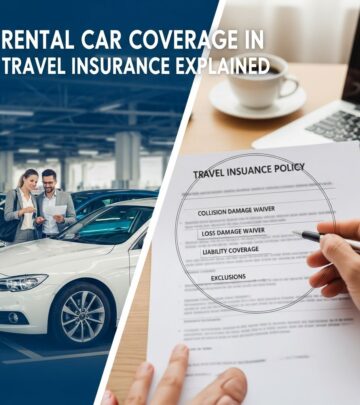
Collision Damage Waiver
A Collision Damage Waiver (CDW) is one of the most commonly offered protections at rental companies. This waiver releases you from financial responsibility for damage to the rental car, including damage from collisions, theft, and vandalism, within the terms of the agreement. The daily cost of a CDW can range significantly, and when combined with other optional coverages, rental company protection plans can add up to $30 or more per day to your rental bill.
Loss Damage Waiver
A Loss Damage Waiver (LDW) is similar to a CDW and provides protection against loss or damage to the rental vehicle. These waivers can be valuable if you lack collision and comprehensive coverage on your personal policy, though they represent an additional daily expense during your rental period.
Supplemental Liability Protection
Supplemental Liability Protection (SLP) extends your liability coverage beyond what your personal policy provides. This option becomes particularly relevant if you have low liability limits on your personal policy or are renting in a high-risk environment where a major accident could result in claims exceeding your coverage limits.
Personal Accident and Effects Coverage
Rental companies also offer Personal Accident Insurance (PAI) to cover medical expenses for you and your passengers from accidents, and Personal Effects Coverage (PEC) to protect personal items stolen from the rental vehicle. These options are less commonly necessary if you have adequate health insurance and homeowners or renters coverage, but they may be worth considering depending on your specific circumstances.
Credit Card Rental Protection Benefits
Many premium credit cards include rental car insurance as a cardholder benefit when you use that card to pay for the rental. These benefits often provide collision and theft protection similar to rental company waivers, sometimes at no additional cost beyond your regular credit card membership.
However, credit card protections typically have important limitations. They often do not include liability coverage, which means if you injure someone or damage their property, you would need to rely on your personal auto policy or purchase supplemental liability protection from the rental company. Additionally, credit card benefits may have restrictions on vehicle types, rental duration, or geographic areas covered.
Determining Your Best Coverage Strategy
| Your Situation | Personal Insurance Coverage | Rental Company Coverage Recommendation |
|---|---|---|
| Have comprehensive and collision | Likely covered in U.S./Canada | Consider CDW/LDW only if high-value deductible |
| Have liability only | Liable for all rental damage | Purchase CDW/LDW; consider SLP |
| Renting internationally | Not covered outside U.S./Canada | Purchase CDW/LDW; verify with credit card |
| Business use rental | Typically excluded | Negotiate commercial coverage options |
Steps to Take Before Renting
- Review your current auto insurance policy to confirm which coverage types you carry and your specific deductible amounts
- Contact your insurance agent or company to ask explicitly whether rental cars are covered and whether any exclusions apply
- Check whether your rental location (state, province, or country) is included in your coverage area
- Verify whether any credit cards you plan to use for the rental include insurance benefits and review the specific terms
- Determine whether your rental purpose qualifies as personal use under your policy
- Ask the rental company about their specific waiver terms and what exclusions or conditions apply
Common Questions About Rental Coverage
If I have full coverage on my personal policy, do I need rental insurance?
Not necessarily. Full coverage typically includes liability, collision, and comprehensive protection, which extends to rentals in most cases. However, you may want to consider rental waivers if your deductible is high or if you want to avoid potential premium increases from filing a claim on your personal policy.
What happens if I damage a rental car and don’t have coverage?
Without coverage, you become personally liable for repair costs, which can be substantial. Rental companies charge fees that often exceed typical body shop prices, and you may also face charges for loss of use while the car is being repaired.
Does my auto insurance cover rental cars used for business purposes?
In most cases, no. Personal auto insurance policies specifically exclude business use. If you need to rent a vehicle for commercial activities, discuss commercial coverage options with your insurance agent or the rental company.
Will filing a claim for rental damage increase my insurance premium?
Filing any claim on your auto insurance policy can potentially increase your premium at renewal time, which is one reason some drivers choose to purchase rental waivers from the company rather than file a claim against their personal policy.
Are rental cars covered the same as my personal vehicle?
Your coverage limits and deductibles apply the same way to rental vehicles as they do to your own car. The only difference is that certain exclusions specific to rentals may apply depending on your policy and the rental circumstances.
Making Your Final Decision
The decision of whether to purchase additional rental coverage ultimately depends on your personal risk tolerance, the deductible amount on your existing policy, the value of the rental vehicle, and the rental duration. If you have comprehensive and collision coverage with a manageable deductible, you likely already have sufficient protection for standard rentals in the U.S. or Canada.
Conversely, if you have only liability coverage, are renting internationally, plan to use the vehicle for business purposes, or have a high deductible that concerns you, purchasing rental waivers or supplemental coverage becomes more strategically important. Taking a few minutes to review your policy before arriving at the rental counter ensures you make an informed choice rather than a pressure-driven one.
References
- Does Car Insurance Cover Rental Cars? — Lemonade Insurance. 2025. https://www.lemonade.com/car/explained/does-car-insurance-cover-rental-cars/
- Rental Car Insurance Explained for 2025 — Business Insider. 2025. https://www.businessinsider.com/personal-finance/auto-insurance/what-is-rental-car-insurance
- Rental Car Insurance: Do You Need It? — Progressive Insurance. https://www.progressive.com/answers/rental-car-insurance/
- The Four Types of Rental Car Insurance, Explained — Allianz Partners. https://www.allianztravelinsurance.com/travel/rental-cars/rental-car-insurance-explained.htm
- Do You Need Rental Car Insurance? — Allstate Insurance. https://www.allstate.com/resources/car-insurance/rental-car-insurance
- You Might Not Need Rental Car Insurance — NerdWallet. 2025. https://www.nerdwallet.com/insurance/auto/learn/rental-car-insurance
- Rental Car Insurance Guide: What Coverage to Consider — State Farm. https://www.statefarm.com/simple-insights/auto-and-vehicles/rental-car-insurance-guide
Similar Articles








Read full bio of medha deb