Accuracy in Auto Insurance Mileage Reporting
Why accurate mileage reporting matters for your insurance rates and coverage

The number of miles you drive annually represents one of the most significant factors influencing your car insurance premiums. Insurance companies rely on mileage data to assess the likelihood of accidents and determine appropriate pricing for policyholders. When mileage information is accurate, insurers can establish rates that truly reflect your driving behavior and risk profile. Conversely, inaccurate reporting creates complications for both drivers and insurance providers, leading to potential financial consequences and coverage disputes.
How Mileage Affects Your Insurance Rates
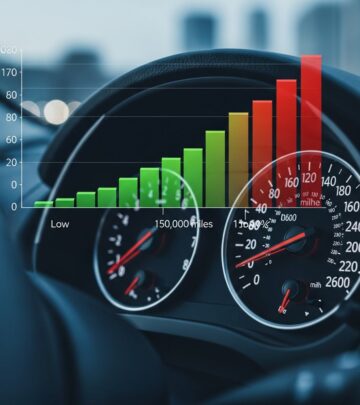
The relationship between driving distance and insurance costs is straightforward: the more miles you drive annually, the higher your premiums tend to be. This correlation exists because increased road exposure naturally elevates accident risk. Drivers who log 50 miles daily face substantially different risk profiles than those commuting only a few miles weekly. Insurance companies recognize this distinction and price coverage accordingly.
Conversely, drivers who maintain lower annual mileage benefit from reduced premiums. Low-mileage discounts frequently range from 5% to 36%, making accurate reporting particularly valuable for those who drive infrequently. Some drivers qualify for these discounts by working from home, utilizing public transportation, or living in areas where most destinations remain within walking distance.
Beyond accident probability, mileage influences vehicle depreciation rates and long-term wear patterns. Cars with higher mileage depreciate faster, which affects both resale value and insurance claim payouts for total losses. Insurers factor depreciation into their assessments, recognizing that high-mileage vehicles represent lower financial recovery potential in comprehensive claims.
The Mechanics of Mileage Verification Systems
Insurance companies employ various methods to collect and verify mileage information, ranging from driver self-reporting to advanced technological solutions. Understanding these verification mechanisms helps policyholders recognize when accuracy becomes critical.
Traditional Self-Reporting Methods
Most insurers rely initially on self-reported mileage, particularly during policy applications. Drivers provide estimates of annual driving distances, and many companies operate on an honor system without immediate verification. However, this approach carries inherent risks. If a driver’s estimate proves significantly inaccurate, insurers may later request corrections or adjust estimates to default rates, resulting in premium adjustments.
Regulatory Verification Requirements
California enforces some of the nation’s strictest mileage verification standards. State law mandates that insurers collect and verify mileage data every three years. When policyholders fail to provide required mileage information, insurance companies may adjust policies to state average mileage rates, often resulting in higher premiums. This regulatory framework reflects California’s commitment to preventing fraud and ensuring fair pricing across the consumer base.
Third-Party Data Sources and Telematics
Beyond self-reporting, insurers increasingly access state vehicle records and third-party mileage databases for verification. Some insurance companies utilize telematics devices or mobile applications that track actual driving patterns in real-time. These technological solutions provide verifiable data and create continuous monitoring rather than annual snapshots. Drivers who grant permission for such monitoring may benefit from pay-per-mile insurance programs, which calculate premiums based on actual usage rather than estimates.
Financial Consequences of Underreporting Mileage
The temptation to report lower mileage than actual to reduce premiums creates serious financial and legal complications. Understanding these consequences helps drivers appreciate the importance of honesty in insurance applications.
Denied Claims and Out-of-Pocket Expenses
When insurers discover significant mileage discrepancies, they may deny claims, leaving drivers to pay damages independently. A driver involved in an accident might expect insurance coverage, only to discover that mileage underreporting provides grounds for claim denial. The financial impact extends beyond the accident damage itself to include legal fees for dispute resolution.
Fraud Allegations and Policy Cancellation
Underreporting mileage can constitute fraud, subjecting drivers to legal consequences and complete loss of coverage. Insurance companies take fraud seriously, and once discovered, the relationship between insurer and policyholder becomes irreparably damaged. Beyond the immediate claim denial, drivers may lose their policy entirely, forcing them to seek new coverage at higher rates as insurers recognize the fraud history.
Regulatory Implications and Fair Pricing
In certain U.S. states, insurers relying negligently on inaccurate mileage data violate regulations designed to ensure fair pricing. When underreported mileage causes insurers to charge inadequate premiums, regulators view this as unfair pricing practice. This regulatory scrutiny affects not only individual drivers but also the insurance companies managing inaccurate data systems.
The Broader Insurance Market Impact
Individual drivers’ mileage misreporting extends beyond personal consequences, affecting entire customer populations. When insurers must pay claims at rates higher than anticipated due to systematic underreporting, they typically raise premiums across their entire customer base to offset losses. This means responsible drivers who accurately report mileage subsidize those who misreport, creating fairness concerns within the insurance system.
The costs associated with investigating and processing mileage discrepancies further burden the insurance industry. Insurers dedicate substantial resources to verifying mileage, investigating fraudulent claims, and handling customer disputes related to reporting accuracy. These administrative expenses accumulate across the industry and ultimately contribute to higher premiums for consumers.
Strategic Benefits of Accurate Mileage Reporting
Maximizing Discount Eligibility
Drivers who maintain accurate mileage records ensure they capture all available discounts. If an insurer incorrectly believes you drive more miles than you actually do, you miss opportunities for lower-mileage discounts. By updating your mileage information promptly when driving patterns change, you maintain eligibility for discounts that can substantially reduce annual premiums.
Ensuring Appropriate Coverage Levels
Accurate mileage reporting allows insurers to recommend appropriate coverage types and limits. Drivers with low annual mileage may qualify for different policy structures than frequent drivers. By providing accurate information, you receive recommendations tailored to your actual risk profile rather than generic recommendations based on inflated estimates.
Protecting Claim Validity
When your recorded mileage aligns with actual driving patterns, claim disputes become less likely. Insurers cannot deny legitimate claims on mileage grounds when your records demonstrate consistency and accuracy. This protection proves invaluable when accidents occur and you need prompt claim processing without complications.
Circumstances Requiring Mileage Updates
- Career changes: Transitioning from office work to a job requiring extensive commuting dramatically alters annual mileage and warrant immediate updates
- Relocation: Moving to a different city changes commute distances and local driving patterns
- Remote work transitions: Shifting to full-time remote work or hybrid arrangements significantly reduces driving
- Retirement: Retiring often reduces work-related commuting but may increase recreational driving
- Vehicle use changes: Purchasing a second vehicle, dedicating one car to occasional use, or retiring a vehicle affects how much each vehicle is driven
- Policy anniversary: Many insurers request mileage verification during annual renewals
Variations in Mileage-Based Rating Practices
Not all insurance companies employ identical mileage-based rating methodologies. Some insurers, such as Farmers, do not depend on individual policyholders’ annual mileage for rate calculations, except in specific states like California. Instead, these companies base rates on average driver mileage patterns and emphasize driving location over distance. Since most accidents occur within 5 to 10 miles of a driver’s home, certain insurers prioritize location factors over total mileage.
This variation means that switching insurance companies may alter how your mileage impacts your rates. When shopping for insurance, inquire about whether mileage represents a primary rating factor, as some companies offer better rates for low-mileage drivers while others standardize rates regardless of individual mileage.
The High-Mileage Driver Consideration
Drivers logging substantial annual mileage should carefully evaluate insurance options. The more a driver spends on the road, the higher the risk of collision, resulting in increased premiums. High-mileage drivers, typically those exceeding 15,000 miles annually, should expect higher premiums than average-mileage drivers.
Pay-per-mile insurance programs, while appealing conceptually, may not benefit high-mileage drivers. High-mileage drivers often find that pay-per-mile insurance costs more than standard policies, making traditional comprehensive or collision coverage more economical. When evaluating insurance options, high-mileage drivers should compare total annual costs across different rating methodologies rather than assuming usage-based programs guarantee savings.
Frequently Asked Questions
How often should I update my mileage information?
Review your mileage annually, particularly around policy renewal dates. If significant life changes alter your driving patterns, update your information immediately rather than waiting for the next renewal. Some states mandate verification at specific intervals, so check your state’s requirements.
What happens if my actual mileage exceeds my reported estimate?
If your driving increases beyond reported levels, inform your insurer to prevent future complications. While your premium may increase, transparency protects you from claim denial or fraud allegations. Most insurers prefer notification to discovery during claims processing.
Can I reduce my insurance costs through accurate low-mileage reporting?
Yes, if you genuinely drive fewer miles than average, accurate reporting qualifies you for low-mileage discounts. However, intentionally underreporting mileage to fraudulently qualify for discounts creates serious consequences far exceeding any premium savings.
Do all states regulate mileage verification?
No, mileage verification requirements vary by state. California enforces particularly strict requirements, while other states impose minimal regulations. Contact your state’s insurance commissioner’s office to understand local requirements.
Best Practices for Mileage Management
To ensure accurate mileage reporting and maintain optimal insurance rates, implement these straightforward practices:
- Track actual mileage: Record odometer readings periodically to establish genuine annual driving patterns
- Notify insurers of changes: Report mileage adjustments before policy renewal to maintain accuracy
- Preserve documentation: Keep service records, repair invoices, and maintenance documentation that verify vehicle usage
- Respond to verification requests: When insurers request mileage confirmation, provide accurate information promptly
- Review policy details: Confirm that your policy documents reflect your actual mileage and understand how your company calculates rates
- Ask about discounts: Specifically inquire whether you qualify for low-mileage discounts and what thresholds apply
Conclusion
Accurate mileage reporting fundamentally shapes your auto insurance experience, influencing premiums, claim processing, and long-term coverage stability. While the temptation to underreport mileage for lower rates may seem financially attractive short-term, the potential consequences—including denied claims, fraud allegations, and policy cancellation—far outweigh minimal savings. By maintaining honest reporting practices and updating information when driving patterns change, you ensure appropriate coverage, access available discounts, and protect yourself from expensive complications. The relationship between mileage accuracy and insurance success ultimately reflects a broader principle: transparency in insurance transactions benefits both drivers and insurers, creating fair pricing and reliable coverage for everyone.
References
- Why insurers still struggle with underreported mileage — Smartcar. Accessed March 31, 2026. https://smartcar.com/blog/avoiding-underreported-mileage
- How Does Annual Mileage Impact Car Insurance Rates? — LA Insurance. Accessed March 31, 2026. https://lainsurance.com/blog/how-does-annual-mileage-impact-car-insurance-rates
- Does Annual Mileage Affect Car Insurance? — Bankrate. Accessed March 31, 2026. https://www.bankrate.com/insurance/car/average-miles-driven-per-year/
- How Annual Mileage Affects Auto Insurance — BIG Blog. Accessed March 31, 2026. https://www.thebig.ca/blog/title/annual-mileage-and-your-insurance
- How Low Mileage Impacts Car Insurance — Progressive. Accessed March 31, 2026. https://www.progressive.com/answers/low-mileage-insurance/
- How Your Annual Mileage Influences Your Auto Insurance Premium — InsureOne. Accessed March 31, 2026. https://www.insureone.com/knowledge-center/auto-insurance/annual-mileage-influence-on-premiums/
Similar Articles








Read full bio of Sneha Tete