Auto Insurance Declarations Page Guide
Unlock the essentials of your car insurance policy with this comprehensive guide to understanding and using your declarations page effectively.

Your auto insurance declarations page serves as a vital snapshot of your policy, summarizing critical details like coverage types, costs, and protected vehicles. This document helps you quickly grasp what your insurance protects without diving into lengthy policy terms.
Why the Declarations Page Matters for Drivers
Every car insurance policy begins with a declarations page, often called the ‘dec page,’ which condenses essential information into one or two pages. It acts as your policy’s executive summary, making it easier to verify coverage at renewal or before filing a claim. Unlike full policy documents that detail exclusions and conditions, this page focuses on the basics: who, what, when, and how much.
Drivers benefit from reviewing it regularly to ensure accuracy in listed drivers, vehicles, and limits. Errors here can lead to denied claims or unexpected out-of-pocket costs during accidents. For instance, if a new family member starts driving, confirming their inclusion prevents coverage gaps.
Core Elements Found on Every Declarations Page
Standard components appear consistently across insurers, though layouts vary. Here’s a breakdown of what to expect:
- Policy Identifier and Timeline: Includes your unique policy number, effective start date, and expiration. Policies typically run six or twelve months, with renewals updating this section.
- Insured Parties: Lists the primary policyholder and any additional drivers. Some pages note exclusions, protecting against unauthorized use.
- Covered Vehicles: Details each car’s year, make, model, and Vehicle Identification Number (VIN). Multiple vehicles get itemized entries with tailored coverages.
- Financial Breakdown: Shows total premium, split by coverage type, plus applied discounts like safe driver or multi-policy bundles.
These elements ensure you know exactly what’s insured and for how long, aiding quick reference during routine checks or lender requests.
Breaking Down Coverage Types and Limits
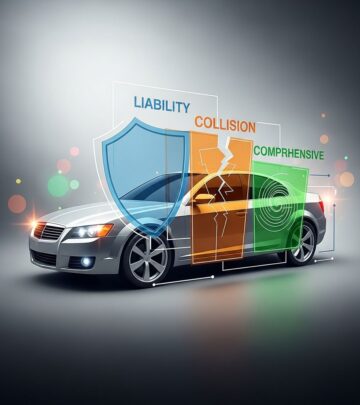
The heart of the page lies in coverage specifics. Liability protects against others’ damages, split into bodily injury (medical costs) and property damage (repairs). Limits appear as formats like 25/50/25, meaning $25,000 per person/$50,000 per accident for injury and $25,000 for property.
| Coverage Type | Description | Typical Limits |
|---|---|---|
| Liability | Covers damages you cause to others | 25/50/25 or higher |
| Collision | Repairs your car after at-fault crashes | Matches vehicle value |
| Comprehensive | Non-collision events like theft or hail | $500-$1,000 deductible |
| Uninsured Motorist | Protection from drivers without insurance | Matches liability |
Deductibles—the amount you pay before insurance kicks in—apply to collision and comprehensive. Lower deductibles raise premiums; higher ones save money but increase claim costs.
Premiums, Deductibles, and Discounts Explained
Your total premium reflects base rates adjusted by factors like location, driving record, and vehicle type. The page itemizes costs per coverage and vehicle, revealing how choices impact bills. Discounts reduce this: multi-car savings, good student incentives, or defensive driving courses can cut 5-25%.
Loss payees, often lenders for financed cars, ensure claim payouts go to them first. This protects their interest in your vehicle.
When to Use Your Declarations Page
Beyond routine reviews, it’s invaluable in key scenarios:
- Proof for Lenders: Dealers or banks require it when financing a purchase, confirming active coverage.
- Policy Shopping: Compare quotes by matching current limits and premiums side-by-side.
- Claim Preparation: Provides quick facts for adjusters, speeding processing.
- Renewal Checks: Spot unintended changes before committing to another term.
Note: It’s not ideal for traffic stops. Use your insurance ID card instead, as declarations pages may lack state-mandated formats.
How to Obtain and Access Your Declarations Page
Insurers send it upon policy issuance, renewal, or changes via email, mail, or app. Most portals let you download PDFs anytime. If lost, contact your agent or log in online—updates reflect instantly after adjustments.
Common Mistakes to Avoid When Reviewing
Overlooking details leads to pitfalls:
- Missing VIN mismatches, voiding coverage for unlisted cars.
- Ignoring low limits in high-risk areas, risking personal liability.
- Forgetting to update after life changes like adding a teen driver.
- Assuming discounts auto-renew without requalifying.
Review within days of receipt and annually. Cross-check against needs: urban drivers may need higher liability than rural ones.
Comparing Declarations Pages Across Insurers
Switching providers? Align pages for apples-to-apples quotes. Focus on:
| Factor | What to Match | Why It Matters |
|---|---|---|
| Limits | Liability, UM, deductibles | Ensures equivalent protection |
| Premium | Total and per-coverage | Reveals true cost savings |
| Discounts | Types and amounts | Identifies best deals |
| Endorsements | Roadside, rental reimbursement | Adds hidden value |
This methodical approach prevents underinsurance when changing carriers.
Proof of Insurance: Declarations vs. ID Cards
While the page proves coverage exists, it’s supplementary. ID cards meet legal roadside requirements, often with QR codes for verification. Lenders prefer declarations for full policy visibility, minus sensitive premium data via certificates.
Customizing Coverage Through Your Dec Page Insights
Use the page to optimize: Raise deductibles if claims-free, or add umbrella liability for extra protection. Track premium trends over renewals to negotiate better rates.
Frequently Asked Questions
What if my declarations page has errors?
Contact your insurer immediately to amend. Delays can affect claims.
Does it list all policy exclusions?
No, it summarizes; full policy details exclusions like certain drivers or uses.
Can I use it for DMV registration?
Often yes, but confirm state rules—some require ID cards.
How often is it updated?
At issuance, renewal, or changes like adding a vehicle.
Is it the same for all insurance types?
Similar format, but auto pages focus on vehicles vs. home on property.
Maximizing Value from Your Policy Summary
Treat the declarations page as your insurance dashboard. Annual audits align it with evolving needs—new cars, moves, or family changes. Digital storage ensures accessibility, empowering informed decisions that balance cost and security.
References
- What Is an Auto Insurance Declaration Page? — The Hartford. 2023-2024. https://www.thehartford.com/aarp/car-insurance/insurance-declaration-page
- What Is an Auto Insurance Declarations Page? — Allstate. 2024. https://www.allstate.com/resources/car-insurance/car-insurance-declarations-page
- Understanding Your Automobile Insurance Declarations Page — Maryland Insurance Administration. 2023. https://insurance.maryland.gov/Consumer/Pages/Auto-Understanding-Declarations.aspx
- What Is an Insurance Declarations Page? — Progressive. 2024. https://www.progressive.com/answers/insurance-declaration-page/
- How to read your auto or home insurance declarations page — Texas Department of Insurance. 2023. https://www.tdi.texas.gov/tips/how-to-read-your-auto-or-home-insurance-declarations-page.html
Similar Articles








Read full bio of medha deb