Aurora University: Complete Profile, Rankings & Data
Explore Aurora University's academics, rankings, admissions, and financial aid information.
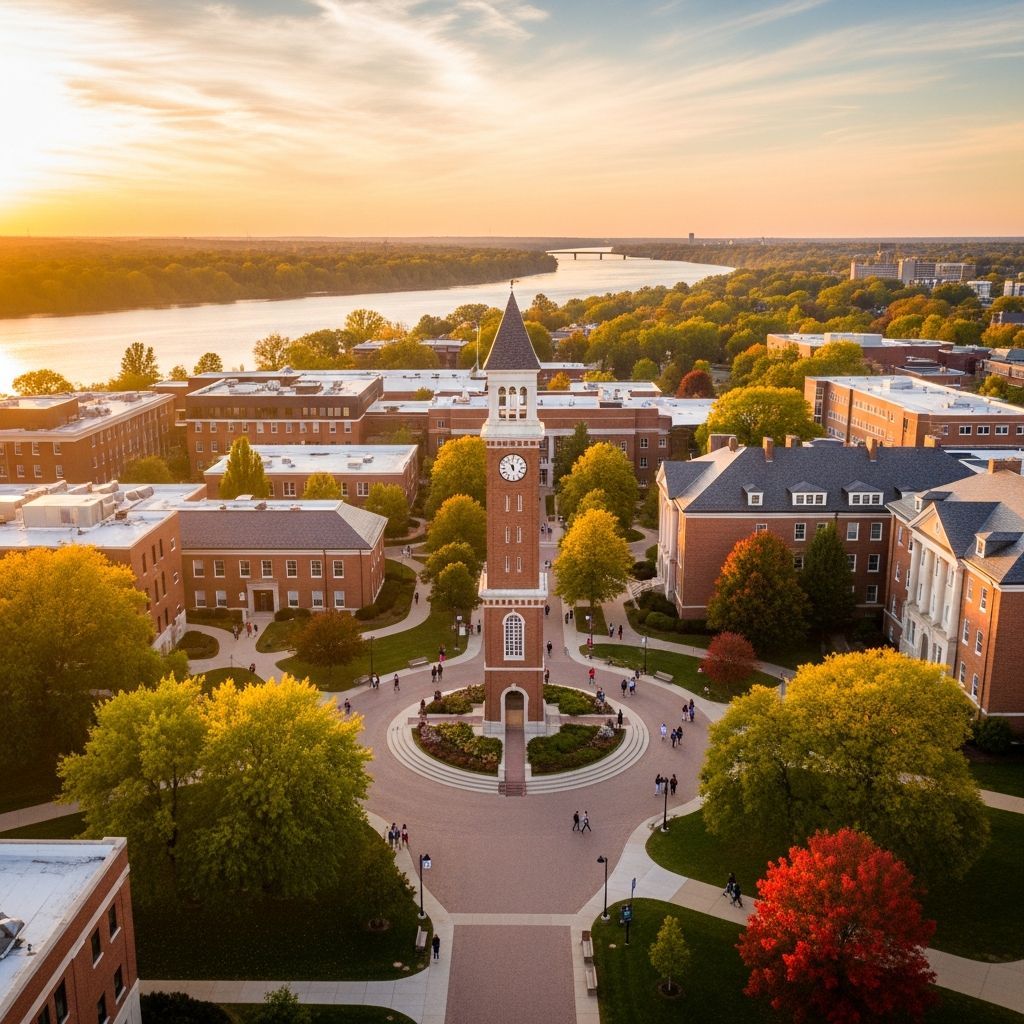
Aurora University stands as a prominent private institution in Illinois, offering students a comprehensive educational experience with a strong focus on community engagement and academic excellence. Located in Aurora, approximately 45 miles west of Chicago, this university combines a small campus footprint with extensive academic and support resources. Whether you’re considering undergraduate studies or exploring specific program strengths, understanding Aurora University’s profile provides essential insights for making informed educational decisions.
Campus Overview and Location
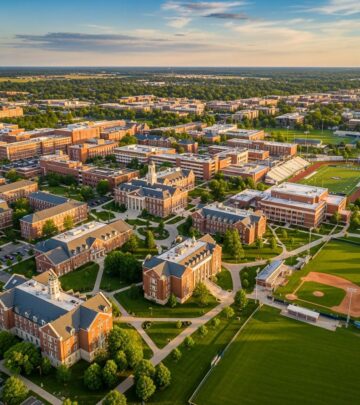
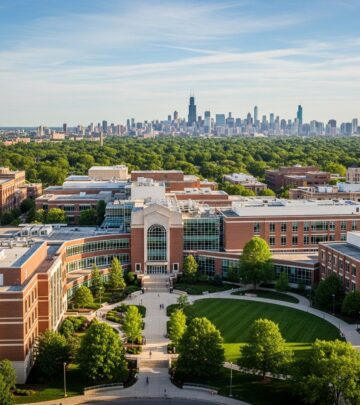
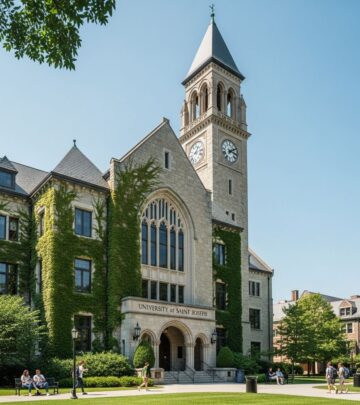
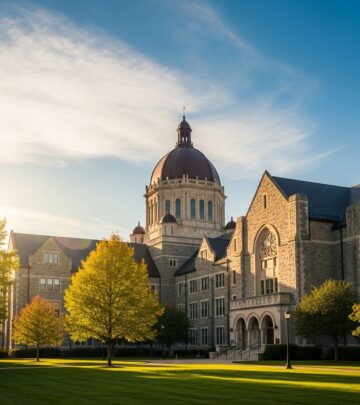
Aurora University’s main campus spans just 32 acres, nestled within a neighborhood setting in Aurora, Illinois. Despite its compact size, the university has strategically developed its physical space to accommodate over 50 undergraduate majors and multiple specialized centers. The proximity to Chicago offers students access to internship opportunities, cultural experiences, and professional networking within the greater metropolitan area. The intimate campus setting creates a close-knit community atmosphere while maintaining connections to a major urban center.
Academic Programs and Specializations
The university delivers a diverse portfolio of academic offerings designed to meet student interests and career aspirations. Business, nursing, and social work represent the most popular undergraduate majors, drawing substantial enrollments from the student body. Beyond these flagship programs, Aurora University provides approximately 50 different undergraduate majors spanning various disciplines including education, criminal justice, psychology, and health sciences.
Signature Centers and Initiatives
Aurora University distinguishes itself through specialized centers addressing contemporary educational and social needs. The Institute for Collaboration, established over 20 years ago, maintains partnerships with the Aurora community to develop programs addressing pressing educational and social issues. This commitment to community engagement reflects the university’s broader mission of social responsibility and practical learning.
More recently, the Betty Parke Tucker Center for Neurodiversity represents an innovative commitment to inclusive education. This specialized center supports students on the autism spectrum, providing comprehensive preparation and transition services to facilitate successful college experiences. Such initiatives underscore the university’s dedication to welcoming diverse learner populations and creating supportive environments where all students can thrive.
Rankings and Recognition
Aurora University receives recognition from multiple prestigious ranking organizations, affirming its position within American higher education. The university earned the #10 spot in the U.S. News & World Report 2026 Best Colleges in Illinois rankings, marking the second consecutive year of this distinction. This placement positions Aurora alongside Northwestern University, University of Chicago, and University of Illinois Urbana-Champaign among Illinois’s premier institutions.
The university demonstrated significant improvement in social mobility metrics, leaping 34 places to achieve #22 national ranking as a Top Performer on Social Mobility. This recognition places Aurora among the top 5% of institutions nationwide in helping students from diverse backgrounds achieve their educational and career goals. College Factual ranked Aurora #11 out of 85 Illinois institutions in its 2025 Best Colleges Ranking, further validating its academic standing within the state.
Admissions Requirements and Selectivity
Aurora University maintains an accessible admissions process while upholding academic standards. The university reports an 85% acceptance rate, indicating a selective but inclusive approach to student recruitment. This acceptance rate reflects the institution’s commitment to welcoming qualified applicants while maintaining academic integrity.
Standardized Testing Scores
The university requires either SAT or ACT scores for undergraduate admission consideration. For students submitting SAT scores, evidence-based reading ranges from 470-583, while mathematics scores fall between 460-550. ACT composite scores typically range from 20-26 for admitted students. These score ranges represent mid-range data for Aurora’s admitted cohort, indicating moderate to average performance relative to national standards.
Enrollment Demographics
Aurora University enrolls approximately 4,021 undergraduate students, with 95% attending full-time and 5% enrolled on a part-time basis. This enrollment composition demonstrates the university’s primarily traditional undergraduate focus. The student-faculty ratio of 18:1 supports meaningful faculty-student interactions while maintaining institutional scale.
Student Retention and Graduation Outcomes
The university reports a 77.8% first-year retention rate, exceeding the national average of 76.8% by one percentage point. This metric indicates strong student satisfaction and academic fit during the critical first year experience. The six-year graduation rate stands at 58.3%, falling 4.2 points below the national benchmark of 62.5%.
Average time to degree completion reaches 4.5 years, reflecting some student progression patterns that extend beyond the traditional four-year timeframe. Multiple factors contribute to extended timelines, including changing majors, part-time enrollment, and individual academic circumstances. Despite these variations, the majority of students successfully complete their degrees within the extended timeline.
Financial Information and Cost Analysis
Understanding Aurora University’s financial structure proves essential for prospective students and families evaluating affordability and value. The average annual net price stands at $18,992, approximately $882 below the national median of $19,874. This positioning suggests competitive pricing within the private university sector, though students should note that individual net prices vary substantially based on merit aid, financial need, and family circumstances.
Financial Aid and Debt Outcomes
The average student debt upon graduation totals $13,900, representing moderate borrowing levels for private university graduates. The loan repayment rate reaches 96.6% within three years of graduation, indicating strong alumni financial capacity and loan management. This high repayment rate demonstrates that graduates successfully transition to employment and financial stability post-graduation.
Career Outcomes and Earnings
Aurora University graduates demonstrate positive career trajectory and earnings potential. Six years after enrollment, median earnings reach $51,237, approximately 17% higher than national outcomes for comparable timeframes. This earnings premium reflects the value of Aurora’s professional-focused programs, particularly in nursing, business, and social work fields.
Ten-year median earnings climb to $101,817, indicating significant career advancement and earnings growth in the decade following graduation. The employment rate for graduates stands at 92.3%, demonstrating strong job market success and professional placement outcomes. These metrics collectively suggest that Aurora graduates successfully translate their education into meaningful employment and career advancement.
Return on Investment Analysis
Aurora University’s return on investment measures -32.6%, positioning the institution 117.9 points below the national benchmark of 85.3%. This metric reflects the longer timeline required for investment payoff relative to some peer institutions. However, this calculation requires context consideration, as specific major selection and individual career trajectories significantly influence actual ROI experiences.
Graduate Programs and Advanced Degrees
Aurora University extends its academic mission beyond undergraduate education through graduate and professional degree programs. Educational Administration and Supervision doctoral degrees generate median earnings of $109,412, representing the highest-earning graduate program. Master’s degrees in Business Administration, Management and Operations produce median earnings of $88,780, while Educational Administration and Supervision master’s programs yield $80,383 median earnings.
Popular online degree options include Registered Nursing, Nursing Administration, and Nursing Research and Clinical Nursing at the bachelor’s level, attracting 184 graduates. Educational Administration and Supervision master’s degrees enroll 81 graduates, while Psychology, General bachelor’s programs graduate 60 students. These program distributions reflect strong demand in healthcare, education, and social service fields.
Specialized Program Rankings
Aurora University achieves recognition across multiple specialized program areas. The university ranks #13 out of 371 institutions for Social Work Bachelor’s Degree programs nationally, placing it in the 96.5th percentile. Regionally, Aurora ranks #6 out of 70 Great Lakes institutions for Social Work programs. Criminal Justice and Corrections bachelor’s programs rank #119 nationally and #6 within Illinois, demonstrating strong performance in criminal justice education.
Health and Physical Education programs rank #130 nationally out of 533 institutions, while Homeland Security, Law Enforcement & Firefighting programs achieve #127 national ranking. Public Administration & Social Service programs rank #25 nationally out of 417 schools. These specialized rankings validate Aurora’s strengths in professional and service-oriented disciplines.
Campus Community and Student Life
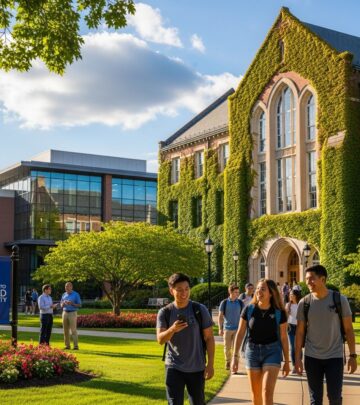
The compact 32-acre campus creates an intimate community environment where students develop meaningful connections with peers and faculty members. The 18:1 student-faculty ratio supports collaborative learning and personalized academic advising. Student retention metrics, exceeding national averages for first-year persistence, suggest that students value the community atmosphere and support systems Aurora provides.
The university’s proximity to Aurora, Illinois, and greater Chicago metropolitan area expands student opportunities beyond campus boundaries. Internship placements, service learning projects, and community partnerships connect classroom learning with real-world application. The Institute for Collaboration particularly exemplifies this integration of academic study with community engagement and social impact.
Value Proposition and Selection Considerations
Aurora University occupies a distinctive position within the private university market. At $18,992 average annual net price, the institution charges more than typical public alternatives but delivers smaller classes, personalized advising, and a tightly integrated campus community. The value proposition strengthens considerably for students receiving substantial merit aid or pursuing specific programs unavailable at public institutions.
Prospective students should evaluate their specific circumstances when assessing Aurora’s value. Students entering high-demand fields such as nursing or business may experience stronger ROI outcomes than suggested by aggregate metrics. Conversely, students considering lower-earning fields should carefully project career earnings against investment costs to ensure alignment with personal financial goals.
Academic Quality and Support Systems
Aurora University earns a B+ overall academic grade, with particularly strong performance in student support services (B+ grade). The Completion category receives a C+ grade, reflecting graduation rate performance slightly below national benchmarks. Career Outcomes merit a B grade, demonstrating solid professional preparation and post-graduation success. The Affordability category receives a C grade, indicating moderate pricing without substantial discount relative to peer institutions.
These categorical grades provide nuanced insight into institutional strengths and development areas. Strong support services, combined with solid career outcomes, suggest effective student preparation for professional transitions. The moderate affordability rating requires careful cost-benefit analysis within individual family financial contexts.
Frequently Asked Questions
Q: What is Aurora University’s acceptance rate?
A: Aurora University maintains an 85% acceptance rate, indicating a selective but inclusive admissions approach that welcomes qualified applicants while maintaining academic standards.
Q: What standardized tests does Aurora University require?
A: Aurora University requires either SAT or ACT scores for undergraduate admission. SAT evidence-based reading ranges from 470-583, math scores from 460-550, while ACT composite scores typically range from 20-26.
Q: What are Aurora University’s most popular majors?
A: Business, nursing, and social work represent the most popular undergraduate majors at Aurora University, with approximately 50 total undergraduate majors available across various disciplines.
Q: What is the average cost of attending Aurora University?
A: The average annual net price is $18,992, approximately $882 below the national median, with average student debt upon graduation totaling $13,900.
Q: What is Aurora University’s graduation rate?
A: Aurora University reports a 58.3% six-year graduation rate, with a 77.8% first-year retention rate, indicating strong student persistence and academic support.
Q: What career support and specialized centers does Aurora offer?
A: Aurora offers the Institute for Collaboration for community partnership programs and the Betty Parke Tucker Center for Neurodiversity supporting students on the autism spectrum, alongside standard career services and internship placement support.
Q: How does Aurora University rank nationally and regionally?
A: Aurora University ranks #10 among Illinois colleges in the U.S. News & World Report 2026 rankings, #22 nationally as a Top Performer on Social Mobility, and #11 out of 85 Illinois institutions in College Factual’s 2025 rankings.
Q: What are median earnings for Aurora University graduates?
A: Six-year median earnings reach $51,237, while ten-year median earnings climb to $101,817, with a 92.3% employment rate demonstrating strong career outcomes and professional placement.
References
- Aurora University Rankings and Academic Profile — EDsmart College Rankings. 2025. https://www.edsmart.org/schools/aurora-university/
- College Factual 2025 Best Colleges Ranking Media Kit — College Factual. 2025. https://www.collegefactual.com/colleges/aurora-university/rankings/best-colleges/
- AU Named a Top 10 College in Illinois — Aurora University Official News. September 25, 2025. https://aurora.edu/blog/au-today/2025/09/au-named-a-top-10-college-in-illinois.html
- Aurora University College Profile — Money Magazine Best Colleges. 2025. https://money.com/best-colleges/profile/aurora-university/
- Aurora University Rankings and Overview — Niche College Rankings. 2025. https://www.niche.com/colleges/aurora-university/
Similar Articles








Read full bio of medha deb