Auditor: Definition, Types, and Role in Financial Oversight
Understanding auditors: Roles, responsibilities, and importance in financial accountability.
What Is an Auditor?
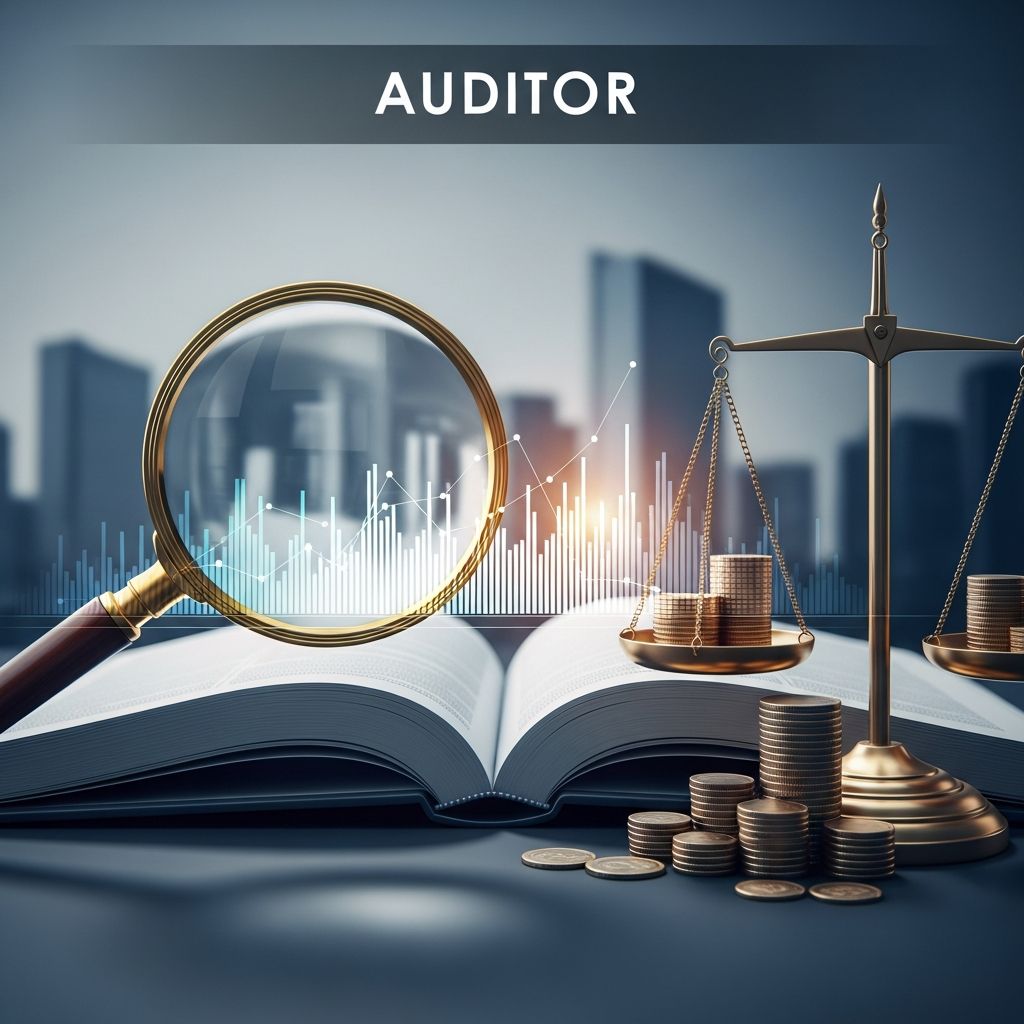
An auditor is an independent professional who examines, verifies, and evaluates financial records, statements, and internal controls of organizations to ensure accuracy, compliance with regulations, and adherence to accounting standards. Auditors serve as objective third parties who provide assurance to stakeholders that financial information presented by a company is accurate, reliable, and presented in accordance with generally accepted accounting principles (GAAP) or International Financial Reporting Standards (IFRS).
The role of auditors has become increasingly critical in the modern business environment, where financial transparency and regulatory compliance are paramount. By conducting thorough examinations of financial statements, transactions, and business processes, auditors help prevent fraud, identify inefficiencies, and provide management with valuable insights for improving operational performance and internal controls.
Key Responsibilities of Auditors
Auditors undertake a comprehensive range of responsibilities that extend beyond simply reviewing financial statements:
- Financial Statement Examination: Auditors carefully analyze and verify the accuracy of financial statements, including balance sheets, income statements, cash flow statements, and notes to financial statements.
- Internal Controls Assessment: They evaluate the effectiveness of internal control systems designed to prevent and detect errors and fraud.
- Regulatory Compliance Verification: Auditors ensure that organizations comply with relevant laws, regulations, and industry standards.
- Risk Assessment: They identify potential risks and vulnerabilities within an organization’s financial and operational processes.
- Fraud Detection: Auditors look for signs of misstatement, irregularities, and potential fraudulent activities.
- Audit Report Preparation: They document findings and provide management and stakeholders with detailed reports on their findings and recommendations.
- Consultation: Auditors offer advice on improving financial reporting, operational efficiency, and compliance with regulations.
Types of Auditors
The audit profession encompasses several specialized roles, each with distinct purposes and expertise:
External Auditors
External auditors are independent professionals hired by companies to conduct impartial examinations of financial statements and internal controls. They work for external audit firms and are not employees of the organization being audited. External auditors provide independent assurance to shareholders, investors, creditors, and other stakeholders that financial statements are accurate and fairly presented. They typically conduct annual audits and provide an audit opinion on whether financial statements are free from material misstatements.
Internal Auditors
Internal auditors are employees of the organization who assess the company’s internal control systems, operational efficiency, and compliance with policies and procedures. Unlike external auditors, internal auditors work for the organization and report to management and the audit committee. They provide ongoing monitoring and evaluation of business processes, financial controls, and risk management procedures. Internal auditors help management identify areas for improvement and ensure that established policies are being followed.
Government Auditors
Government auditors, also known as public auditors, examine the financial records and operations of government agencies and publicly funded institutions. They ensure that public funds are being used efficiently, effectively, and in accordance with applicable laws and regulations. The Government Accountability Office (GAO) employs federal auditors who conduct audits of U.S. government agencies and programs.
Forensic Auditors
Forensic auditors specialize in investigating financial irregularities, fraud, and other criminal activities. They use specialized investigative techniques and accounting analysis to uncover evidence of misappropriation, embezzlement, bribery, and other financial crimes. Forensic auditors often work with law enforcement agencies and are frequently called upon to provide expert testimony in legal proceedings.
IT Auditors
IT auditors focus on evaluating an organization’s information technology systems, data security, and cybersecurity controls. They assess whether IT systems are adequately protecting sensitive financial and operational data, complying with security standards, and operating efficiently. With increasing cyber threats, IT auditors have become essential to organizational risk management.
Qualifications and Credentials
Becoming a professional auditor requires substantial education, training, and certification. The following qualifications are typically required or highly valued:
Educational Requirements
- Bachelor’s degree in accounting, finance, or a related field
- Course work in accounting, auditing, taxation, business law, and finance
- Advanced degrees such as MBA or Master’s in Accounting (MAcc) for senior positions
- Continuing education and professional development throughout one’s career
Professional Certifications
Professional certifications are critical credentials that demonstrate an auditor’s expertise and commitment to ethical standards:
- Certified Public Accountant (CPA): The most widely recognized accounting credential, requiring passing the CPA exam and meeting education and experience requirements.
- Certified Internal Auditor (CIA): Specifically designed for internal auditors, demonstrating expertise in internal control, risk management, and audit processes.
- Certified Information Systems Auditor (CISA): Credentials for IT auditors specializing in information technology systems and security.
- Certified Fraud Examiner (CFE): Specialization for forensic auditors and professionals investigating fraud.
- Chartered Accountant (CA): An international accounting credential recognized in many countries.
The Audit Process
A comprehensive audit typically follows a structured process with several distinct phases:
Planning Phase
Auditors begin by understanding the organization’s business, industry, regulatory environment, and potential risks. They develop an audit strategy, determine the scope of the audit, and identify areas requiring detailed examination.
Fieldwork Phase
During fieldwork, auditors gather evidence by examining documents, interviewing management and staff, observing processes, and testing transactions. They assess the effectiveness of internal controls and identify any irregularities or areas of concern.
Analysis Phase
Auditors analyze their findings, evaluate evidence obtained, and determine whether financial statements are accurate and complete. They assess the appropriateness of accounting practices and compliance with applicable standards.
Reporting Phase
Auditors prepare detailed reports documenting their findings, conclusions, and recommendations. External auditors issue an audit opinion stating whether financial statements present a fair and accurate picture of the organization’s financial condition.
Audit Standards and Regulations
Auditors must adhere to stringent professional standards and regulatory requirements established by regulatory bodies and professional organizations:
- Generally Accepted Auditing Standards (GAAS): Established by the American Institute of Certified Public Accountants (AICPA), providing guidelines for conducting audits in the United States.
- International Standards on Auditing (ISA): Developed by the International Auditing and Assurance Standards Board (IAASB), used globally for audit consistency.
- Sarbanes-Oxley Act (SOX): U.S. legislation requiring public companies to undergo audits and maintain robust internal controls.
- Public Company Accounting Oversight Board (PCAOB): U.S. regulatory body overseeing audits of public companies.
Importance of Auditors in Business and Finance
Auditors play a vital role in maintaining financial integrity, building investor confidence, and ensuring organizational accountability:
- Fraud Prevention and Detection: Auditors identify misstatements, unauthorized transactions, and potential fraud, protecting organizational assets.
- Investor Confidence: Independent audit opinions assure investors and creditors that financial information is reliable, facilitating access to capital markets.
- Regulatory Compliance: Auditors ensure organizations meet legal and regulatory requirements, reducing the risk of penalties and reputational damage.
- Operational Improvement: Through their examination of processes and controls, auditors identify inefficiencies and recommend improvements.
- Risk Management: Auditors help organizations identify and assess risks, enabling better decision-making and risk mitigation strategies.
- Stakeholder Confidence: Financial statement audits provide assurance to employees, suppliers, customers, and the public that the organization is financially sound.
Differences Between External and Internal Auditors
| Aspect | External Auditors | Internal Auditors |
|---|---|---|
| Employment | Independent third party | Company employee |
| Primary Users | External stakeholders (investors, creditors) | Internal management and board |
| Focus | Financial statement accuracy and fairness | Operational efficiency and control effectiveness |
| Frequency | Typically annual | Ongoing throughout the year |
| Scope | Comprehensive financial audit | Focused on specific areas and controls |
| Independence | Complete independence required | Reports to audit committee and management |
Frequently Asked Questions (FAQs)
Q: What is the primary purpose of an audit?
A: The primary purpose of an audit is to provide independent assurance that financial statements are accurate, complete, and presented in accordance with applicable accounting standards. Audits also help organizations maintain effective internal controls, comply with regulations, and identify opportunities for operational improvement.
Q: How often should organizations undergo audits?
A: Public companies are typically required to undergo annual audits by external auditors due to regulatory requirements. Private companies may conduct audits based on lender requirements, investor demands, or internal policies. Internal audits may occur continuously or at regular intervals depending on organizational needs.
Q: What qualifications do auditors need?
A: Auditors typically need a bachelor’s degree in accounting or finance, professional certifications such as CPA or CIA, and extensive knowledge of accounting standards, audit procedures, and relevant regulations. They must also complete continuing education to maintain their credentials.
Q: Can auditors detect fraud?
A: While auditors are trained to identify signs of fraud, detecting fraud is not the primary objective of a financial audit. However, auditors design audit procedures to detect material misstatements resulting from fraud or error. Specialized forensic auditors focus specifically on investigating suspected fraud.
Q: What is an audit opinion?
A: An audit opinion is the formal conclusion provided by external auditors regarding whether financial statements present a fair and accurate view of an organization’s financial condition. The four types of audit opinions are: unqualified (clean), qualified, adverse, and disclaimer of opinion.
Q: How do internal auditors differ from external auditors?
A: Internal auditors are employees of the organization and provide ongoing assessment of internal controls and operational efficiency. External auditors are independent third parties hired to provide assurance on financial statement accuracy to external stakeholders. They have different reporting relationships and focus areas.
Q: What are the main audit standards?
A: The main audit standards include Generally Accepted Auditing Standards (GAAS) in the United States and International Standards on Auditing (ISA) used globally. These standards establish guidelines for planning, conducting, and reporting audit results.
References
- What is an Auditor? — American Institute of Certified Public Accountants (AICPA). 2024. https://www.aicpa.org
- Understanding Auditing Standards and Requirements — Public Company Accounting Oversight Board (PCAOB). 2024. https://pcaobus.org
- Internal Auditing Standards — The Institute of Internal Auditors (IIA). 2024. https://www.theiia.org
- International Standards on Auditing — International Auditing and Assurance Standards Board (IAASB). 2024. https://www.iaasb.org
- Sarbanes-Oxley Act of 2002 — U.S. Securities and Exchange Commission (SEC). 2002. https://www.sec.gov
- Forensic Accounting and Investigation — Association of Certified Fraud Examiners (ACFE). 2024. https://www.acfe.org
Similar Articles








Read full bio of Sneha Tete