ATM Withdrawal Limits Explained
Discover how ATM cash limits work, why banks set them, typical amounts across major institutions, and proven strategies to access more funds when needed.
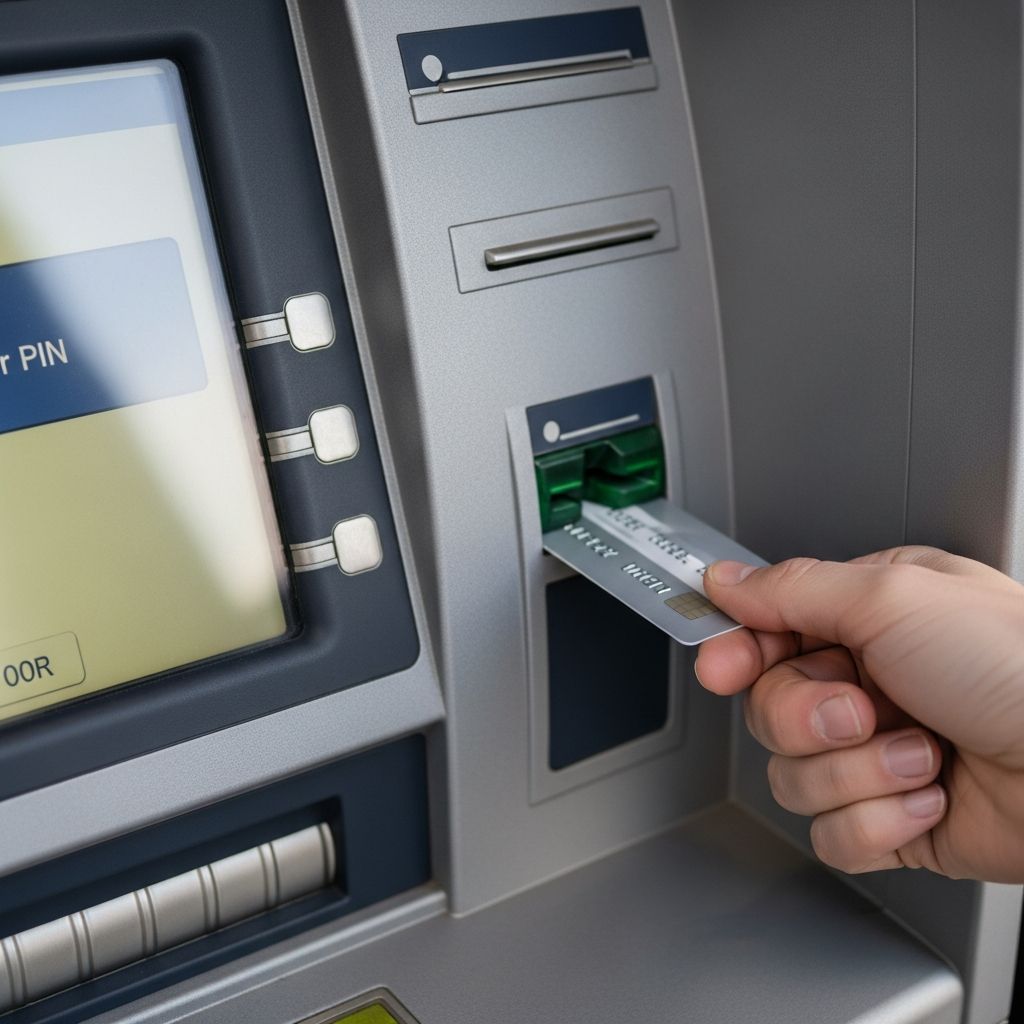
Automated Teller Machines (ATMs) provide convenient access to cash, but financial institutions impose strict daily and per-transaction caps to safeguard accounts and manage liquidity. These restrictions typically range from $300 to $5,000 per day, varying by bank, account tier, and customer profile.
Why Financial Institutions Enforce Cash Access Caps
Banks establish ATM withdrawal boundaries primarily for security and operational efficiency. By limiting large cash extractions, institutions reduce fraud risks, such as unauthorized access or theft, protecting both customers and their reserves. These measures also ensure sufficient cash availability across ATM networks, preventing shortages during peak demand periods.
Regulatory compliance plays a role too. Federal guidelines under the Electronic Fund Transfer Act (Regulation E) encourage prudent transaction monitoring, indirectly supporting limit policies. Additionally, caps help control internal cash flow, allowing banks to forecast and replenish ATM inventories accurately.
Core Components of ATM Cash Restrictions
Understanding the structure of these limits is essential for effective cash management. They generally fall into two categories:
- Daily Aggregate Cap: The total cash retrievable within a 24-hour window, irrespective of transaction count. This resets at midnight or a bank-specific time, often aligned with the business day close.
- Single Transaction Maximum: The uppermost amount per individual withdrawal, influenced by ATM denomination capabilities (e.g., $20 or $100 bills) and machine safeguards.
Other variables include transaction volume limits (e.g., 6-10 per day) and reductions from pending debits or holds on recent deposits. Out-of-network ATMs may impose lower thresholds due to operator rules.
Factors Shaping Your Specific Limit
No universal standard exists; limits personalize based on several elements:
- Account Category: Premium or high-balance checking yields higher caps than basic or student variants. Long-term customers often qualify for elevated access.
- Banking Relationship: Established profiles with consistent activity receive preferential treatment over new or low-activity ones.
- Debit Card Variant: Standard cards cap lower than premium or business variants.
- ATM Type: In-network machines support fuller limits; foreign ones add operator ceilings and surcharges.
- Available Funds: Effective balance post-holds dictates realizable withdrawals.
Fees erode net proceeds— a $3 out-of-network charge on a $500 pull nets $497.
Comparative Overview of Major Bank Policies
Limits diverge significantly across institutions. The table below aggregates data from leading U.S. banks, highlighting daily maxima (as of latest reports):
| Bank/Institution | Typical Daily ATM Limit | Notes |
|---|---|---|
| Ally Bank | $1,000 | Uniform across accounts |
| Bank of America | $1,000 – $1,500 | Varies by account tier |
| Capital One | $200 – $5,000 | App-based lower; total debit inclusive |
| Chase | $500 – $3,000 | Account-dependent |
| Citi | $1,500 | Standard for most |
| PNC Bank | $500+ | Scales with profile |
| TD Bank | Up to $1,500 | Account-specific |
| Truist | Up to $2,500 | Level-based |
| Wells Fargo | Varies | Adjustable via app |
Averages hover at $500-$1,000 for standard accounts, with outliers up to $5,000 for elite tiers.
Requesting a Personalized Limit Increase
Exceeding needs? Many banks permit adjustments:
- Digital Channels: Apps or online portals (e.g., Wells Fargo Mobile) enable self-service tweaks.
- Phone Support: Call the number on your card; provide justification like travel or emergencies.
- Branch Visits: Present ID for teller-assisted hikes, often temporary.
Approval hinges on history, balance, and rationale. Premium members secure faster, higher boosts.
Practical Workarounds for Immediate Cash Needs
When caps bind, alternatives abound:
- Multi-ATM Strategy: Split across machines if daily total remains viable.
- Reset Timing: Await daily refresh, commonly 12:00 AM local time.
- Cash Back at Retail: Grocery checkouts offer $20-$200 per purchase without ATM fees.
- Branch Counter Service: Bypass machines for full teller withdrawals.
- Digital Transfers: Apps like Zelle or Venmo for peer cash, or load prepaid cards.
- Overdraft Opt-In: Enable for buffer, though fees apply.
Avoid repeated declined attempts to prevent fraud flags.
Navigating Fees and Hidden Costs
Out-of-network use triggers dual charges: your bank’s ($2-$5) and operator’s ($2-$4), slashing yields. Seek surcharge-free networks via apps. International pulls add currency conversion fees (1-3%).
Implications for Budgeting and Security
Proactive limit awareness aids planning—especially for cash-heavy events like moves or vendor payments. It fosters digital payment shifts, reducing theft exposure. Monitor via apps for real-time balances and alerts.
Scams exploit limits; verify ATMs in lit areas and shield PINs. Report irregularities immediately.
Frequently Asked Questions
What is a standard daily ATM withdrawal amount?
Most fall between $500 and $1,000, though ranges span $300-$5,000 per bank policy.
Can I change my ATM limit online?
Yes, many banks like Wells Fargo offer app-based adjustments for eligible accounts.
Do savings accounts share ATM caps?
Often yes, with federal Regulation D limiting savings to six transfers monthly, including ATM pulls.
Why was my withdrawal declined despite sufficient funds?
Likely hit daily cap, holds, or ATM/processor limits.
Are limits uniform across all ATMs?
No—in-network higher; out-of-network or international often lower.
Best Practices for Optimal Cash Access
- Check limits via app or statement quarterly.
- Batch withdrawals pre-reset.
- Prioritize in-network for fee avoidance.
- Build emergency digital reserves.
- Upgrade accounts for higher caps.
Mastering these dynamics empowers seamless financial navigation in a cash-optional world.
References
- What Are ATM Withdrawal Limits? — Experian. 2023-10-15. https://www.experian.com/blogs/ask-experian/what-are-atm-withdrawal-limits/
- ATM Withdrawal Limits: What You Need to Know — SoFi. 2024-05-22. https://www.sofi.com/learn/content/atm-withdrawal-limit/
- What Is an ATM Withdrawal Limit? — American Express. 2024-02-10. https://www.americanexpress.com/en-us/credit-cards/credit-intel/atm-withdrawal-limit/
- ATM Withdrawal Limits: Know Your Daily Limit — Wells Fargo Stories. 2024-08-01. https://stories.wf.com/your-money/atm-withdrawal-limit/
- What is an ATM Withdrawal Limit? — Chase Bank. 2024-06-18. https://www.chase.com/personal/banking/education/basics/atm-withdrawal-limits
- Self-Service ATMs: Accessibility, Limits, & Features — Bank of America. 2024-03-05. https://www.bankofamerica.com/deposits/self-service-atms/
Similar Articles








Read full bio of medha deb