Assumable Mortgages: 4 Loan Types And How To Save
Discover how assumable mortgages let buyers take over seller's loans for lower rates and savings in today's market.
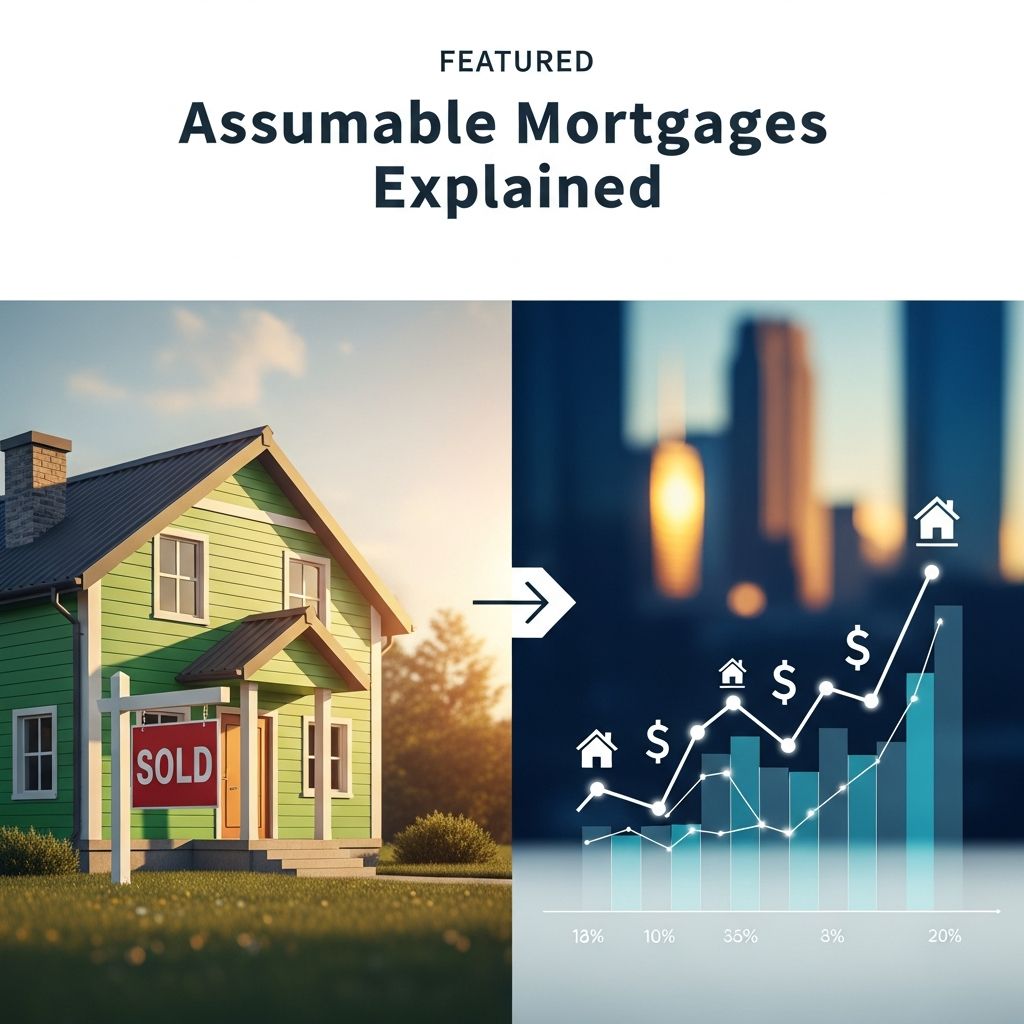
Assumable mortgages provide a unique pathway for homebuyers to inherit the seller’s existing loan terms, often securing lower interest rates than new market offerings. This mechanism can significantly reduce long-term costs and streamline purchases, particularly when rates are elevated.
Defining the Core Concept
An assumable mortgage enables a buyer to step into the seller’s loan obligations, adopting the remaining principal balance, fixed interest rate, and repayment schedule without originating a fresh loan. Primarily available on government-backed products like FHA, VA, and USDA loans, this option contrasts sharply with conventional mortgages, which rarely permit assumption due to lender restrictions.
Buyers effectively continue payments from the loan’s current point, preserving any favorable terms established years earlier. For instance, with many homeowners locked into sub-4% rates from prior low-rate periods, assumers can bypass today’s higher averages around 6% or more.
Primary Types of Assumable Loans
- FHA Loans: Backed by the Federal Housing Administration, these allow assumptions with processing fees capped at 0.5% of the loan balance. Buyers must meet credit and income standards, but release of the seller from liability is possible via a “simple” assumption.
- VA Loans: Offered to eligible veterans and service members, VA loans feature no down payment requirements for assumptions and often waive funding fees. Substitution of entitlement occurs, preserving the seller’s VA benefits for future use.
- USDA Loans: Rural development loans from the U.S. Department of Agriculture permit assumptions, typically requiring buyer qualification and limiting closing costs.
- Conventional Loans: Rare, but some pre-1989 loans or portfolio-held mortgages may qualify; most post-1989 Fannie Mae/Freddie Mac loans do not.
Step-by-Step Assumption Process
- Verify Eligibility: Confirm the mortgage type supports assumption by reviewing the seller’s loan documents or contacting the servicer.
- Submit Application: The buyer applies through the lender, providing financial details for credit review, income verification, and debt-to-income ratio checks—similar to new loan underwriting.
- Equity Gap Coverage: Pay the seller the difference between the home’s sale price and remaining loan balance, often via cash or a second mortgage at current rates.
- Lender Approval: Upon qualification, the lender processes the transfer, collects fees, and updates records. No new appraisal is typically needed, accelerating closure.
- Closing and Transfer: Sign assumption documents; seller may request a release from future liability, though not always granted.
The entire process mirrors traditional closings but often completes faster with fewer fees, potentially in 30-45 days.
Key Advantages for Buyers and Sellers
Assumable mortgages offer mutual benefits, reshaping transaction dynamics in competitive markets.
For Buyers
- Interest Rate Savings: Inherit rates as low as 2-3%, potentially saving tens of thousands over 30 years compared to new loans.
- Reduced Closing Expenses: Government caps limit fees (e.g., FHA at 0.5%), excluding origination and underwriting costs.
- No Appraisal Hurdles: Avoids valuation fees and delays, saving $300-$500 upfront.
- Enhanced Affordability: Lower payments boost borrowing power, enabling pricier homes.
For Sellers
- Market Edge: Attracts buyers in high-rate eras, speeding sales.
- Premium Pricing: Justify higher list prices as rate savings offset equity demands.
| Party | Main Benefit | Potential Savings |
|---|---|---|
| Buyer | Lower Rate | $50,000+ over loan life |
| Buyer | Closing Costs | 1-2% of loan vs. 3-6% new |
| Seller | Faster Sale | Reduced days on market |
Potential Drawbacks and Risks
Despite appeal, assumptions carry challenges.
- Large Equity Payments: Sellers with substantial paid-down principal demand large cash infusions or secondary financing at higher rates.
- Qualification Barriers: Buyers undergo full credit checks; poor scores disqualify despite favorable rates.
- Seller Liability Concerns: Without release, original borrower remains liable for defaults.
- Limited Availability: Only ~25% of mortgages qualify; inventory remains low.
- Due-on-Sale Clauses: Triggered on non-assumable loans, accelerating full repayment.
Eligibility Criteria for Buyers
Lenders assess assumers like new applicants:
- Credit score: Typically 620+ for FHA/VA.
- Debt-to-income ratio: Under 43%.
- Stable income and employment history.
- Sufficient reserves for equity gap and reserves.
VA assumptions uniquely prioritize service-related eligibility over credit in some cases.
Real-World Examples and Savings Calculations
Consider a $400,000 home with a $250,000 assumable 3% loan (20 years left). Buyer pays $150,000 equity.
- New 6.5% loan on $400,000: ~$2,530 monthly.
- Assumed: $1,386 monthly + second lien if needed—saving $1,144/month or $275,000 total.
Sellers listing assumables often see 10-20% more showings.
Finding and Listing Assumable Properties
Search platforms like LendingTree or MLS filters for “assumable.” Sellers should disclose terms upfront, partnering with assumption-savvy agents.
Navigating Fees and Costs
| Fee Type | FHA/VA Cap | Typical Amount |
|---|---|---|
| Processing | 0.5% | $1,000-$2,500 |
| Appraisal (if req.) | N/A | $0 often |
| Funding (VA) | 0.5% | Waivable |
Future Outlook in Rising Rate Environments
With persistent inflation, assumables gain traction; listings rose 20% in 2023-2024. Policy shifts could expand conventional assumability.
Frequently Asked Questions
Can anyone assume a mortgage?
No, buyers must qualify via lender review; not open to all.
Does assuming release the seller?
Often yes for FHA simple assumptions, but VA requires processing.
Are there tax implications?
Equity payments treated as purchase price; consult IRS for details.
How long does assumption take?
30-60 days, faster sans appraisal.
Can I assume if rates drop?
Possible but less attractive; refinances compete.
References
- Assumable Mortgage: What It Is and How It Works — LendingTree. 2024. https://www.lendingtree.com/home/mortgage/what-is-an-assumable-mortgage/
- What is an assumable mortgage and how does it work? — Rocket Mortgage. 2024. https://www.rocketmortgage.com/learn/what-is-an-assumable-mortgage
- What Is an Assumable Mortgage? How it Works, Pros & Cons — Farm Bureau Financial Services. 2024. https://www.fbfs.com/learning-center/what-is-an-assumable-mortgage
- What is an Assumable Mortgage? — RW Towner Mortgage. 2024. https://rwtownemortgage.com/blog/mortgage/what-is-an-assumable-mortgage/
- The Assumable Mortgage: Is it Right For You? — PennyMac. 2024. https://www.pennymac.com/blog/understanding-assumable-mortgages
- A Comprehensive Guide to Assumable Mortgages — NewRez. 2024. https://www.newrez.com/blog/mortgage-101/a-comprehensive-guide-to-assumable-mortgages/
Similar Articles








Read full bio of medha deb