Assumable Mortgage: Definition, How It Works
Understanding assumable mortgages: Transfer seller's loan, keep the rate, save thousands.
Assumable Mortgage: Definition and Overview
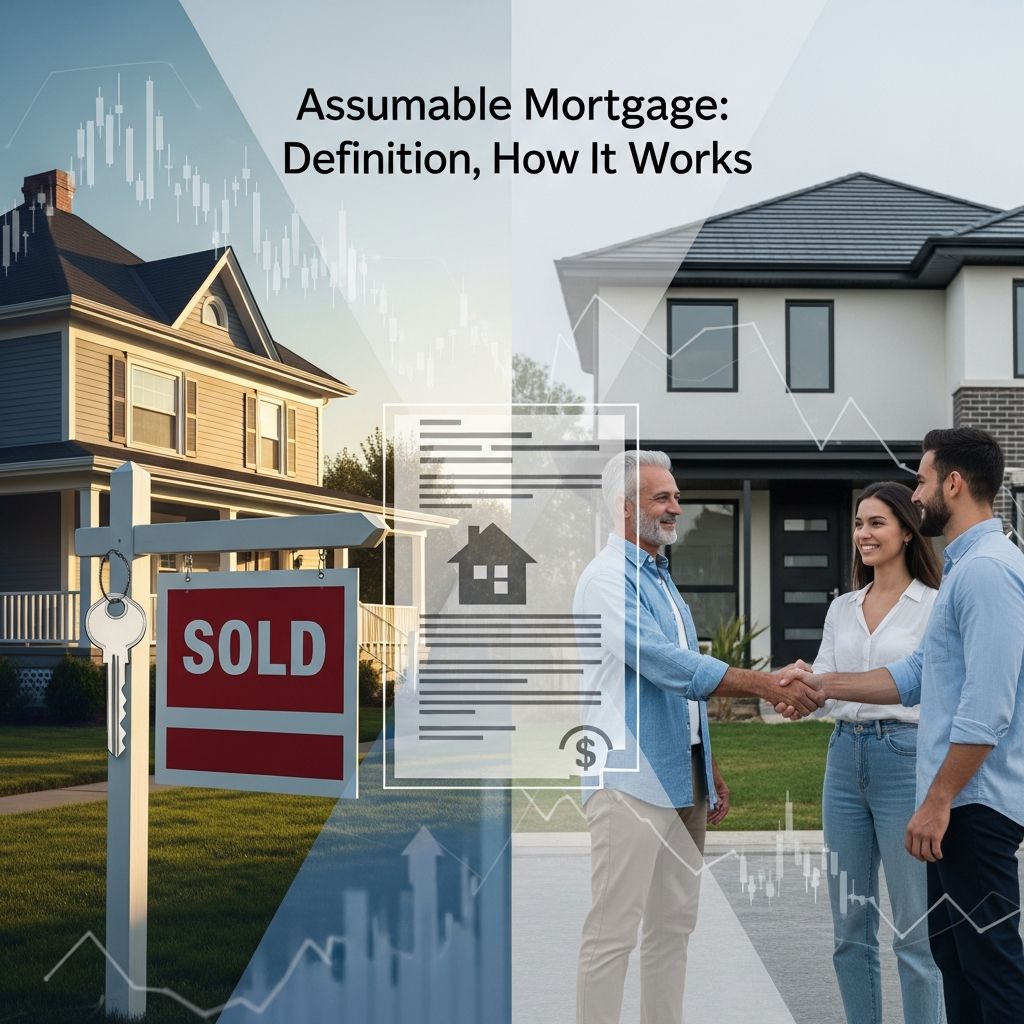
An assumable mortgage is a type of home loan that can be transferred from the original borrower to a subsequent homeowner. Unlike traditional mortgages, which must be refinanced when a property changes hands, an assumable mortgage allows the buyer to take over the seller’s existing loan with all its original terms intact. This includes the interest rate, repayment period, and remaining loan balance. The primary appeal of assumable mortgages lies in their ability to provide buyers with significantly lower interest rates, especially in environments where current market rates have risen since the original loan was originated.
When mortgage rates are elevated, assumable mortgages become particularly attractive to homebuyers. For instance, a home purchased in 2016 when rates hovered around 4% could be transferred to a new buyer in 2024, potentially allowing that buyer to save approximately 3 percentage points on their interest rate compared to current market offerings. This substantial rate advantage can result in thousands of dollars in savings over the life of the loan.
How Assumable Mortgages Work
The mechanics of an assumable mortgage are relatively straightforward, though they require careful coordination between the buyer, seller, and lender. When a buyer assumes a mortgage, they essentially step into the shoes of the original borrower, taking on the remaining debt, interest rate, and payment obligations. For example, if a 30-year mortgage is already three years old when assumed, the new borrower has 27 years remaining to pay off the loan. Only the name on the mortgage documentation changes; all other terms remain identical.
However, assuming a mortgage requires explicit lender approval. If a buyer and seller attempt to transfer a mortgage without notifying the lender, they face significant risks. Upon discovery, the lender can demand immediate payment of the full loan amount. Additionally, if the loan remains in the seller’s name, the original borrower continues to bear responsibility for the debt, leaving them vulnerable to credit damage if the new owner fails to make payments.
In a properly executed assumption, the new borrower must satisfy many of the same qualification requirements as someone seeking a new mortgage. The loan servicer typically requests a credit report, financial statements, and employment verification. Once the lender is satisfied with the buyer’s creditworthiness, it releases the original borrower from liability for the remaining debt.
Which Mortgages Are Assumable?
Not all mortgages qualify as assumable. In fact, most conventional mortgages are not assumable due to a “due-on-sale” clause that requires the remaining balance to be paid in full upon sale of the property. Instead, assumable mortgages are limited primarily to government-backed or government-insured loans.
Loans that are typically assumable include:
- FHA Loans: Mortgages insured by the Federal Housing Administration are assumable subject to lender approval. Lenders may impose conditions, such as a minimum credit score requirement for the assuming buyer.
- VA Loans: Mortgages guaranteed by the Department of Veterans Affairs are assumable. Notably, the buyer assuming a VA loan does not need to be a veteran or active-duty military member.
- USDA Loans: Mortgages guaranteed by the Department of Agriculture are assumable, making rural property purchases more flexible.
- Conventional Loans with Assumption Clauses: While rare, some conventional mortgages include assumption provisions that allow transfers under specific circumstances, such as when property is transferred to a successor in interest during the borrower’s lifetime or after death.
- Adjustable-Rate Mortgages: Certain ARMs can be assumed if they have moved beyond their initial fixed-rate period.
The Equity Gap Challenge
One of the most significant considerations in an assumable mortgage transaction is the equity gap. When a home has appreciated since the original mortgage was issued, the property’s current market value typically exceeds the remaining loan balance. This difference represents the seller’s equity in the property.
For example, if a seller has paid down a mortgage to $150,000 over five years, but the home is now worth $300,000, the buyer assuming the $150,000 mortgage must still pay the remaining $150,000 difference. The buyer typically handles this through one of two methods: a substantial down payment from savings or a second mortgage covering the equity gap. The second mortgage usually carries a higher interest rate and different terms than the assumed first mortgage, which can diminish some of the cost advantages of assuming the original loan.
This equity consideration is crucial for buyers evaluating whether an assumable mortgage makes financial sense compared to obtaining a new mortgage for the full purchase price.
Advantages for Buyers
Assumable mortgages offer several compelling benefits for homebuyers, particularly in high-interest-rate environments.
Lower Interest Rate: The most significant advantage is access to an interest rate that may be substantially below current market rates. This benefit can persist for many years, translating into substantial savings on monthly payments and total interest paid over the loan’s lifetime.
Reduced Closing Costs: Assuming a mortgage costs significantly less than originating a new loan. Additionally, the FHA, VA, and USDA impose caps on assumption-related fees, keeping costs reasonable. Buyers assuming mortgages typically avoid appraisal requirements, which can save hundreds of dollars alone.
Faster Closing Process: Since much of the underwriting is already complete on the original loan, the assumption process often moves more quickly than a traditional mortgage application and approval.
Predictable Terms: Buyers know exactly what their interest rate, payment amount, and loan term will be, eliminating rate uncertainty.
Advantages for Sellers
Sellers also benefit from offering assumable mortgages to prospective buyers.
Enhanced Marketability: When current interest rates exceed the rate on an assumable mortgage, the property becomes significantly more attractive. In a scenario where a seller has a 4.25% interest rate and current rates are at 7%, that lower rate becomes a powerful selling feature that can draw more qualified buyers and reduce time on market.
Negotiating Power on Price: The ability to transfer a favorable rate gives sellers leverage in price negotiations. Since buyers can save considerable money on interest through assumption and avoid typical closing costs, they can allocate those savings toward a higher purchase price or down payment, potentially allowing sellers to command premium pricing.
Easier Sale Completion: Assumable mortgages can facilitate smoother transactions and reduce the likelihood of deals falling through due to financing obstacles, particularly for buyers who might struggle to qualify for new mortgages.
Disadvantages and Limitations
While assumable mortgages offer distinct advantages, they also present challenges that buyers and sellers should carefully consider.
The Equity Gap Problem: As mentioned, buyers must pay the difference between the home’s current value and the assumed mortgage balance, typically through a second mortgage. This second loan carries higher interest rates and increases total borrowing costs, potentially offsetting much of the benefit from the lower primary mortgage rate.
Limited Loan Availability: The restriction of assumable mortgages to government-backed loans significantly limits options. Most modern mortgages are conventional loans with due-on-sale clauses, making assumable mortgages relatively uncommon in today’s market.
Lender Approval Requirements: Buyers must still qualify with the lender, undergoing credit checks and financial verification. Those with poor credit or unstable employment may face difficulties or outright rejection.
Seller’s Continued Liability Risk: Until the assumption is formally completed and the original borrower is released from liability, the seller remains responsible for the debt. If the new owner defaults, the seller’s credit suffers.
Complex Negotiations: Determining how to handle the equity gap and structuring the transaction requires careful negotiation between buyer and seller, potentially complicating the sales process.
Comparing Assumable Mortgages to Traditional Financing
| Feature | Assumable Mortgage | Traditional Mortgage |
|---|---|---|
| Interest Rate | Seller’s original rate (often lower) | Current market rate |
| Closing Costs | Lower (assumption fees only) | Typically 2-5% of loan amount |
| Loan Term | Reduced by years already paid | Full 15, 20, or 30 years |
| Appraisal Requirement | Usually not required | Required |
| Lender Approval | Lender must approve assumption | Standard qualification process |
| Down Payment Flexibility | Often requires second mortgage for equity gap | Standard down payment options |
| Availability | Limited to government-backed loans | Widely available |
When Assumable Mortgages Make Sense
Assumable mortgages are most advantageous when interest rates have risen significantly since the original mortgage was issued. A buyer considering assumption should calculate whether the savings from the lower interest rate outweigh the costs of the second mortgage needed to cover the equity gap and any assumption fees. Additionally, buyers should ensure they can qualify with the lender and have sufficient credit and income to satisfy approval requirements.
For sellers, offering an assumable mortgage can be particularly valuable in buyer’s markets where financing flexibility attracts qualified purchasers and reduces time on market.
Frequently Asked Questions
Q: Can any buyer assume a mortgage?
A: No. The buyer must meet the lender’s qualification standards, including credit score requirements and income verification. Additionally, only government-backed mortgages—FHA, VA, and USDA loans—are typically assumable.
Q: What happens if I assume a mortgage without lender approval?
A: The lender can demand immediate full payment of the remaining balance once discovered. Additionally, if the original borrower’s name remains on the loan, they continue bearing legal responsibility for the debt.
Q: Do I need to pay an appraisal fee when assuming a mortgage?
A: No. Assumable mortgages typically do not require appraisals, which saves buyers several hundred dollars compared to traditional mortgage origination.
Q: How do I handle the equity gap in an assumable mortgage?
A: You can either pay the difference as a down payment from savings or obtain a second mortgage. A second mortgage covers the equity gap but typically carries a higher interest rate than the assumed primary loan.
Q: Are conventional mortgages ever assumable?
A: Most conventional mortgages contain due-on-sale clauses preventing assumption. However, rare exceptions exist for properties transferred to successors in interest or certain adjustable-rate mortgages beyond their initial fixed periods.
Q: How long does the assumption process take?
A: The timeline varies but is typically shorter than a traditional mortgage application, often taking 30-45 days since much underwriting is already complete on the original loan.
References
- Assumable Mortgage: What It Is, How It Works and Who Can Get One — NerdWallet. 2024. https://www.nerdwallet.com/mortgages/learn/assumable-mortgage
- What is an assumable mortgage and how does it work? — Rocket Mortgage. 2024. https://www.rocketmortgage.com/learn/what-is-an-assumable-mortgage
- Assumable Mortgage — Cornell Law School, Legal Information Institute. January 2025. https://www.law.cornell.edu/wex/assumable_mortgage
- What Is an Assumable Mortgage? How it Works, Pros & Cons — Farm Bureau Financial Services. 2024. https://www.fbfs.com/learning-center/what-is-an-assumable-mortgage
- A Comprehensive Guide to Assumable Mortgages — Newrez. 2024. https://www.newrez.com/blog/mortgage-101/a-comprehensive-guide-to-assumable-mortgages/
- Homebuying decoded: What is an assumable mortgage? — U.S. Bank. 2024. https://www.usbank.com/financialiq/manage-your-household/home-ownership/what-is-an-assumable-mortgage.html
Similar Articles








Read full bio of medha deb