Assisted Living vs Nursing Homes: Complete Comparison
Understand the key differences between assisted living and nursing homes to make the best care decision.
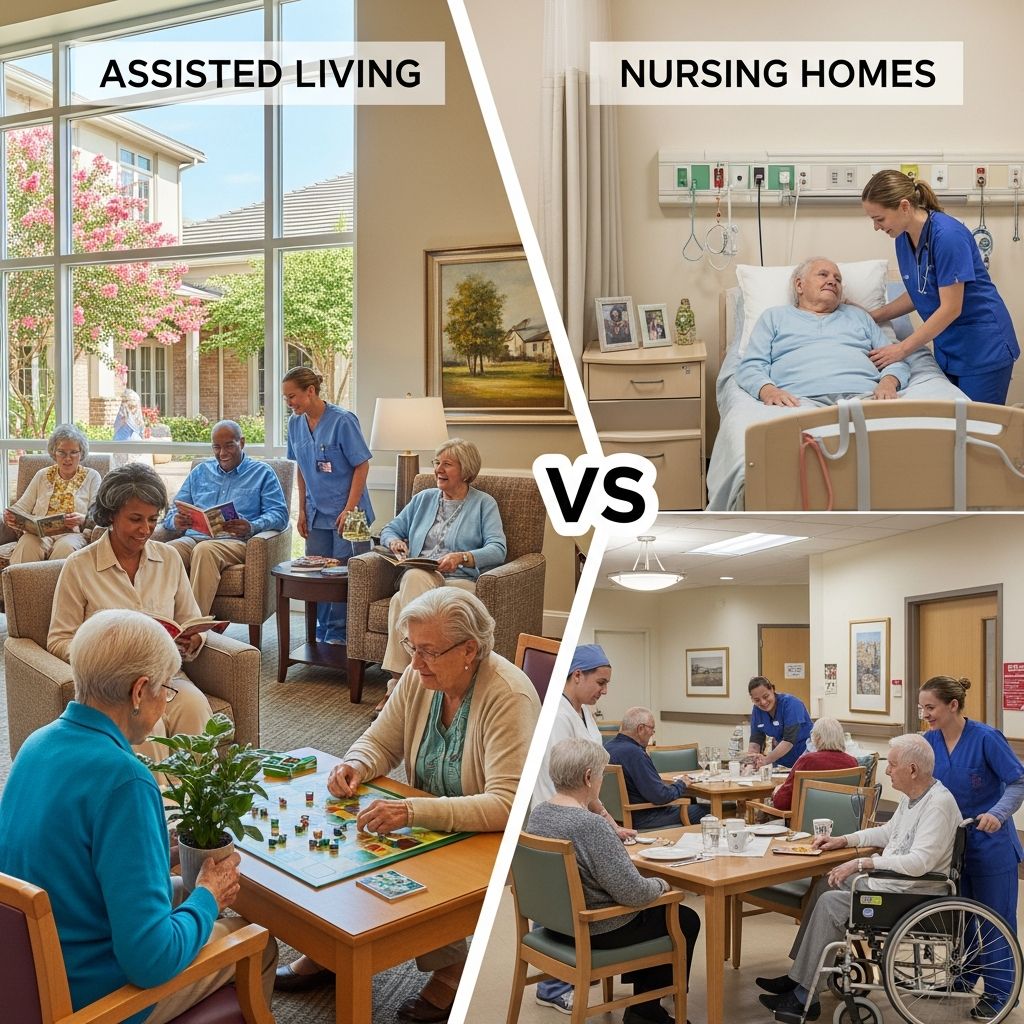
Assisted Living vs Nursing Homes: Which Senior Care Option Is Right for You?
Choosing between assisted living and nursing homes is one of the most important decisions families make when caring for aging loved ones. Both options provide valuable support for seniors, but they serve different needs and offer distinct levels of care. Understanding the differences between these two senior living arrangements can help you make an informed decision that best matches your loved one’s health requirements, lifestyle preferences, and financial situation.
Key Differences Between Assisted Living and Nursing Homes
While both assisted living facilities and nursing homes provide care for seniors, they differ significantly in their focus, services, staffing, and target populations. Assisted living communities are designed for active seniors who need help with some daily tasks but want to maintain independence, while nursing homes cater to individuals with complex medical needs requiring round-the-clock professional medical supervision.
| Factor | Assisted Living | Nursing Homes |
|---|---|---|
| Primary Focus | Independence and social engagement | 24/7 medical care and supervision |
| Target Population | Active seniors with minor assistance needs | Seniors with chronic conditions requiring medical care |
| Staffing | Trained caregiving staff | Licensed healthcare professionals and medical specialists |
| Admission Requirements | Minimal health assessments | Physician recommendation required |
| Living Space | Apartment-style with personalization options | Semi-private or shared rooms with medical accessibility |
Understanding Assisted Living
Assisted living communities support seniors who are generally in good health but need assistance with everyday activities. These facilities emphasize maintaining residents’ independence while providing the support necessary to help them thrive. The environment in assisted living promotes active engagement and social participation.
Services and Amenities in Assisted Living
Assisted living facilities offer a comprehensive range of supportive services designed to enhance residents’ quality of life while maintaining their autonomy:
- Assistance with activities of daily living (ADLs) such as dressing, grooming, and bathing
- Meal preparation and dining services with restaurant and pub-style options
- Medication management and medical transportation
- Housekeeping and laundry services
- Social activities, outings, and entertainment programs
- Transportation services for appointments and shopping
- Dementia care and memory support programs
- Recreational activities and hobby programs
Living Accommodations in Assisted Living
Residents in assisted living typically enjoy more flexibility and personalization options compared to nursing homes. Apartment-style living arrangements include one-bedroom units and club suites that residents can decorate and arrange to reflect their personal preferences. This home-like environment encourages residents to maintain their sense of individuality and comfort.
Understanding Nursing Homes
Nursing homes, also known as skilled nursing facilities, are designed for seniors with serious medical conditions who require intensive medical care and supervision. These facilities employ licensed healthcare professionals available 24/7 to monitor and manage complex health issues. The primary focus is providing comprehensive medical care rather than fostering independence.
Services and Amenities in Nursing Homes
Nursing homes offer extensive medical services beyond what assisted living facilities provide:
- 24/7 skilled nursing care from licensed healthcare professionals
- Medication administration including intravenous injections
- Specialized rehabilitation services including physical, occupational, and speech therapy
- Dialysis support and other specialized medical treatments
- Palliative and preventative long-term care
- Emergency and routine dental services
- Specialized diets for residents with digestive limitations
- Wound care and medical monitoring
- Respiratory and cognitive therapy
- Enhanced safety and security features
Staffing and Medical Care
Nursing homes maintain a significantly larger medical staff compared to assisted living facilities. This includes registered nurses, licensed practical nurses, certified nursing assistants, and medical specialists available around the clock. The continuous presence of trained medical professionals ensures that residents with complex health conditions receive appropriate monitoring and treatment at any time of day or night.
Cost Comparison: Assisted Living vs Nursing Homes
One of the most significant differences between assisted living and nursing homes is the cost of care. Nursing home care is substantially more expensive than assisted living due to the higher level of medical services and staffing requirements.
Current Pricing
According to recent data, the median monthly cost of a private room in a nursing home is approximately $10,646, while the median monthly cost of an apartment in an assisted living community is $5,190. When calculated annually, a private room in a nursing home costs around $116,800 compared to approximately $64,200 for a one-bedroom apartment in assisted living. This means nursing home care typically costs nearly double that of assisted living.
Factors Contributing to Cost Differences
The significant price difference reflects several key factors. Nursing homes require more medically trained staff and a greater overall number of employees to provide round-the-clock supervision and specialized care. Additionally, the cost of medical equipment, medications, and specialized therapeutic services contributes to higher operational expenses in nursing facilities.
Admission Requirements and Eligibility
The admission process differs considerably between assisted living and nursing homes, reflecting their different care levels and target populations.
Assisted Living Admission
Assisted living communities typically have more flexible admission requirements. While facilities may require certain health assessments and functional capabilities, they do not require a physician’s recommendation. Residents generally must be able to manage basic self-care tasks independently or with minimal assistance, eat meals with minimal help, and transfer between a bed and wheelchair without extensive assistance.
Nursing Home Admission
Nursing home admission is more rigorous and requires a physician’s recommendation confirming that the individual needs a higher level of care. Facilities must assess that residents require skilled nursing services for their medical conditions and cannot manage independently even with supportive services. Residents must also meet specific health criteria confirming their need for specialized medical care.
Independence and Lifestyle Considerations
The degree of independence available to residents represents a fundamental difference between these two care options.
Assisted Living and Independence
Assisted living communities actively encourage and foster independence for residents with varying ability levels. Residents maintain control over their daily schedules, dining choices, activities, and personal preferences. This environment supports an active lifestyle with opportunities for social engagement, hobby pursuit, and relationship maintenance with family and friends.
Nursing Home and Medical Focus
Nursing homes prioritize medical management and safety over independence. The environment is configured around medical necessity, with staff access and medical equipment taking precedence in room design and layout. While nursing homes also offer social and recreational activities, these are secondary to providing medical care and supervision.
Medical Care and Health Management
Understanding the distinction in medical services is crucial for selecting appropriate care.
Assisted Living Medical Services
Assisted living staff are trained to provide basic health support but generally are not qualified to deliver skilled medical services. They typically assist with medication management reminders, medical transportation, and coordination with healthcare providers, but do not administer medications, change wound dressings, or provide physical therapy.
Nursing Home Medical Services
Nursing homes provide comprehensive medical services from trained professionals capable of managing severe health challenges and rehabilitation. Licensed nurses administer medications including complex treatments, monitor chronic conditions continuously, manage post-surgical recovery, and coordinate specialized therapies. This level of medical expertise makes nursing homes appropriate for individuals recovering from surgery, managing multiple chronic diseases, or requiring palliative care.
Frequently Asked Questions
Q: Who typically benefits from assisted living?
A: Assisted living is ideal for seniors who are generally in good health but need help with daily activities like meal preparation, dressing, bathing, or medication reminders. It suits active older adults who want to maintain independence while receiving support.
Q: What types of medical conditions require nursing home care?
A: Nursing homes are appropriate for seniors with serious chronic conditions, severe mobility impairments, cognitive decline such as advanced dementia, those requiring dialysis or specialized medical treatments, and individuals recovering from major surgery who need intensive rehabilitation.
Q: Can residents transition from assisted living to a nursing home?
A: Yes, many residents begin in assisted living but transition to nursing homes as their health needs increase and they require more intensive medical supervision and care.
Q: What payment options are available for these facilities?
A: Both assisted living and nursing home care can be paid through out-of-pocket funds, long-term care insurance, Medicare, Medicaid, or a combination of these options depending on individual circumstances and facility policies.
Q: How do I determine which option is best for my loved one?
A: Consider your loved one’s current health status, level of independence, medical care needs, financial situation, and personal preferences. Consulting with healthcare providers and touring facilities can help inform your decision.
Making the Right Choice for Your Loved One
Selecting between assisted living and nursing homes requires careful consideration of your loved one’s specific needs. Assess their current health status, ability to perform daily activities, medical care requirements, and preference for independence versus professional medical supervision. Consulting with their primary care physician can provide valuable guidance. Visiting facilities, speaking with current residents and their families, and reviewing specific services offered will help ensure you choose the option that best supports your loved one’s well-being and quality of life.
References
- Assisted Living Vs Nursing Home: When Do You Choose Each? — Village Walk Senior Living. 2024. https://villagewalkseniorliving.com/assisted-living-vs-nursing-home/
- Assisted Living vs. Nursing Homes: Care, Services, and Costs — A Place for Mom. 2024. https://www.aplaceformom.com/caregiver-resources/articles/assisted-living-vs-nursing-homes
- Understanding Assisted Living vs. Nursing Home Care — Charter Senior Living of Brookfield. 2024. https://www.charterofbrookfield.com/blog/assisted-living-vs-nursing-home/
- Long-Term Care Facilities: Assisted Living, Nursing Homes, and Related Care — National Institute on Aging. 2024. https://www.nia.nih.gov/health/assisted-living-and-nursing-homes/long-term-care-facilities-assisted-living-nursing-homes
- Understanding the Difference: Assisted Living vs. Nursing Homes — Sunrise Senior Living. 2024. https://www.sunriseseniorliving.com/resources/caregivers-and-families/understanding-the-difference-assisted-living-vs-nursing-homes
- Differences Between Assisted Living and Nursing Homes — HumanGood. 2024. https://www.humangood.org/resources/senior-living-blog/differences-between-assisted-living-and-nursing-homes
- What’s the Difference? Assisted Living vs. Nursing Homes — Buckner Retirement Living. 2024. https://bucknerretirement.org/blog/whats-the-difference-assisted-living-vs-nursing-home/
Similar Articles








Read full bio of medha deb