Assets Under Management (AUM): Definition and Importance
Understanding AUM: The total market value of assets managed by investment firms.
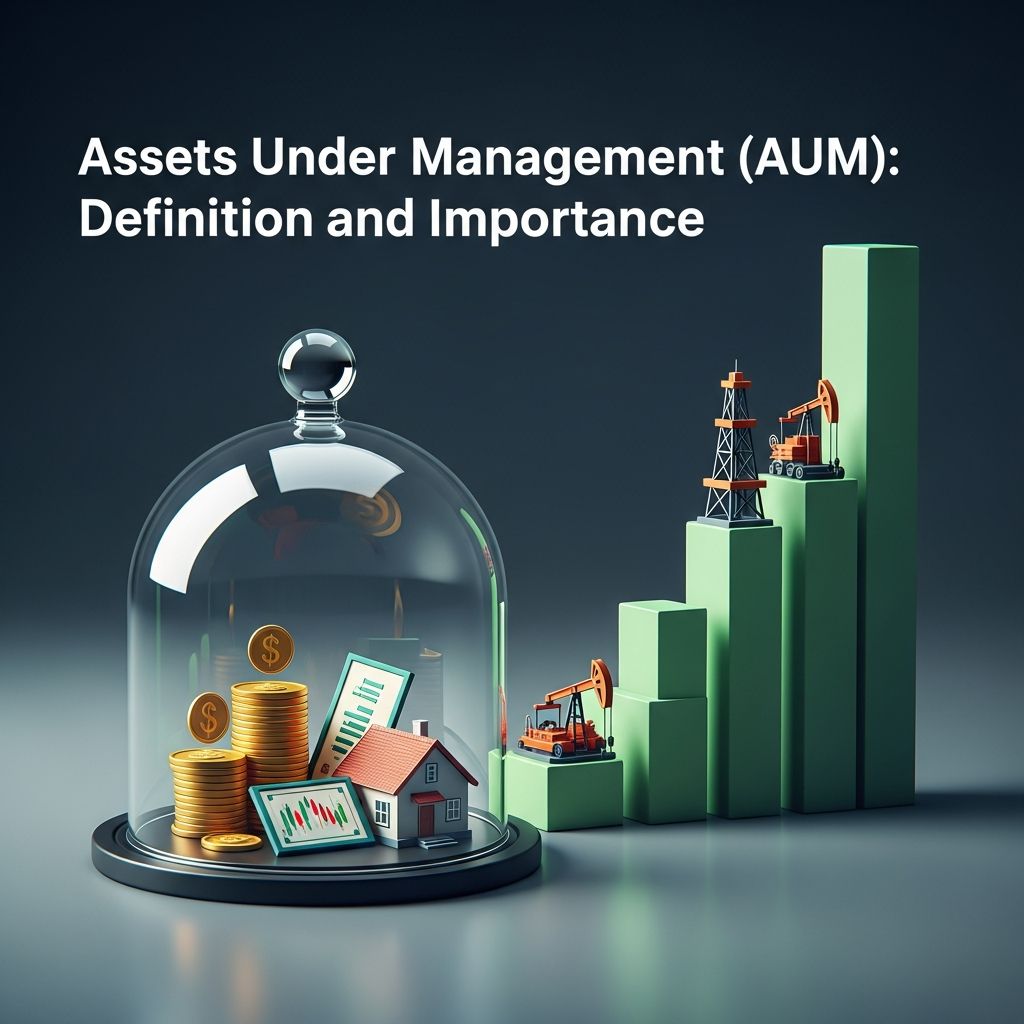
What is Assets Under Management (AUM)?
Assets Under Management, commonly abbreviated as AUM, refers to the total market value of all financial assets that an investment firm, hedge fund, mutual fund company, or financial advisor manages on behalf of their clients. AUM is one of the most critical metrics in the investment industry, as it directly reflects the scope and scale of a financial institution’s operations. The larger the AUM, the more significant the assets the firm is entrusted to manage, which often correlates with the firm’s credibility, experience, and market influence.
AUM encompasses a wide variety of asset classes, including stocks, bonds, real estate investment trusts (REITs), commodities, derivatives, and other investment vehicles. Understanding AUM is essential for investors because it provides insight into the size and capability of the financial institution managing their investments. Additionally, AUM can influence the types of strategies a firm pursues, the fees they charge, and the level of service they provide to their clients.
How Assets Under Management is Calculated
Calculating AUM is a straightforward process, though it requires careful tracking of all client assets. The basic formula involves summing the total market value of all assets managed by a financial institution at a specific point in time. However, the methodology can vary depending on the type of firm and the specific assets being managed.
The most common approach is to take a snapshot of all client holdings at market value on a particular date, typically at the end of each quarter or fiscal year. This includes:
- Equity investments and stock portfolios
- Fixed-income securities and bonds
- Cash and cash equivalents
- Mutual fund and ETF holdings
- Alternative investments such as private equity and hedge funds
- Real estate properties and REITs
- Other managed financial instruments
Different firms may include or exclude certain assets based on their business model. For example, some financial advisors might only count assets they directly invest on behalf of clients, while others may include assets under administration or advisement but not direct management. It is crucial for investors to understand how a specific firm calculates its AUM to accurately assess the firm’s true asset management capacity.
Why AUM Matters to Investors
AUM serves as a critical indicator of several important factors in the investment industry. First and foremost, it demonstrates the financial strength and stability of an investment firm. Larger AUM figures typically indicate that many investors trust the firm with their capital, suggesting a strong track record and professional management capabilities. Conversely, a declining AUM may signal performance issues, client dissatisfaction, or market challenges.
Additionally, AUM directly impacts the fees investors pay. Many investment firms charge fees based on a percentage of assets under management, commonly known as an assets-based fee or ad valorem fee. A higher AUM can lead to economies of scale, potentially resulting in lower fee percentages for clients. However, a firm with very high AUM might become less responsive to individual client needs due to size constraints.
AUM also influences investment strategy decisions. Firms managing smaller amounts of money may focus on niche strategies or smaller investment opportunities, while firms with substantial AUM have the resources to pursue large-scale investments, institutional strategies, and diversified portfolios. Understanding a firm’s AUM can help investors determine whether the firm has the capacity and expertise to meet their specific investment objectives.
The Relationship Between AUM and Performance
The relationship between AUM and investment performance is a topic of significant debate in the financial industry. Some research suggests that there is an optimal level of AUM for investment performance. When a firm’s AUM is too small, it may lack sufficient resources to conduct thorough research and execute effective strategies. However, when AUM becomes excessively large, firms may struggle with agility and decision-making speed, potentially leading to diminished returns.
This phenomenon is sometimes referred to as the “AUM trap.” As firms grow larger and accumulate more assets, they face challenges in identifying and executing investment opportunities that can meaningfully move the needle for their entire portfolio. Large positions become necessary to generate meaningful returns, but large positions may be difficult to establish without moving markets or facing liquidity constraints.
Additionally, successful investment performance can attract new clients and increase AUM, which may paradoxically make it more difficult for the firm to replicate its historical performance. This is one reason why many successful hedge funds close to new investors once they reach a certain AUM level—to preserve their ability to generate strong returns for existing clients.
Types of Asset Management and AUM
Different types of investment firms manage assets in various ways, and their AUM calculations may differ accordingly. Understanding these distinctions helps investors evaluate which type of firm best suits their needs.
Mutual Funds
Mutual fund companies calculate AUM by summing the total value of all shares outstanding multiplied by the current net asset value (NAV) per share. Mutual fund AUM can fluctuate significantly based on market performance and investor flows into and out of the fund.
Hedge Funds
Hedge funds typically report AUM that includes only the capital committed by investors to their specific fund. Unlike mutual funds, hedge funds often use leverage and derivatives, but AUM typically reflects only the actual capital invested rather than the full notional value of positions.
Investment Advisory Firms
Independent investment advisors and wealth management firms calculate AUM based on the total market value of all client portfolios they manage. This may include separately managed accounts, wrap accounts, and advisory relationships.
Bank Trust Departments
Banks managing trust accounts and fiduciary assets calculate AUM by summing the value of all accounts under their management. This can include individual trusts, corporate retirement plans, and endowment funds.
AUM Growth and Decline: What Drives Changes
AUM can change for two primary reasons: market performance and client flows. Understanding these drivers is essential for evaluating an investment firm’s true performance and investor appeal.
- Market Performance: When investment markets rise, the market value of existing portfolios increases, automatically raising AUM. Conversely, market downturns reduce AUM regardless of management quality. This means AUM growth is not always a reflection of successful investment performance or new client acquisition.
- Client Inflows and Outflows: When investors deposit new money into managed accounts or invest in mutual funds, AUM increases through what is called “net inflows.” When clients withdraw money or redeem shares, it decreases through “net outflows.” Net inflows indicate investor confidence, while net outflows may signal performance problems or market conditions.
- Acquisitions and Mergers: Investment firms may increase AUM overnight by acquiring other firms or merging with competitors. This can result in rapid AUM growth without corresponding improvements in investment performance or operational efficiency.
- Fee Changes: Some firms calculate AUM to include assets under advisement in addition to assets under management, potentially inflating reported AUM figures.
AUM and Fee Structures
The relationship between AUM and fees is fundamental to understanding investment costs. Most investment firms use AUM as the basis for calculating management fees. Common fee structures include:
- Percentage of AUM: Many advisors charge between 0.5% and 2% annually of total AUM. Larger accounts often receive lower percentage rates due to economies of scale.
- Tiered Fee Structures: Some firms charge declining percentages as AUM increases, encouraging larger investments and client consolidation.
- Performance Fees: Hedge funds and some actively managed funds charge performance fees (typically 15-20% of profits) in addition to management fees based on AUM.
- Flat Fees: Some advisors charge flat annual fees regardless of AUM, which may be more advantageous for clients with larger portfolios.
Understanding how AUM translates into fees is critical for investors evaluating different investment options and comparing costs across firms and strategies.
Evaluating Investment Firms Based on AUM
While AUM is an important metric, it should not be the only factor investors consider when selecting an investment firm. Here are key considerations:
- AUM Trends: Is the firm experiencing growing AUM (indicating client confidence) or declining AUM (potentially signaling problems)? Understanding whether growth is driven by market gains or new client inflows is important.
- AUM Relative to Team Size: More AUM per team member may indicate efficiency but could also suggest stretched resources or less personalized service.
- Appropriate Firm Size: Consider whether the firm’s AUM is appropriate for your investment objectives. Very small firms may lack resources, while very large firms may lack agility.
- Fee Transparency: Ensure fees are clearly disclosed and justified relative to services provided and performance delivered.
- Historical Performance: Evaluate whether the firm has delivered strong, consistent returns, accounting for market conditions and risks taken.
- Regulatory Compliance: Check whether the firm has any regulatory violations or disciplinary history that might affect your confidence.
Common Misconceptions About AUM
Several misconceptions about AUM can mislead investors when evaluating investment firms:
- Larger AUM Always Means Better Performance: In reality, there is often an optimal AUM range for investment returns. Excessively large AUM can constrain performance.
- AUM Growth Indicates Strong Management: AUM growth may simply reflect market appreciation or acquisitions rather than superior investment skill.
- All AUM is Equal: AUM composition matters. A firm managing $1 billion in easily tradable stocks operates differently from one managing $1 billion in illiquid private equity.
- Higher Fees are Justified by Larger AUM: While economies of scale may justify lower fees for larger portfolios, extremely high fees cannot be justified by AUM size alone.
Frequently Asked Questions (FAQs)
Q: What does AUM stand for?
A: AUM stands for Assets Under Management. It represents the total market value of all financial assets that an investment firm manages on behalf of its clients.
Q: How is AUM different from Assets Under Administration (AUA)?
A: AUM refers specifically to assets that a firm actively manages and makes investment decisions for. AUA includes assets that a firm administers or provides services for but does not actively manage. Some firms include both metrics in their reporting.
Q: Does higher AUM always mean better investment returns?
A: No. While larger AUM can provide resources for research and analysis, excessive AUM can limit performance by constraining investment flexibility and reducing the impact of successful investment ideas on overall returns.
Q: How frequently is AUM reported?
A: Most investment firms report AUM quarterly or annually, typically in regulatory filings or marketing materials. Some firms may provide monthly or real-time AUM data to clients.
Q: Can AUM decrease without poor investment performance?
A: Yes. AUM can decrease due to market downturns affecting portfolio values or client withdrawals. Both factors can reduce AUM independent of management performance.
Q: Why do some investment firms close to new investors based on AUM?
A: Successful investment managers often close their funds to new investors once AUM reaches a level where they believe further growth would compromise investment performance. This preserves the ability to generate strong returns for existing investors.
Q: How should I use AUM when evaluating investment firms?
A: Use AUM as one factor among many. Consider the firm’s AUM trends, fee structure, historical performance, team experience, and regulatory record. Ensure the firm’s size and focus align with your investment needs.
References
- Investment Company Act of 1940 — U.S. Securities and Exchange Commission. https://www.sec.gov/cgi-bin/browse-edgar
- Principles Regarding the Proper Use and Reporting of Assets Under Management — CFA Institute. 2011. https://www.cfainstitute.org/
- How Investment Advisers Use Assets Under Management — Financial Industry Regulatory Authority (FINRA). https://www.finra.org/rules-guidance/rulebooks
- Global Assets Under Management to Reach $184 Trillion by 2025 — McKinsey & Company. 2021. https://www.mckinsey.com/industries/financial-services
- Understanding Asset-Based Fee Arrangements — U.S. Securities and Exchange Commission Investment Adviser Public Disclosure. https://www.sec.gov/investor/
Similar Articles








Read full bio of Sneha Tete