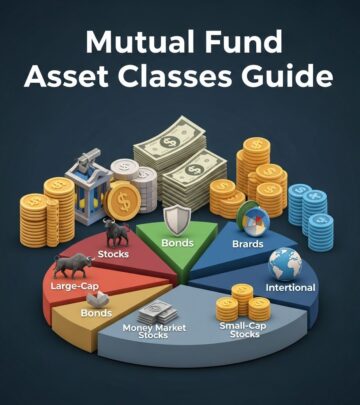
Asset Classes: Types, Characteristics, and Investment Guide
Master asset classes: Learn how stocks, bonds, real estate, and commodities shape investment portfolios.

An asset class is a group of securities or investments that exhibit similar characteristics, behave alike in the marketplace, and are subject to the same laws and regulations. Asset classes form the foundation of investment portfolios and financial planning strategies. Understanding the different types of asset classes and how they work together is essential for building a diversified investment portfolio that aligns with your financial goals and risk tolerance.
What Is an Asset Class?
An asset class represents a collection of similar financial instruments or investments that demonstrate comparable performance patterns and market behaviors. These groupings help investors organize their portfolios, understand risk exposure, and make informed allocation decisions. Asset classes typically move independently of each other, which makes them valuable for diversification strategies. When one asset class performs poorly, another may perform well, helping to balance overall portfolio returns and reduce volatility.
Asset classes serve as building blocks for constructing investment portfolios. By distributing capital across multiple asset classes, investors can potentially reduce unsystematic risk while maintaining exposure to growth opportunities. Professional advisors and fund managers use asset class categorization to develop strategic asset allocation plans tailored to individual investor needs.
The Main Asset Classes
The financial markets recognize several primary asset classes, each with distinct characteristics, risk profiles, and return potential. Understanding these core categories helps investors make strategic decisions about portfolio composition.
1. Equities (Stocks)
Equities represent ownership shares in corporations. When you purchase stock, you become a partial owner of that company and may receive dividends if the company distributes profits to shareholders. Stock prices fluctuate based on company performance, market conditions, economic outlook, and investor sentiment.
- Common Stocks: Provide voting rights and potential dividend income, representing residual ownership claims on company assets.
- Preferred Stocks: Offer higher dividend payments and claim priority over common stocks in liquidation scenarios.
- Growth Stocks: Focus on capital appreciation rather than dividend income, typical of emerging or rapidly expanding companies.
- Value Stocks: Trade at lower valuations relative to fundamental metrics, potentially offering better risk-reward opportunities.
- Dividend Stocks: Emphasize regular income distribution while providing growth potential.
Stocks historically provide strong long-term returns but experience significant short-term volatility. They are suitable for investors with longer investment horizons and higher risk tolerance.
2. Fixed Income (Bonds)
Bonds are debt instruments where investors lend money to corporations, governments, or other entities in exchange for periodic interest payments and principal repayment at maturity. Fixed income investments provide predictable cash flows and typically experience lower volatility than stocks.
- Government Bonds: Issued by federal governments, offering lower yields but high safety, as they are backed by government revenue and taxation power.
- Corporate Bonds: Issued by companies to raise capital, offering higher yields than government bonds with corresponding higher default risk.
- Municipal Bonds: Issued by state and local governments, often providing tax-advantaged income to investors in higher tax brackets.
- High-Yield Bonds: Issued by lower-rated entities, offering higher interest rates to compensate investors for elevated default risk.
- Treasury Securities: Direct obligations of the U.S. government, considered virtually risk-free, serving as portfolio stabilizers.
Fixed income securities serve as portfolio ballast, providing stability and predictable returns. They are particularly attractive for conservative investors and those nearing retirement.
3. Real Estate
Real estate investments involve property ownership or claims on property income. This asset class provides tangible assets, inflation hedging, and regular income through rental payments. Real estate can be accessed through direct property ownership or through structured vehicles.
- Residential Properties: Single-family homes, apartments, and multi-unit residential buildings generating rental income.
- Commercial Properties: Office buildings, retail spaces, and industrial facilities leased to businesses.
- REITs (Real Estate Investment Trusts): Companies owning income-producing properties, offering real estate exposure with stock market liquidity.
- Mortgages: Loans secured by real property, providing fixed income with real estate backing.
Real estate historically demonstrates lower correlation with stocks and bonds, making it effective for portfolio diversification. It offers tangible value, income generation, and potential appreciation.
4. Commodities
Commodities are basic goods or raw materials used in production or consumption, including agricultural products, metals, and energy resources. Commodity prices respond to supply-demand dynamics, geopolitical events, and economic cycles.
- Agricultural Commodities: Crops like wheat, corn, and soybeans; livestock including cattle and hogs.
- Precious Metals: Gold, silver, and platinum serving as inflation hedges and portfolio stabilizers.
- Energy: Crude oil, natural gas, and refined petroleum products responding to global supply and demand.
- Industrial Metals: Copper, aluminum, and zinc used in construction and manufacturing.
Commodities typically move inversely to stocks and bonds during market stress, providing valuable diversification benefits. They also offer inflation protection as commodity prices tend to rise during inflationary periods.
5. Alternative Investments
Alternative assets extend beyond traditional stock and bond investments, encompassing diverse strategies and investments. These often require sophisticated analysis and may have limited liquidity.
- Hedge Funds: Actively managed investment pools employing diverse strategies including long/short equity, derivatives, and arbitrage.
- Private Equity: Investments in non-public companies, providing growth capital and operational improvements for expansion potential.
- Cryptocurrencies: Digital assets offering alternative store of value with high volatility and evolving regulatory framework.
- Collectibles: Art, antiques, and rare items providing portfolio diversification and personal enjoyment.
- Peer-to-Peer Lending: Direct loans to individuals or businesses, offering yield potential with corresponding credit risk.
Characteristics of Asset Classes
| Asset Class | Risk Level | Expected Return | Liquidity |
|---|---|---|---|
| Stocks (Equities) | High | 8-10% annually | High |
| Bonds (Fixed Income) | Low-Moderate | 3-5% annually | High |
| Real Estate | Moderate | 7-9% annually | Low-Moderate |
| Commodities | High | Variable | High |
| Alternatives | Varies | Variable | Low-Moderate |
Asset Class Correlation and Diversification
Asset class correlation measures how different investments move relative to each other. Understanding correlation is fundamental to effective portfolio construction. Low or negative correlation between asset classes means they move independently, providing diversification benefits. When stocks decline, bonds may increase in value, offsetting portfolio losses. This inverse relationship creates a portfolio cushion during market volatility.
Historically, stocks and bonds demonstrate negative correlation, particularly during market downturns. Real estate shows moderate correlation with stocks and varying relationships with bonds depending on economic conditions. Commodities typically show low correlation with both stocks and bonds, making them valuable diversification tools. By combining asset classes with low correlation, investors can construct portfolios that deliver smoother returns with potentially lower volatility.
Asset Allocation Strategies
Effective asset allocation involves distributing investment capital across different asset classes based on investment goals, time horizon, and risk tolerance. Different allocation strategies suit different investor profiles:
- Conservative Allocation: 30% stocks, 60% bonds, 10% alternatives—suitable for risk-averse investors or those nearing retirement.
- Moderate Allocation: 50% stocks, 35% bonds, 15% alternatives—balanced approach for investors with medium risk tolerance.
- Aggressive Allocation: 70% stocks, 20% bonds, 10% alternatives—for young investors with long time horizons and high risk tolerance.
- Dynamic Allocation: Adjusts asset class weightings based on market conditions, economic outlook, and rebalancing triggers.
Why Asset Classes Matter for Investors
Understanding asset classes enables investors to make informed decisions about portfolio construction and risk management. Asset class diversification reduces portfolio volatility while maintaining growth potential. By spreading investments across multiple asset classes with different risk-return profiles, investors can achieve superior risk-adjusted returns compared to concentrated portfolios.
Professional investors and financial advisors use asset class frameworks to develop strategic allocations aligned with client objectives. Institutional investors like pension funds and endowments rely on multi-asset class portfolios to generate returns sufficient for long-term obligations. The periodic rebalancing of asset class weightings helps maintain target risk levels and disciplines investment decisions by following systematic approaches rather than emotional market reactions.
Frequently Asked Questions (FAQs)
Q: How many asset classes should I include in my portfolio?
A: Most financial professionals recommend exposure to at least 3-5 major asset classes. A diversified portfolio typically includes stocks, bonds, and real estate, with some investors adding commodities and alternatives. The optimal number depends on your investment goals, time horizon, and complexity comfort level.
Q: Can I invest in asset classes with a small amount of money?
A: Yes, modern investing has democratized access. Exchange-traded funds (ETFs) and mutual funds allow investors to gain exposure to various asset classes with minimal capital. You can start with as little as $100-$1,000 and build a diversified portfolio through these vehicles.
Q: How often should I rebalance my portfolio across asset classes?
A: Most financial advisors recommend annual or semi-annual rebalancing, or whenever allocations drift significantly from targets (typically 5-10% deviation). Regular rebalancing helps maintain desired risk levels and forces a disciplined buy-low, sell-high approach.
Q: What is the best asset class for beginners?
A: Stocks and bonds are most accessible for beginners. Low-cost index funds tracking the S&P 500 or total bond market provide broad diversification within each asset class. These offer simplicity, diversification, and lower fees than actively managed alternatives.
Q: How do asset classes respond during economic recessions?
A: Different asset classes respond differently to recessions. Stocks typically decline significantly. Bonds often appreciate as interest rates fall. Real estate may face challenges initially but provides income. Commodities vary based on specific economic drivers. This divergence reinforces diversification benefits.
Q: Are alternative asset classes suitable for all investors?
A: Alternative investments typically require higher minimum investments, greater sophistication, and longer holding periods. They are better suited for experienced investors or high-net-worth individuals. Beginners should focus on traditional asset classes first.
References
- Asset Classes and Diversification — U.S. Securities and Exchange Commission (SEC). 2024. https://www.sec.gov/investor/basics/investment.htm
- Modern Portfolio Theory and Asset Allocation — MSCI Research. 2024. https://www.msci.com/research
- Historical Returns by Asset Class — Morningstar Investment Research. 2024. https://www.morningstar.com/research
- Real Estate Investment Trusts (REITs) Guide — National Association of Real Estate Investment Trusts. 2024. https://www.nareit.org
- Global Commodities Markets Overview — International Monetary Fund (IMF). 2024. https://www.imf.org/external/research/index.aspx
Similar Articles








Read full bio of medha deb