Asset-Backed Securities: Definition, Types, and How They Work
Understanding asset-backed securities: A comprehensive guide to ABS investments and securitization.

What Are Asset-Backed Securities?
An asset-backed security (ABS) is a financial instrument whose income payments and value are derived from and collateralized by a specified pool of underlying assets. These securities represent an innovative approach to converting illiquid assets into tradable financial instruments through a process known as securitization. The fundamental concept behind asset-backed securities involves bundling together numerous small or illiquid assets that cannot be sold individually in the open market, then transforming them into marketable securities that can be purchased by a broad range of investors.
Asset-backed securities serve as a critical mechanism in modern financial markets, enabling financial institutions to release capital tied up in loans and receivables, thereby facilitating increased lending capacity and economic growth. The underlying assets in an ABS pool typically generate cash flows through payments made by borrowers, and these cash flows are used to pay investors holding the securities.
How Asset-Backed Securities Work
The process of creating asset-backed securities involves several key steps and participants. When a financial institution, such as a bank or finance company, originates loans or extends credit, it accumulates a pool of these assets. Rather than holding these assets to maturity, the originating institution transfers them to a special-purpose vehicle (SPV), which is a separate legal entity created specifically for this transaction.
The special-purpose vehicle is responsible for “bundling” the underlying assets into a specified pool designed to match the risk preferences and investment needs of potential buyers. The SPV manages credit risk through various mechanisms, often by transferring this risk to an insurance company in exchange for a premium. Once the assets are securitized, they are sold to investors, and the cash proceeds are returned to the originating institution.
The monthly payments from the underlying assets typically consist of principal and interest components, with principal payments being either scheduled or unscheduled. These cash flows can be allocated to investors in different ways. In a pass-through structure, cash flows are directly passed to investors after administrative fees are deducted. Alternatively, in structured securities, cash flows are divided according to specified rules and market demand, creating different classes of securities with varying risk and return characteristics.
Types of Asset-Backed Securities
Asset-backed securities encompass a diverse range of financial instruments, each backed by different types of underlying assets. Understanding the various types is essential for investors seeking to build a diversified investment portfolio.
Mortgage-Backed Securities
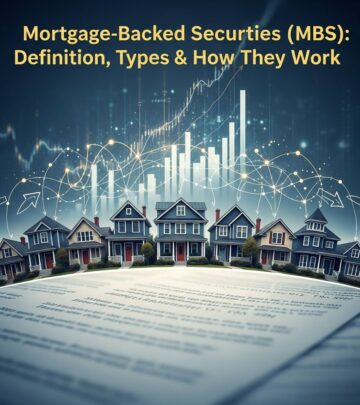
Mortgage-backed securities (MBS) are among the most common types of asset-backed securities. These instruments are backed by pools of residential or commercial mortgage loans. When homeowners make their monthly mortgage payments, these funds are passed through to MBS investors. The primary risk in MBS investments includes prepayment risk, where borrowers pay off mortgages early due to declining interest rates, and extension risk, where rising rates cause borrowers to hold mortgages longer than expected.
Auto Loan-Backed Securities
Auto loan-backed securities are collateralized by pools of automobile loans. These securities generate cash flows from monthly car payments made by borrowers. Auto loan ABS typically have shorter durations than mortgage-backed securities, as vehicles depreciate faster than real estate. The credit quality of these securities depends on factors such as loan-to-value ratios, borrower credit scores, and the overall economic conditions affecting vehicle ownership.
Credit Card Receivables
Credit card receivables represent another significant category of asset-backed securities. These instruments are backed by the revolving credit accounts of cardholders. Unlike fixed-maturity assets, credit card receivables continue to generate cash flows as long as the underlying accounts remain open and active. The performance of credit card ABS is highly sensitive to economic conditions and consumer spending patterns.
Student Loan-Backed Securities
Student loan-backed securities are collateralized by pools of education loans, either federal or private. These securities can provide steady cash flows over extended periods, as student loans typically have long amortization schedules. The credit quality depends on borrower employment prospects, default rates, and the economic environment.
Other Specialized Asset-Backed Securities
Beyond traditional consumer lending, asset-backed securities can be backed by more esoteric cash flows including aircraft leases, royalty payments, movie revenues, equipment leases, and various other receivables. These specialized ABS provide investors with exposure to unique revenue streams and sectors of the economy.
Benefits of Asset-Backed Securities
Asset-backed securities offer numerous advantages to both issuers and investors, making them an important component of the global financial system.
For Financial Institutions
For originating financial institutions, asset-backed securitization provides several key benefits. By selling pools of loans or receivables to a special-purpose vehicle, banks and finance companies can remove these assets from their balance sheets and receive cash in return. This process improves their credit ratings by reducing leverage ratios and decreases the amount of capital they need to maintain to satisfy regulatory requirements. Additionally, securitization enables financial institutions to generate fee income through servicing the underlying assets and structuring the securities.
For Investors
Investors benefit from asset-backed securities through diversification of their investment portfolios. Each ABS represents a fraction of a large, diversified pool of underlying assets, spreading the risk across many borrowers and loans. This diversification effect significantly reduces the concentration risk that would exist if an investor purchased individual loans. Additionally, ABS securities often provide higher yields than comparable government or corporate bonds, offering attractive risk-adjusted returns.
For the Broader Economy
Asset-backed securitization plays a vital role in promoting economic growth by increasing the liquidity in credit markets. By converting illiquid assets into marketable securities, securitization enables financial institutions to recycle capital into new lending, supporting business expansion, consumer spending, and overall economic activity.
Risks Associated with Asset-Backed Securities
While asset-backed securities offer significant benefits, investors must carefully consider the various risks inherent in these instruments.
Credit Risk
Credit risk represents the possibility that borrowers underlying the asset pool will default on their obligations. If delinquencies and defaults in the asset pool increase significantly, cash flows to investors may be reduced. The quality of credit enhancement mechanisms, such as overcollateralization and insurance, becomes crucial in mitigating this risk.
Prepayment Risk
Prepayment risk occurs when borrowers pay off their obligations faster than expected, typically when interest rates decline. This forces investors to reinvest proceeds at lower prevailing interest rates, reducing overall returns. This risk is particularly significant for mortgage-backed securities.
Extension Risk
Conversely, extension risk occurs when borrowers pay off obligations more slowly than anticipated, usually when interest rates rise. This locks investors into below-market returns for longer periods. Extension risk is the opposite of prepayment risk but equally undesirable for investors.
Liquidity Risk
Some asset-backed securities trade in relatively thin secondary markets, making it difficult for investors to sell their positions quickly without accepting significant price concessions. This liquidity risk can be particularly acute for lower-rated ABS or those backed by esoteric assets.
Model Risk
Complex asset-backed securities, particularly structured instruments with multiple tranches, rely on mathematical models to estimate cash flows and default probabilities. If these models are inaccurate or based on faulty assumptions, actual performance may differ substantially from projections.
Understanding ABS Ratings and Structure
Asset-backed securities are typically structured into multiple classes or “tranches,” each with different risk characteristics and priority in receiving cash flows. Senior tranches receive priority in payment and typically carry lower yields but also lower risk. Subordinated or junior tranches accept greater risk in exchange for higher potential returns.
Credit rating agencies evaluate ABS and assign ratings based on the underlying collateral quality, structure, and credit enhancements. These ratings help investors assess the probability of receiving promised cash flows. However, the 2008 financial crisis exposed significant flaws in ABS rating methodologies, leading to substantial revisions in how these securities are evaluated.
The Role of Special-Purpose Vehicles
Special-purpose vehicles are essential to the ABS securitization process. These entities are legally separate from the originating institution and are specifically created to hold the asset pool and issue securities. The SPV structure provides several advantages: it isolates the assets from the credit risk of the originating institution, making the securities more attractive to investors, and it allows for bankruptcy-remote securitization structures that protect investors in case the originating institution fails.
Regulatory Environment
Asset-backed securities are subject to various regulatory requirements designed to protect investors and promote market stability. In the United States, the Securities and Exchange Commission (SEC) oversees the disclosure requirements for ABS issuers. Following the financial crisis, regulations such as the Dodd-Frank Act imposed additional requirements on ABS issuers, including risk retention rules that require originators to retain a portion of the credit risk in securitizations they create.
Current Market Trends
The asset-backed securities market continues to evolve with changing economic conditions and regulatory frameworks. Recent trends include increased focus on loan-level disclosure, which allows investors greater transparency into the underlying collateral. Additionally, there is growing interest in alternative asset-backed securities backed by non-traditional assets such as receivables from small businesses and specialized consumer credit.
Frequently Asked Questions
Q: What is the difference between asset-backed securities and mortgage-backed securities?
A: Mortgage-backed securities (MBS) are a specific subset of asset-backed securities that are collateralized exclusively by mortgage loans. Asset-backed securities represent a broader category that can be backed by any pool of assets generating predictable cash flows, including auto loans, credit card receivables, and other receivables.
Q: How can I invest in asset-backed securities?
A: Individual investors can access ABS through mutual funds, exchange-traded funds (ETFs), or direct purchases through brokerage accounts. Many institutional investors purchase ABS directly from underwriters during primary market offerings.
Q: What determines the price of an asset-backed security?
A: ABS prices are determined by supply and demand in the secondary market, credit quality of the underlying assets, prevailing interest rates, expected prepayment rates, and the overall risk premium investors demand for accepting various forms of risk.
Q: Are asset-backed securities safe investments?
A: Safety depends on the specific ABS and its credit rating. Senior tranches of high-quality ABS are generally considered relatively safe, but subordinated tranches and those backed by lower-quality assets carry substantial risk. The 2008 financial crisis demonstrated that even highly-rated ABS can experience significant losses.
Q: How do credit enhancements protect ABS investors?
A: Credit enhancements include mechanisms such as overcollateralization (where the pool value exceeds the security value), reserve funds, subordination, and third-party insurance. These features provide a buffer against losses from borrower defaults.
References
- Asset-Backed Security — Wikipedia. Accessed November 2025. https://en.wikipedia.org/wiki/Asset-backed_security
- SEC Division of Corporation Finance: Asset-Backed Securities — U.S. Securities and Exchange Commission. https://www.sec.gov/cgi-bin/browse-edgar
- Securitization and Structured Finance Principles — Federal Reserve Board Research Publications. https://www.federalreserve.gov
Similar Articles








Read full bio of medha deb