Asset Allocation Essentials: A Complete Guide For Investors
Master the art of dividing investments across asset classes to balance risk and reward for long-term financial success.

Asset allocation forms the cornerstone of effective investment strategy, determining how capital is distributed across various asset classes to achieve desired outcomes while mitigating risks. This approach outperforms individual security selection or market timing in driving long-term portfolio performance.
Understanding the Core Concept of Asset Allocation
At its essence, asset allocation involves strategically dividing an investment portfolio among distinct categories such as equities, fixed income, cash equivalents, and alternatives like real estate or commodities. This division is guided by an investor’s objectives, risk appetite, time horizon, and financial constraints.
The process begins with assessing personal circumstances. Investors must evaluate their financial goals—whether funding retirement, purchasing a home, or building wealth—and quantify their tolerance for market volatility. Younger investors with distant horizons often favor growth-oriented allocations heavy in stocks, while those nearing retirement prioritize capital preservation through bonds and cash.
Research underscores that asset allocation explains approximately 90% of portfolio return variation over time, far surpassing the impact of stock picking or market forecasts. By spreading investments, portfolios capture opportunities across economic cycles, reducing the peril of concentrated bets.
Key Asset Classes and Their Roles
Each asset class contributes unique risk-return characteristics, correlations, and responses to economic conditions. Understanding these dynamics enables informed allocation decisions.
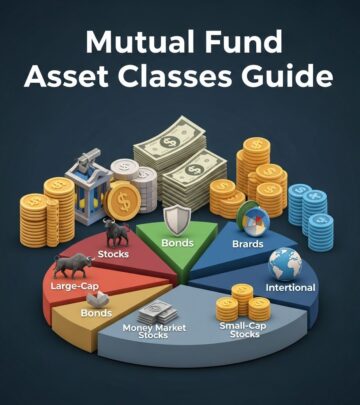
- Equities (Stocks): Offer highest long-term growth potential but with elevated volatility. Domestic and international stocks diversify geographic risks.
- Fixed Income (Bonds): Provide steady income and principal stability, acting as a buffer during equity downturns. Government, corporate, and municipal bonds vary in yield and credit risk.
- Cash and Equivalents: Ensure liquidity for emergencies or opportunities, though they yield lower returns amid inflation.
- Alternatives: Including real estate, commodities, and private equity, these enhance diversification by exhibiting low correlations to traditional assets.
A balanced allocation might allocate 60% to equities, 30% to bonds, and 10% to alternatives for moderate-risk profiles, adjustable based on individual needs.
Strategic vs. Tactical Asset Allocation Approaches
Investors employ two primary methodologies: strategic and tactical asset allocation, often in tandem for optimal results.
Strategic Asset Allocation establishes a long-term target mix aligned with core objectives and risk tolerance. It assumes markets revert to historical norms over extended periods (5-10 years). Portfolios are periodically rebalanced to these targets, enforcing discipline amid market swings.
Tactical Asset Allocation introduces short-term deviations from strategic targets to exploit market inefficiencies, valuations, or macroeconomic shifts. Skilled managers overweight undervalued classes or underweight overvalued ones temporarily.
| Approach | Time Horizon | Focus | Example |
|---|---|---|---|
| Strategic | Long-term (5+ years) | Consistent risk/return profile | 60/40 stocks/bonds |
| Tactical | Short-term (months) | Market opportunities | Overweight emerging markets |
Combining both yields a robust framework: strategic for stability, tactical for alpha generation.
The Power of Diversification in Portfolios
Diversification, the practice of spreading investments within and across asset classes, is asset allocation’s linchpin. It diminishes unsystematic risk without proportionally eroding returns.
Effective diversification targets segments with divergent behaviors. Within equities, blend large-cap, small-cap, value, growth, and international holdings. For bonds, mix durations and credit qualities.
Modern techniques incorporate factors like value, momentum, and low volatility alongside traditional classes for enhanced efficiency. Correlation analysis is vital; low or negative correlations amplify diversification benefits during stress periods.
Liability-Relative and Goals-Based Strategies
Advanced frameworks view portfolios relative to liabilities or specific goals, transcending asset-only optimization.
Liability-Relative Allocation matches assets to future obligations, such as pension payouts. Methods include surplus optimization (maximizing excess returns post-liability hedging) and bifurcating into hedging (liability-matching) and return-seeking portfolios.
Goals-Based Allocation segments the portfolio into sub-portfolios, each funding a discrete goal—like education or retirement—with tailored risk levels and success probabilities. This modular approach aligns investments precisely with life milestones.
Implementing and Maintaining Allocations
Once determined, allocations require vigilant execution via low-cost index funds, ETFs, or active vehicles that track targets efficiently.
Rebalancing restores drifted weights, capturing gains from outperformers and replenishing laggards. Triggers include calendar-based (quarterly), threshold-based (e.g., 5% deviation), or hybrid methods.
Optimal corridors widen with high transaction costs, low risk tolerance, or strong asset correlations, minimizing unnecessary trades. Empirical evidence shows disciplined rebalancing lowers volatility and boosts returns via diversification premiums and volatility harvesting.
- Redirect contributions to underweights.
- Sell overweights to fund underweights.
- Monitor tax implications in taxable accounts.
Common Pitfalls and Best Practices
Investors often chase performance, abandoning allocations post-rallies, or ignore inflation’s erosive effect on conservative mixes.
Best practices: Document your policy, review annually or upon life changes, utilize tax-advantaged accounts, and consider professional advice for complexity.
Asset Allocation Models for Different Investors
Sample models illustrate applications:
| Profile | Stocks | Bonds | Alternatives/Cash | Suitable For |
|---|---|---|---|---|
| Conservative | 20-40% | 50-70% | 10-20% | Near-term needs |
| Balanced | 50-70% | 25-40% | 5-15% | Moderate growth |
| Aggressive | 70-90% | 10-20% | 0-10% | Long horizons |
Adjust dynamically as circumstances evolve.
Frequently Asked Questions
What is the ideal asset allocation for beginners?
Start with age-based rules like 110 minus age in stocks, balancing with bonds for diversification.
How often should I rebalance my portfolio?
Quarterly or when deviations exceed 5-10%, balancing costs and drift control.
Does tactical allocation outperform strategic?
Not consistently for most; strategic discipline trumps timing attempts.
Can asset allocation guarantee returns?
No, but it manages risk probabilistically toward goals.
Why include alternatives?
They decorrelate from stocks/bonds, boosting resilience in volatile markets.
References
- Principles of Asset Allocation — CFA Institute. 2026. https://www.cfainstitute.org/insights/professional-learning/refresher-readings/2026/principles-asset-allocation
- Understanding Asset Allocation and its Potential Benefits — PIMCO. N/A. https://www.pimco.com/us/en/resources/education/understanding-asset-allocation-and-its-potential-benefits
- Strategic Asset Allocation or the Art of Diversification — BNP Paribas Wealth Management. N/A. https://wealthmanagement.bnpparibas/en/insights/news/strategic-asset-allocation-art-of-diversification.html
- Asset Allocation and Diversification — FINRA. N/A. https://www.finra.org/investors/investing/investing-basics/asset-allocation-diversification
- Beginners’ Guide to Asset Allocation, Diversification, and Rebalancing — Investor.gov (SEC). N/A. https://www.investor.gov/additional-resources/general-resources/publications-research/info-sheets/beginners-guide-asset
Similar Articles








Read full bio of medha deb