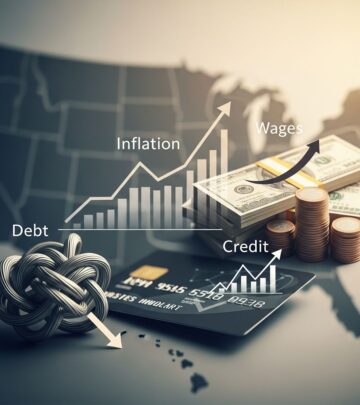
Assessing U.S. Financial Wellness in 2026
Consumer sentiment surveys reveal rising pessimism, debt concerns, and ambitious goals amid economic pressures shaping America's financial landscape.

Recent data from multiple surveys paints a concerning picture of American financial health entering 2026, marked by declining consumer confidence, surging stress levels, and a focus on debt reduction amid persistent inflation. Indexes tracking personal finances have dropped significantly, signaling broader economic unease that could influence spending, saving, and investment behaviors throughout the year.
Declining Consumer Financial Health Indexes
The Consumer Financial Health Index (CFHI) has recorded back-to-back monthly declines in early 2026, falling 1.29 points to 59.89 in February, a level 3.28 points lower than the previous year. This erosion reflects growing uncertainty in investing outlooks and debt management perceptions. Similarly, J.D. Power reports that the share of financially unhealthy U.S. consumers reached 72% in February 2026, the highest in 12 months, driven by weakening labor markets and rising costs.
These trends indicate a shift from relative stability in prior years to heightened vulnerability. Factors like sticky inflation and a cooling job market are primary culprits, stretching household budgets and diminishing optimism for personal financial improvement.
Rising Pessimism and Financial Outlook Surveys
Bankrate’s Financial Outlook Survey reveals that 32% of Americans anticipate their finances worsening in 2026, the highest pessimism since 2018. This marks a jump from 23% who felt similarly about 2025. Inflation tops the list of concerns, cited by 78% of pessimists, followed by policy impacts (55%), stagnant income (46%), and debt burdens (25%).
Conversely, only 34% expect improvement, down from 44% last year, with rising income (47%) and better spending habits (40%) as key hopes. Another 34% foresee no change, underscoring a polarized yet predominantly cautious mindset. Allianz Life notes 48% of Americans report higher stress than at the start of 2025, up from 43%, linked to daily expenses (54%), low income (46%), and inadequate emergency savings (39%).
| Survey | % Expecting Worsening Finances | Main Concern |
|---|---|---|
| Bankrate 2026 Outlook | 32% | Inflation (78%) |
| Allianz Stress Index | 48% more stressed | Daily costs (54%) |
| AICPA Goals Survey | 24% expect worse | Cost of living (50%) |
Top Financial Priorities and Goals for the Year
Despite challenges, Americans are resolute in setting ambitious targets. Paying down debt emerges as the leading goal at 19%, rising with age, while 77% prioritize saving overall, including 32% for retirement and 29% for vacations. About 34% aim to invest or reduce debt further.
- Debt Repayment: 19-34% across surveys, focusing on credit cards, student loans, and medical bills.
- Saving: 77% overall, with emergency funds and retirement as subsets.
- Investing: 34%, though tempered by declining outlooks.
AICPA findings show 92% have 2026 goals, but 50% fear rising living costs will derail them, alongside unexpected expenses (41%) and job uncertainty (26%). Ipsos confirms saving more as the top New Year’s resolution.
Impact on Retirement Security and Long-Term Planning
Financial stress is eroding retirement confidence, with 27% reporting decreased assurance in meeting goals compared to last year. Gen X (38%) and Gen Z (32%) are hit hardest, and 21% feel further from targets. Brookings highlights broader risks, projecting health care changes could uninsured 5 million and SNAP cuts affect 2 million monthly, exacerbating vulnerabilities.
National debt trajectories compound these issues: CBO forecasts $170 trillion in added borrowing over 30 years, with interest payments hitting 27% of revenues in a decade and half within three, assuming rates below 3.8%. This crowds out investments and raises borrowing costs for households.
Demographic Variations in Financial Strain
Younger generations bear disproportionate worry. Gen Z and millennials cite job insecurity and health costs more acutely, while older groups prioritize debt. Women and lower-income households report higher stress across metrics.
- Gen X: 38% lower retirement confidence.
- Boomers: 20% lower, more stable but concerned with fixed incomes.
- Low-income: Debt and emergencies dominate barriers.
Strategies to Bolster Personal Financial Health
To counter these trends, experts advocate proactive steps:
- Budget Ruthlessly: Track expenses to combat inflation; apps can categorize spending.
- Build Emergency Funds: Aim for 3-6 months’ expenses, starting small.
- Prioritize High-Interest Debt: Use avalanche or snowball methods for repayment.
- Boost Income Streams: Side gigs or skill upgrades amid labor softening.
- Review Investments: Diversify despite cautious outlooks; low-cost index funds.
Fitch Ratings projects consumer resilience with 1.7% consumption growth in 2026, supported by solid balance sheets despite labor weakness.
FAQs on U.S. Financial Health in 2026
What is driving the decline in consumer financial health indexes?
Persistent inflation, weakening job markets, and rising debt levels are key factors, as seen in CFHI drops and J.D. Power’s 72% unhealthy rate.
How many Americans expect worse finances in 2026?
32% per Bankrate, with 48% more stressed overall.
What are the top financial goals for 2026?
Debt payoff (19-34%), saving (77%), and investing (34%).
Will inflation continue to impact outlooks?
Yes, 78% of pessimists cite it, alongside policy and income stagnation.
How can individuals improve their financial health?
Focus on budgeting, emergency savings, debt reduction, and diversified income.
Broader Economic Context and Policy Implications
Macro forces like Federal Reserve actions on rates and fiscal policies on entitlements shape individual outcomes. With interest payments ballooning, households face higher borrowing costs. Yet, 42% in AICPA surveys see 2026 as better, buoyed by potential income gains.
Financial institutions note healthier members adopt premium products, suggesting wellness drives growth. Committing to habits like regular check-ins and goal tracking can yield compounding benefits.
References
- Consumer Financial Health Index Records Second Monthly Decline of 2026 — CivicScience. 2026-02. https://civicscience.com/consumer-financial-health-index-records-second-monthly-decline-of-2026-driven-by-declining-investing-and-debt-outlooks/
- Fewer Americans Expect Financial Improvement In 2026, Survey Finds — Bankrate. 2026. https://www.bankrate.com/banking/financial-outlook-survey/
- Economic issues to watch in 2026 — Brookings Institution. 2026. https://www.brookings.edu/articles/economic-issues-to-watch-in-2026/
- Nearly Half of Americans More Stressed Heading into 2026 — Allianz Life. 2025-12. https://www.allianzlife.com/about/newsroom/2025-Press-Releases/Nearly-Half-of-Americans-More-Stressed-Heading-into-2026
- Americans Set Ambitious Financial Goals for 2026 But Rising Cost of Living — AICPA & CIMA. 2026-01-16. https://www.aicpa-cima.com/news/article/americans-set-ambitious-financial-goals-for-2026-but-rising-cost-of-living
- Financial Health of U.S. Consumers Drops to a 12-Month Low — J.D. Power. 2026-02. https://www.jdpower.com/business/resources/financial-health-us-consumers-drops-12-month-low
- A Year of Yes: 5 Financial Health Commitments To Make in 2026 — Financial Health Network. 2026. https://finhealthnetwork.org/a-year-of-yes-5-financial-health-commitments-to-make-in-2026/
Similar Articles








Read full bio of Sneha Tete