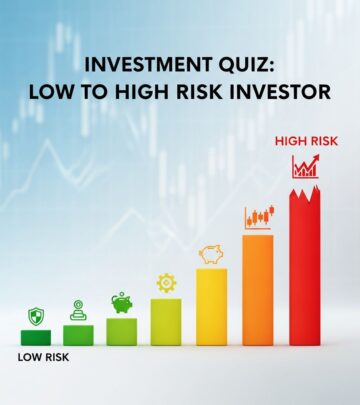
Assessing Your Investment Risk Tolerance
Unlock your ideal investment strategy by evaluating how much market volatility you can handle without losing sleep.

Determining your investment risk tolerance is the foundation of a sustainable financial strategy. It represents the degree of uncertainty and potential loss you can endure in pursuit of higher returns, shaped by both emotional comfort and objective financial circumstances. This assessment ensures your portfolio aligns with your life goals, preventing impulsive decisions during market downturns.
Defining Risk Tolerance in Modern Investing
Risk tolerance combines an investor’s psychological readiness to face losses with their financial ability to absorb them. The U.S. Securities and Exchange Commission describes it as the capacity and desire to forgo some or all of an investment for the chance of superior gains. Unlike fleeting market trends, this profile guides asset selection, from stable bonds to volatile equities.
Investments inherently carry uncertainty: stocks may surge but also plummet, while bonds offer steadier income at lower yields. High-risk choices like high-yield bonds or emerging market funds promise amplified rewards but demand resilience against sharp declines.
Risk Tolerance Versus Risk Capacity: Key Distinctions
Many confuse risk tolerance with risk capacity, yet they differ fundamentally. Tolerance reflects emotional stamina—your ‘sleep-at-night’ threshold amid volatility. Capacity, however, is factual: how much loss your finances can sustain without derailing objectives.
Your overall risk profile takes the lower of these two. A thrill-seeking young professional with high tolerance might still cap risks if debt burdens limit recovery potential.
| Aspect | Risk Tolerance | Risk Capacity |
|---|---|---|
| Definition | Emotional willingness to endure losses | Financial ability to withstand losses |
| Influences | Personality, past experiences | Income, savings, timeline |
| Changes Over Time | Relatively stable | Fluctuates with life events |
| Example | Comfort with 20% drops | Can afford $50K loss |
Core Factors Shaping Your Risk Profile
Several elements influence your risk stance. Start with your investment horizon: longer timelines, like 20+ years to retirement, allow recovery from downturns, favoring equities.
- Age and Life Stage: Younger investors often embrace aggression, as time heals wounds; those nearing retirement prioritize preservation.
- Income Stability: Secure earnings support bolder moves; variable paychecks demand caution.
- Financial Cushion: Emergency funds covering 6-12 months enable risk-taking without liquidation fears.
- Debt Levels: High obligations reduce capacity, tilting toward conservative assets.
- Goals: Growth for wealth-building versus income for near-term needs dictates balance.
Investor Profiles: Finding Your Fit
Investors cluster into profiles based on these factors. Each suggests tailored allocations.
Conservative Profile
These individuals shun volatility, accepting modest gains to safeguard principal. Ideal for short horizons or low comfort with swings, they favor Treasurys, CDs, and blue-chip bonds.
- Portfolio: 70-90% fixed income, 10-30% equities
- Suits: Retirees, risk-averse savers
Moderate or Balanced Profile
Balanced types seek equilibrium, tolerating moderate dips for steady growth. Diversification via ETFs and mutual funds tempers exposure.
Aggressive Profile
Aggressors chase outsized returns, undeterred by steep drops. They lean into stocks, REITs, and alternatives, banking on long-term appreciation.
- Portfolio: 70-100% equities, minimal fixed income
- Suits: Young accumulators with stable finances
Practical Tools for Self-Assessment
Questionnaires from reputable sites like Investor.gov provide starting points, posing scenarios on loss reactions and goals. Beware biases toward sponsored products.
Try this exercise: Hypothetical $10,000 investment drops 20% ($2,000 loss). Sell all? Hold steady? Buy more? Responses reveal tolerance.
- Review past reactions to market events.
- Project needs: Calculate required returns via future value formulas.
- Consult advisors for personalized quizzes.
Building a Portfolio Matched to Your Tolerance
Diversification mitigates risks without eliminating them. Blend assets that zig when others zag—stocks with bonds, domestic with international.
For conservatives: High-quality corporates and Treasurys. Moderates: Index funds blending S&P 500 with aggregate bonds. Aggressives: Sector ETFs, growth stocks, commodities.
Rebalance annually: Sell winners, buy laggards to maintain targets. This enforces discipline.
Common Mistakes and How to Avoid Them
- Chasing Returns Blindly: High past performance doesn’t predict future; match to tolerance.
- Ignoring Capacity: Emotional high-fliers crash if finances falter.
- Static Profiles: Life changes—marriage, kids—shift capacity; reassess biennially.
- Panic Selling: Volatility is normal; tuned portfolios weather storms.
Life Events That Reshape Risk Levels
Milestones demand reevaluation. Job loss shrinks capacity; inheritance expands it. Approaching retirement? Glide toward bonds. Health issues prioritize liquidity.
Tech like robo-advisors dynamically adjust based on profiles and market data, but human oversight ensures alignment.
FAQs
What if my tolerance and capacity conflict?
Default to capacity—the binding constraint—to avoid unsustainable losses.
Can risk tolerance change?
Yes, via experience or circumstances, but core personality endures. Reassess post-major events.
Are online quizzes reliable?
Useful starters, but supplement with financial review; avoid vendor-biased ones.
How does diversification fit in?
It spreads risk across uncorrelated assets, softening blows without slashing returns.
What’s the role of time in risk?
Longer horizons justify aggression, as markets trend up historically.
References
- What Is Risk Tolerance and How Can You Determine Yours? — Merrill Lynch. 2023. https://www.ml.com/articles/what-is-risk-tolerance.html
- What is your risk tolerance in investing? — MassMutual. 2024-01-15. https://blog.massmutual.com/retiring-investing/what-is-risk-tolerance-in-investing
- Understanding risk tolerance — Saxo Bank. 2024. https://www.home.saxo/learn/guides/start-investing/understanding-risk-tolerance
- How to Determine Your Risk Tolerance Level — Charles Schwab. 2023-05-10. https://www.schwab.com/learn/story/how-to-determine-your-risk-tolerance-level
- Discussing Risk Tolerance with Clients — Ascensus. 2023. https://advisors.ascensus.com/all-resources/discussing-risk-tolerance-with-clients/
- Know Your Risk Tolerance — FINRA. 2024-02-01. https://www.finra.org/investors/insights/know-your-risk-tolerance
- Understanding Risk — CIRO. 2023-11-20. https://www.ciro.ca/office-investor/understanding-risk
Similar Articles








Read full bio of medha deb