Assessed Value vs Appraised Value: Key Differences
Understand how assessed and appraised values differ and impact property taxes and home loans.

Assessed Value vs Appraised Value: Understanding the Difference
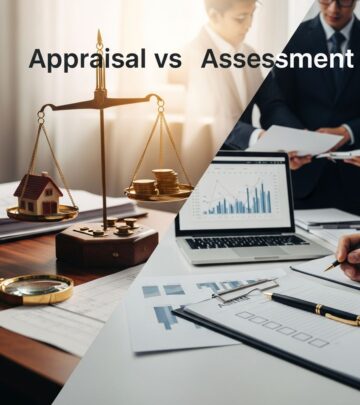
When navigating the complexities of real estate and property ownership, understanding the distinction between assessed value and appraised value is essential. While these two terms may sound similar, they serve very different purposes and are calculated using distinct methodologies. Assessed value determines your property tax obligations, while appraised value influences mortgage lending decisions and helps establish fair market value. Confusion between these concepts can lead to misunderstandings about your home’s worth and unexpected financial implications.
What Is Assessed Value?
Assessed value is the worth placed on a property by a local government, specifically through an individual property assessor, for the purpose of taxation. This valuation determines the taxable basis upon which your property taxes are calculated. Local government auditors periodically assess the value of residential properties, and this information is public record that homeowners can search online through county and municipal websites.
The assessed value typically differs significantly from market value because tax assessors must evaluate property based solely on its current condition. Market value, by contrast, is based on the best potential use of the property regardless of its current condition. This fundamental difference explains why assessed values are often lower than fair market values. Tax assessors use standardized methods and comparable property data to ensure consistency across jurisdictions, with all valuations in a particular area made as of the same date, called the “tax status date.”
What Is Appraised Value?
An appraised value is an objective, professional assessment conducted by a licensed appraiser to determine how much a home or property is worth at a specific point in time. Unlike assessed value, which is determined by government officials for tax purposes, appraised value reflects the expert opinion of a qualified professional regarding what a typical buyer would pay for the property in its current condition.
Appraisals are a critical component of the home buying and mortgage refinancing process. When purchasing a home with financing, lenders require an appraisal to verify that they are not loaning more than the property is worth. The appraiser’s role is to determine collateral value—essentially, how much the lender can safely loan without risking financial loss if foreclosure becomes necessary. This professional evaluation protects both the lender and the borrower by ensuring the transaction aligns with the property’s true market value.
Key Differences Between Assessed and Appraised Values
| Aspect | Assessed Value | Appraised Value |
|---|---|---|
| Purpose | Property tax calculation | Mortgage lending and collateral verification |
| Conducted By | Local government assessor | Licensed professional appraiser |
| Frequency | Periodic, typically every 1-3 years | As needed for transactions or refinances |
| Evaluation Basis | Current condition only | Market conditions and comparable sales |
| Cost | No cost to homeowner | Average cost approximately $350 |
| Typical Range | Usually lower than market value | Often lower than fair market value |
How Assessed Value Is Calculated
The assessed value calculation process follows a standardized formula established by local taxing authorities. The basic calculation is: Assessed home value × mills ÷ 1,000 = property tax. Tax assessors analyze comparable properties in the area and adjust their valuations based on specific characteristics and conditions. The assessed value specifically represents the taxable value of your home, not its fair market value, which means it may not reflect all the market factors that affect actual sale price.
One significant limitation of assessed values is that they often lag behind current market values. This means a home may have appreciated substantially in the market, but the assessed value might not reflect this recent appreciation. Additionally, because of the methods used by tax assessors, it can be harder to compare your property’s assessed value to recent home sales. The assessment may not account for certain improvements or renovations that significantly affect market value but are not reflected in official records.
How Appraised Value Is Calculated
The appraisal process is far more detailed and customized than assessed value calculations. Professional appraisers typically employ the comparable market approach, also known as the comparative market analysis (CMA), which involves averaging the prices of three or more comparable homes, or “comps,” that have recently sold in the area.
When analyzing comparables, appraisers examine each home and factor in positives and negatives based on specific features such as square footage, age, condition, and location. For example, if the subject property is 1,500 square feet and one comparable property is only 1,250 square feet, the appraiser might adjust values accordingly. Appraisers utilize industry-standard references like the Marshall & Swift Residential Cost Handbook to ensure consistent and accurate valuations. These estimates are based on generally accepted ranges of values and help appraisers make informed adjustments when comparing properties.
Beyond the comparable approach, appraisers may employ alternative valuation methods depending on the property type and market conditions:
Cost Approach
Appraisers sometimes use the cost approach, especially when appraising unique homes with few comparable sales. This method considers the previous sale price of the land and estimates the cost to construct a replacement home on the property. The appraiser factors in depreciation and subtracts this from the total value to determine the property’s worth.
Income Capitalization Approach
This lesser-used method is generally reserved for income or rental properties. It bases valuation on the income potential of the property—specifically, how much revenue the property can generate. This approach is rarely used for primary residences but is crucial for commercial and investment properties.
After completing their analysis, appraisers compile a formal report, typically the Uniform Residential Appraisal Report, which they deliver to the lender. As a borrower, you are entitled to receive a free copy of this report before your loan closes, allowing you to review all the details about your property’s physical and locational characteristics.
Why Market Value, Assessed Value, and Appraised Value Differ
These three valuations—market value, assessed value, and appraised value—can be quite different from one another. Fair market value represents what a buyer would willingly pay and what a seller would willingly accept on the open market based on current conditions and comparable sales. It reflects buyer demand and market sentiment about the property.
Assessed value, being used for taxation purposes, must remain consistent across municipal jurisdictions and typically lags behind market appreciation. Appraised value, while closer to fair market value, is still the opinion of a single professional and may not perfectly align with what the property would actually sell for in the current market. A home’s fair market value may be higher or lower than its appraised value depending on broader market conditions, buyer interest, and specific property characteristics that may not be fully captured in the appraisal process.
When Each Valuation Matters Most
Assessed value becomes critical when calculating your property taxes. The assessed value directly determines your annual tax obligation through the formula provided by your local taxing authority. Understanding your home’s assessed value allows you to see if it has appreciated, compare it with nearby homes, and potentially appeal the assessment if you believe it is inaccurate.
Appraised value is essential during mortgage transactions and refinancing. Lenders require appraisals to ensure they are not lending more than the home is worth. If an appraisal comes in lower than the purchase price, the buyer may need to provide additional down payment funds, or the seller may need to reduce the asking price. In refinancing situations, a lower-than-expected appraisal might prevent you from refinancing or limit how much you can borrow against your home’s equity.
Appraisals vs. Home Inspections
Many homeowners confuse appraisals with home inspections, but these are distinctly different services. An appraisal estimates the value of the home as a dollar amount and is typically required by mortgage lenders as a security measure. A home inspection, by contrast, evaluates the physical condition and structural integrity of the property, identifying any repairs, maintenance issues, or potential problems. While both involve outside professionals assessing your home, an appraiser focuses on valuation while an inspector focuses on condition and safety. Both services are valuable during the home purchase process but serve different purposes.
How to Access Your Home’s Assessed and Appraised Values
Finding your home’s assessed value is straightforward since this information is public record. You can check county and municipal websites to look up your property’s assessed value. This allows you to monitor whether your assessment has changed and compare it with other nearby properties. The information is typically available for free online through your local assessor’s office or tax collector’s website.
Obtaining an appraisal requires more effort and investment. If you are financing a home purchase or refinancing your mortgage, your lender will order the appraisal for you, though you may be responsible for the cost (typically around $350). If you want an independent appraisal outside of a mortgage transaction, you can hire a licensed appraiser directly, though this is an out-of-pocket expense. An appraisal conducted by a professional is generally considered more accurate than online estimation tools or automated valuation models (AVMs), particularly for unique properties or those in areas with few recent comparable sales.
What If You Disagree With Your Assessed or Appraised Value?
If you believe your assessed value is inaccurate, most jurisdictions allow property owners to file an appeal. You can provide evidence that your property’s assessment is higher than comparable properties or that the assessment doesn’t reflect the property’s actual condition. Many property owners discover their assessed values are higher than necessary, presenting an opportunity to reduce their property tax burden through a successful appeal.
If your appraisal comes in lower than expected during a mortgage transaction, you have several options. You might request a second opinion, especially if you believe the appraiser made factual errors about your property. During a refinance, you may still be able to proceed by offering to make up the difference. You could also ask the seller to reduce the price to match the appraised value, or negotiate other terms to close the gap between the purchase price and the appraised value.
Frequently Asked Questions
Q: Is assessed value the same as appraised value?
A: No, these are completely different valuations. Assessed value is determined by local government for tax purposes, while appraised value is a professional opinion of market worth conducted by a licensed appraiser for lending purposes.
Q: Why is my assessed value different from what I think my home is worth?
A: Assessed value is based on the property’s current condition for taxation purposes and typically lags behind market appreciation. Your home’s fair market value may be substantially higher than its assessed value, reflecting current market demand and comparable sales.
Q: Can I use assessed value instead of an appraisal for a mortgage?
A: No. Lenders require a professional appraisal, not an assessed value, to verify collateral value. An appraisal provides the objective professional assessment that lenders need to approve a loan.
Q: How often are homes assessed?
A: Assessment frequency varies by jurisdiction, typically occurring every 1 to 3 years. Appraisals, however, are conducted as needed for specific transactions or when refinancing.
Q: Can I appeal my property’s assessed value?
A: Yes. Most jurisdictions allow property owners to appeal their assessed value if they believe it is inaccurate or higher than comparable properties. Check with your local assessor’s office for the appeals process in your area.
Q: What should I do if my appraisal comes in lower than the purchase price?
A: You have several options: request a second appraisal if you believe errors were made, negotiate a lower price with the seller, increase your down payment to cover the difference, or in refinancing situations, negotiate with your lender.
References
- Fair Market Value Of A Home, And How It’s Calculated — Bankrate. 2024. https://www.bankrate.com/real-estate/fair-market-value/
- How To Determine Home Value — Bankrate. 2024. https://www.bankrate.com/real-estate/determine-home-value/
- What is a Home Appraisal? Everything You Need to Know — Bankrate. 2024. https://www.bankrate.com/real-estate/home-appraisals/
- What Are Property Taxes? How Are They Calculated? — Bankrate. 2024. https://www.bankrate.com/real-estate/property-taxes/
- Home Valuation: How Much Is Your Home Really Worth? — Bankrate. 2024. https://www.bankrate.com/real-estate/home-valuation/
Similar Articles








Read full bio of medha deb