Articles of Organization: LLC Formation Guide
Complete guide to Articles of Organization for forming and managing LLCs.
What Are Articles of Organization?
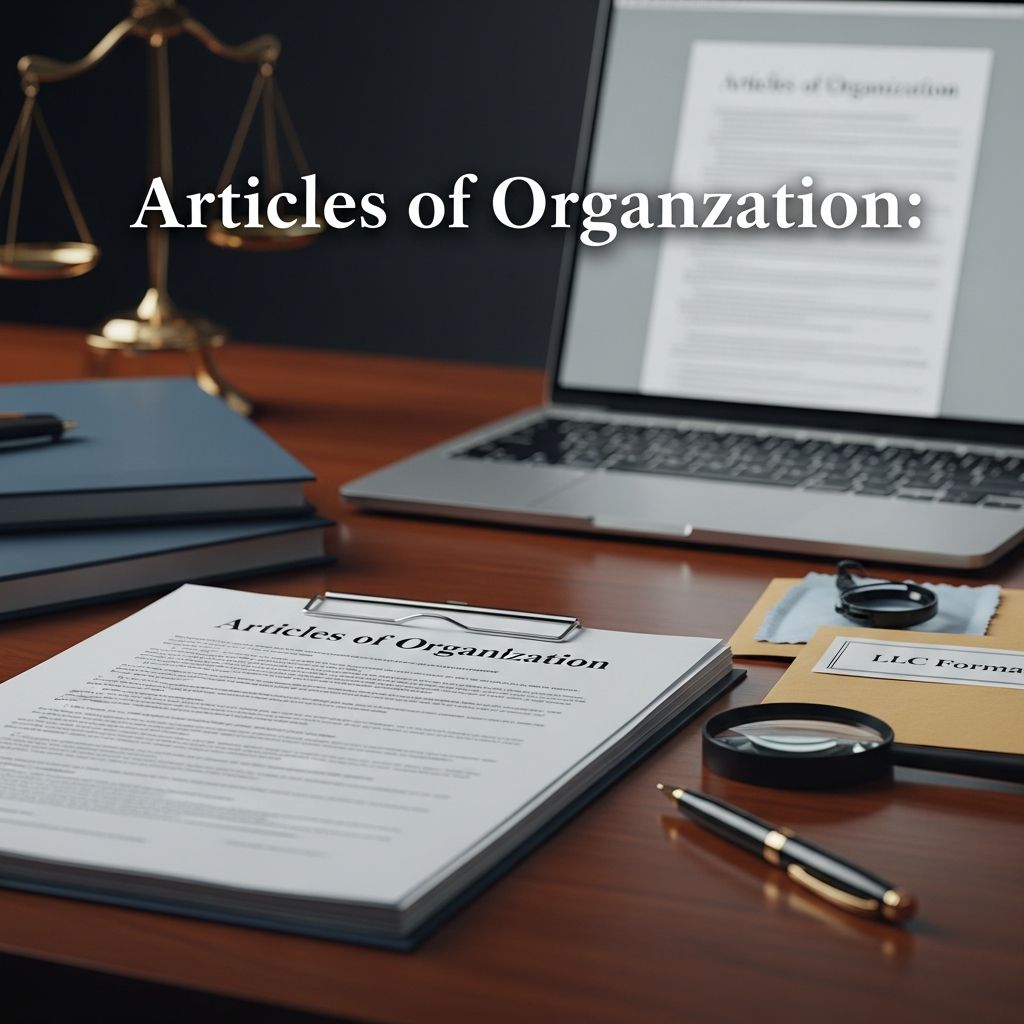
Articles of Organization are official legal documents filed with a state government to formally create a limited liability company (LLC). These documents serve as the foundational paperwork that establishes an LLC as a separate legal entity, distinct from its owners, who are referred to as members. Once approved and filed by the appropriate state agency, typically the Secretary of State, the LLC gains legal recognition and can begin conducting business operations under state law.
An LLC is technically described as ”organized” rather than ”incorporated,” which is why the formation document carries the name ”Articles of Organization” instead of ”Articles of Incorporation.” This distinction is important because it reflects the different legal structures between LLCs and corporations. While both serve to create separate legal entities, they follow different regulatory pathways and have different organizational requirements.
The Articles of Organization function as a public record that outlines the LLC’s rights, powers, and obligations, as well as the relationship between members and the company itself. This document provides transparency to the state government and establishes a clear legal framework for the LLC’s operations moving forward.
Key Information Included in Articles of Organization
While specific requirements vary from state to state, Articles of Organization typically contain essential information about the LLC and its structure. Understanding what information must be included is crucial for proper filing and compliance.
Most Articles of Organization include the following key elements:
- LLC Name: The legal name of the limited liability company, which must comply with state naming requirements and typically include ”LLC,” ”L.L.C.,” or ”Limited Liability Company” in the name.
- Business Address and Registered Agent Information: The principal place of business location and details about the registered agent, who is authorized to receive legal documents on behalf of the LLC.
- Management Structure: Declaration of whether the LLC will be member-managed or manager-managed, which determines how the business will be operated and who has decision-making authority.
- Names of Members or Managers: In some states, the names and addresses of LLC members or managers may be required to be listed in the Articles of Organization.
- Business Purpose: A description of the LLC’s intended business activities, though this is optional in many states.
- Filing Fee: The appropriate state filing fee must accompany the Articles of Organization submission.
State-specific variations may require additional information or allow optional disclosures depending on the jurisdiction’s LLC laws and regulations.
Filing Process and Requirements
The process of filing Articles of Organization involves several important steps and considerations to ensure proper legal formation of your LLC.
Where to File: Articles of Organization are filed with the Secretary of State office (or equivalent state business filing agency) in the state where the LLC will operate. While LLC members can technically form an LLC in any state, they typically choose the state where the business is principally located. This state becomes the LLC’s ”home” or ”domestic” state.
Filing Requirements: When submitting Articles of Organization, you must include the completed legal document along with the appropriate filing fee. Each state charges a one-time fee for processing the filing, though the amount varies significantly by jurisdiction. Some states may also require additional supporting documents or have specific formatting requirements for submission.
Processing and Confirmation: Once the state agency accepts and approves your Articles of Organization, they issue official confirmation documentation. This confirmation is sometimes called a Certificate of Organization or Certificate of Formation. This official certificate confirms the LLC’s legal status and provides the filing date, which marks the official beginning of the LLC’s existence as a registered business entity.
Compliance After Filing: After initial filing and approval, LLC members may be required to make additional mandatory filings to maintain compliance and keep the LLC in good standing. These ongoing obligations might include annual reports, tax filings, or other state-specific requirements.
Articles of Organization vs. Articles of Incorporation
A common point of confusion for business owners is the distinction between Articles of Organization and Articles of Incorporation. While these documents serve similar purposes—legally forming a business entity—they are distinct documents used for different entity types and have important differences.
| Aspect | Articles of Organization | Articles of Incorporation |
|---|---|---|
| Entity Type | Limited Liability Company (LLC) | Corporation (C-Corp or S-Corp) |
| Legal Status | Organized under state law | Incorporated under state law |
| Filing Agency | Secretary of State | Secretary of State |
| Required Information | LLC name, address, management structure, members/managers, business purpose (optional) | Corporation name, registered office, directors, authorized shares, business purpose |
| Ownership Structure | Member-driven, flexible | Shareholder/board of directors-driven, formal |
| Disclosure Level | Generally fewer formal details required | More detailed upfront disclosure required |
| Management Requirements | Member-managed or manager-managed | Must have board of directors and officers |
Entity Type Differences: Articles of Organization are exclusively used to form LLCs, while Articles of Incorporation are exclusively used to form corporations. An LLC is not incorporated; it is organized. This terminology distinction reflects fundamental differences in how these entities operate and are governed under state law.
Content and Information: While both documents include the entity name and business address, Articles of Incorporation typically require disclosure of more formal structural details upfront, such as the number of authorized shares and initial directors. Articles of Organization focus more on management style and member information but generally require fewer formal structural disclosures.
Organizational Flexibility: LLCs, formed through Articles of Organization, offer greater flexibility in management and operational structure compared to corporations formed through Articles of Incorporation. Members can choose between member-managed or manager-managed structures, whereas corporations must maintain a formal board of directors.
Alternative Names by State
Although ”Articles of Organization” is the most common terminology, different states use varying names for this same document. Understanding these alternatives is important when researching LLC formation in your specific state.
Common Alternative Names Include:
- Certificate of Formation
- Certificate of Organization
- Articles of Formation
- Certificate of Limited Liability Company Formation
For example, some states may use ”Certificate of Formation” interchangeably with ”Articles of Organization.” Despite the different names, these documents serve the same legal purpose and contain substantially similar information requirements. When filing in your state, verify the exact terminology and requirements with your state’s Secretary of State office to ensure compliance and proper filing.
Articles of Organization vs. Operating Agreement
Another important distinction business owners must understand is the difference between Articles of Organization and an operating agreement, as these are often confused despite serving different purposes.
Articles of Organization: This is the official document filed with the state government to legally create and form the LLC as a registered business entity. It is a public record that establishes the LLC’s legal existence.
Operating Agreement: The operating agreement is an internal document that establishes the rules, structure, and guidelines for how the LLC will operate. This document outlines the rights and responsibilities of LLC members, decision-making procedures, profit distribution, member withdrawal processes, and other operational details. While not always required to be filed with the state, an operating agreement is a critical internal document that guides business decisions and helps prevent costly disputes among members.
In essence, Articles of Organization create the LLC, while an operating agreement governs how it functions. Many business formation experts strongly recommend having a comprehensive operating agreement in place to avoid future conflicts that might otherwise require expensive litigation to resolve.
Frequently Asked Questions (FAQs)
Q: What is the primary purpose of Articles of Organization?
A: The primary purpose of Articles of Organization is to legally establish an LLC as a separate legal entity with the state government. This filing creates liability protection for members, allows the LLC to enter contracts and own assets, and establishes a formal business structure recognized under state law.
Q: Is an LLC incorporated or organized?
A: An LLC is technically organized, not incorporated. This is why the formation document is called Articles of Organization rather than Articles of Incorporation, and the business is said to be ”organized” under state law, reflecting its distinct legal structure from corporations.
Q: Do LLCs need Articles of Incorporation?
A: No, LLCs specifically use Articles of Organization. Articles of Incorporation apply exclusively to corporations and cannot be used to form an LLC, as they are designed for different entity types with different legal requirements.
Q: Are Articles of Organization the same in every state?
A: While the basic purpose and content of Articles of Organization are similar across states, specific requirements, terminology, and filing procedures vary by state. You should consult your state’s Secretary of State office for exact requirements and proper filing procedures.
Q: What happens after Articles of Organization are approved?
A: After approval, the state issues a Certificate of Organization or Certificate of Formation confirming the LLC’s legal status. The LLC then exists as a registered business entity and must comply with ongoing state requirements to maintain good standing, which may include annual reports and tax filings.
Q: Can I form an LLC in any state?
A: Legally, yes—LLC members can form an LLC in any state. However, they typically form it in the state where the business is principally located to avoid additional compliance requirements in multiple states and to reduce administrative burden.
Q: What is the filing fee for Articles of Organization?
A: Filing fees vary significantly by state and typically range from $50 to $500 or more. The fee is a one-time charge included with your Articles of Organization submission. Check your specific state’s Secretary of State website for current fee information.
Why Articles of Organization Matter
Articles of Organization are fundamental to LLC formation because they establish legal recognition, provide liability protection to members, and create a framework for business operations. By filing these documents, you transform a business from an unregistered entity into a legally recognized limited liability company with all associated protections and responsibilities. This legal structure protects personal assets of members from business liabilities and creditor claims, making it an essential step for serious business operations.
References
- LLC vs. Corporation: Articles of Organization and Incorporation — RASi. 2024. https://www.rasi.com/insights/llc-vs-corporation-filing
- Articles of Organization — Cornell Law School Legal Information Institute. Accessed 2024. https://www.law.cornell.edu/wex/articles_of_organization
- What are LLC Articles of Organization? — Wolters Kluwer. 2024. https://www.wolterskluwer.com/en/expert-insights/what-are-articles-of-organization
- Articles of Incorporation vs. Articles of Organization — OnBoard Meetings. 2024. https://www.onboardmeetings.com/blog/articles-of-incorporation-vs-articles-of-organization/
- Articles of Organization Definition — ZenBusiness. 2024. https://www.zenbusiness.com/articles-of-organization-definition/
- New York State Department of State: Articles of Organization — New York State. 2024. https://dos.ny.gov/articles-organization-domestic-limited-liability-company-0
Similar Articles








Read full bio of Sneha Tete