ARM Mortgages: A Complete Guide to Variable Rate Loans
Explore whether adjustable-rate mortgages align with your homebuying strategy and financial goals.
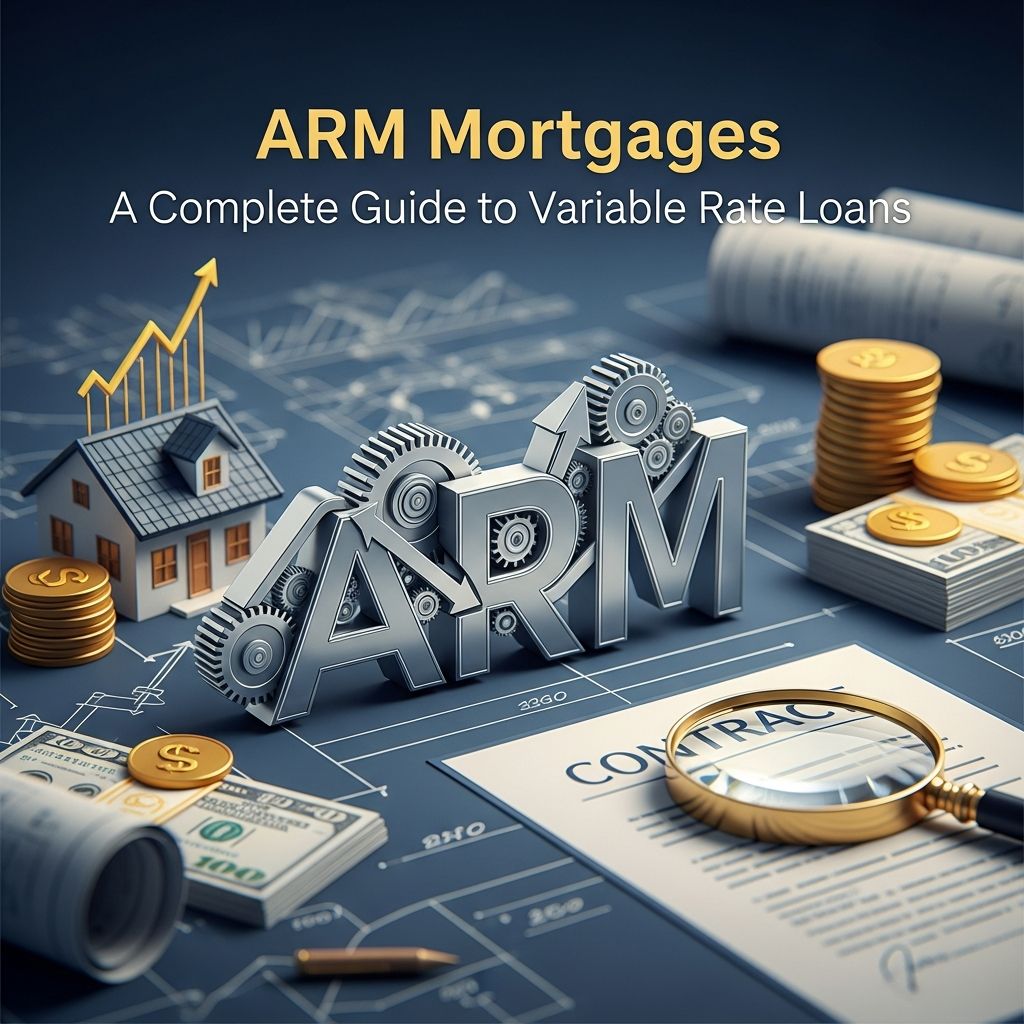
When exploring mortgage options, many homebuyers encounter adjustable-rate mortgages (ARMs) as an alternative to traditional fixed-rate loans. An ARM represents a fundamentally different approach to home financing, with interest rates that shift periodically rather than remaining constant throughout the loan term. For certain borrowers, this flexibility can translate into meaningful financial advantages, while for others, it introduces unwelcome uncertainty. Understanding the mechanics, benefits, and drawbacks of ARMs is essential for making an informed decision aligned with your personal circumstances and long-term objectives.
What Distinguishes an Adjustable-Rate Mortgage
An adjustable-rate mortgage operates on a dual-rate structure that fundamentally differs from fixed-rate alternatives. The loan begins with an initial period—typically lasting anywhere from one to ten years—during which the interest rate remains locked at a predetermined level. Once this introductory phase concludes, the interest rate enters an adjustment period where it recalibrates based on prevailing market conditions and established financial indices. This recalculation typically occurs annually or at other specified intervals, directly impacting your monthly payment amount.
The mechanics behind rate adjustments involve several protective mechanisms designed to prevent extreme fluctuations. Lenders establish multiple layers of rate caps: an initial adjustment cap limits how dramatically the rate can rise after the fixed period expires, a subsequent adjustment cap constrains increases during each subsequent reset, and a lifetime adjustment cap prevents the rate from climbing beyond a maximum threshold over the entire loan duration. These safeguards provide a degree of predictability, though payments can still increase substantially.
The reference index used to calculate new rates varies among lenders but commonly includes the Secured Overnight Financing Rate (SOFR) or other market-based benchmarks. Understanding which index your lender uses and monitoring its trends helps you anticipate potential payment changes as your adjustment date approaches.
The Financial Appeal: Lower Entry-Point Costs
The primary attraction of ARMs centers on their notably reduced introductory interest rates. Lenders offer substantially lower initial rates on ARMs compared to contemporary fixed-rate mortgages, sometimes by one or more percentage points. This rate advantage translates directly into lower monthly payments during the fixed-rate period, creating meaningful monthly savings.
These reduced payments offer several practical benefits for qualified borrowers:
- Enhanced purchasing power: Lower monthly obligations mean you can afford a more expensive property with the same total monthly budget allocation.
- Improved accessibility: Reduced entry costs make homeownership more attainable for individuals with modest incomes who might otherwise struggle to qualify for fixed-rate mortgages.
- Budgetary flexibility: Monthly savings can be redirected toward additional housing expenses, home improvements, emergency reserves, or accelerated principal payments.
- Strategic financial positioning: Borrowers expecting income growth can use the lower initial payment period as a bridge to more expensive payments later.
Circumstances Where ARMs Make Financial Sense
ARMs function optimally within specific scenarios where their structural advantages outweigh inherent risks. Understanding whether your situation aligns with these conditions is crucial for ARM viability.
Short-Term Ownership Plans
The most advantageous ARM scenario involves borrowers planning to sell their property before the introductory rate period expires. By exiting the loan before adjustments occur, homeowners capture the interest rate benefit without exposure to rate increases. For instance, if your ARM features a five-year fixed period and you plan to relocate after three years, you enjoy three years of favorable rates followed by a profitable sale before adjustments impact your payments.
Anticipated Income Growth
Borrowers expecting significant income increases before their rate adjusts can strategically use ARMs to purchase homes earlier than a fixed-rate mortgage would permit. A professional early in their career, anticipating substantial salary growth within five years, could qualify for an ARM today and comfortably absorb higher payments after adjustment once their income has materialized. This approach requires confidence in projected earnings and a realistic contingency plan if income growth doesn’t materialize as expected.
Refinancing Opportunities
The ability to refinance before adjustment provides additional flexibility. Should market conditions create favorable opportunities—declining rates, improved credit scores, or equity accumulation—borrowers can convert their ARM to a fixed-rate loan, locking in predictability. This option requires careful cost-benefit analysis, as refinancing involves closing costs and fees that must be justified by interest savings over your remaining ownership period.
Investment and Portfolio Considerations
Real estate investors frequently employ ARMs as strategic tools for property acquisition and portfolio management. Investors planning to hold properties briefly before selling, or those who will apply rental income surpluses toward additional principal payments, can benefit substantially from reduced initial costs. The lower payment obligations improve cash flow dynamics during the ownership period, enhancing investment returns.
The Potential Advantage of Declining Rates
While rate increases represent the most commonly discussed ARM risk, the possibility of declining interest rates presents an often-overlooked benefit. Unlike fixed-rate mortgages where falling market rates provide no advantage without refinancing, ARMs adjust automatically. If market conditions push rates downward after your initial period expires, your monthly payment decreases without any action required on your part.
However, this advantage requires careful scrutiny of your loan’s interest rate floor—the minimum rate below which your ARM will never descend regardless of market conditions. Understanding this floor prevents overestimating potential savings if rates fall significantly.
The Critical Risk: Payment Escalation
The counterbalance to ARM advantages manifests most prominently through the possibility of substantial payment increases after the fixed-rate period concludes. When interest rates rise—as they historically do during economic cycles—borrowers face correspondingly higher monthly obligations. The extent of these increases depends on the magnitude of rate adjustments, the values of your rate caps, and the duration of your loan’s remaining term.
This payment escalation creates several cascading financial pressures:
- Reduced budgetary flexibility as mortgage payments consume larger portions of monthly income
- Difficulty affording additional debt obligations simultaneously
- Potential inability to qualify for other credit products
- Risk of mortgage payment becoming unaffordable, threatening loan default
The historical context matters here: periods of elevated interest rates complicate ARM borrowing substantially. Entering an ARM when fixed rates already sit at elevated levels means initial savings diminish, and adjustment-phase rates could climb even higher, negating the primary ARM advantage.
The Qualification Advantage for Borderline Borrowers
Lenders often perceive ARM applications more favorably than comparable fixed-rate applications due to reduced initial payment obligations. Borrowers operating near debt-to-income ratio limits may qualify for ARMs when fixed-rate mortgages prove unavailable. This democratizing effect expands homeownership access, though it requires honest self-assessment about capacity to handle future payment increases.
Structural Safeguards and Their Limitations
ARM rate caps provide important—though imperfect—protections against unlimited rate escalation. A mortgage with initial, subsequent, and lifetime caps creates predictable boundaries for rate increases. However, these protections possess inherent limitations. Even with substantial caps preventing rates from reaching certain thresholds, payments can still increase dramatically. Additionally, some ARMs incorporate payment caps rather than rate caps, which can create negative amortization—a situation where monthly payments fail to cover accruing interest, causing your loan balance to expand rather than contract.
Decision Framework: Evaluating ARM Suitability
Determining whether an ARM aligns with your circumstances requires systematic evaluation across multiple dimensions:
| Consideration | ARM-Favorable Scenario | Fixed-Rate-Favorable Scenario |
|---|---|---|
| Ownership timeline | Planning to sell before adjustments begin | Expecting long-term ownership |
| Income trajectory | Confident of substantial income growth | Income stable or declining |
| Rate environment | Fixed rates historically high | Fixed rates historically low |
| Financial cushion | Ability to absorb 30–50% payment increases | Limited financial flexibility |
| Risk tolerance | Comfortable with payment uncertainty | Requires payment predictability |
| Market familiarity | Understanding of rate indices and cycles | Prefers simplicity and certainty |
Preparing for Adjustment: Strategic Planning
ARM borrowers who remain in their homes through the adjustment phase require deliberate preparation strategies. Dedicating a portion of the initial monthly savings to a reserve account builds financial cushion for when payments increase. Understanding the timing and magnitude of anticipated adjustments—by reviewing your loan documents and consulting with your lender—enables accurate household budgeting.
Refinancing before your adjustment date offers an exit strategy if circumstances warrant. Similarly, maintaining awareness of your loan’s refinancing options and any associated costs ensures you can act decisively when market conditions align favorably.
Comparing ARMs Across Market Environments
ARM attractiveness fluctuates with prevailing interest rate regimes. During periods of elevated fixed rates, the differential between ARM introductory rates and fixed-rate alternatives widens substantially, enhancing ARM appeal. Conversely, when fixed rates sit at historical lows, ARM savings diminish since there’s limited advantage to temporary rate discounts.
Final Considerations for Your Mortgage Decision
Selecting between adjustable and fixed-rate mortgages fundamentally depends on your specific financial situation, risk tolerance, and life plans. ARMs represent powerful financial tools for borrowers whose circumstances align with their structural benefits—those selling within five years, expecting significant income growth, or demonstrating strong financial resilience to absorb payment increases. For others prioritizing payment certainty, planning extended ownership, or lacking financial flexibility, fixed-rate mortgages offer superior alignment with their needs.
The critical imperative involves thorough evaluation rather than defaulting to either option based on market trends or peer influence. Consulting with qualified mortgage professionals, reviewing comprehensive loan documentation, and honestly assessing your financial capacity and future plans ensures your mortgage decision supports rather than undermines your broader financial objectives.
References
- Adjustable-Rate Mortgage Risks and Benefits — WSECU. Accessed 2026. https://wsecu.org/resources/arm-risks-benefits
- Pros & Cons of an Adjustable-Rate Mortgage — Chase Bank. Accessed 2026. https://www.chase.com/personal/mortgage/education/financing-a-home/pros-and-cons-adjustable-rate-mortgage
- Adjustable Rate Mortgage: What are the Advantages and Disadvantages — First Merchants. 2021. https://www.firstmerchants.com/resources/learn/blogs/blog-detail/resource-library/2021/12/01/adjustable-rate-mortgage-what-are-the-advantages-and-disadvantages
- Pros And Cons Of An Adjustable-Rate Mortgage (ARM) — Bankrate. Accessed 2026. https://www.bankrate.com/mortgages/pros-and-cons-arm/
- Adjustable-rate mortgages: Pros and cons — Rocket Mortgage. Accessed 2026. https://www.rocketmortgage.com/learn/adjustable-rate-mortgage-pros-and-cons
- Adjustable-Rate Mortgages: How They Work (Pros and Cons) — SCCU. Accessed 2026. https://www.sccu.com/articles/home-mortgage/adjustable-rate-mortgages-how-they-work-pros-cons
- Adjustable Rate Mortgages (ARM) — U.S. Department of Housing and Urban Development. Accessed 2026. https://www.hud.gov/hud-partners/single-family-203armt
Similar Articles








Read full bio of medha deb