ARM Mortgages: Risks, Rewards, and Real Data
Explore adjustable-rate mortgages with fresh insights on usage trends, payment impacts, and strategic tips for today's market.
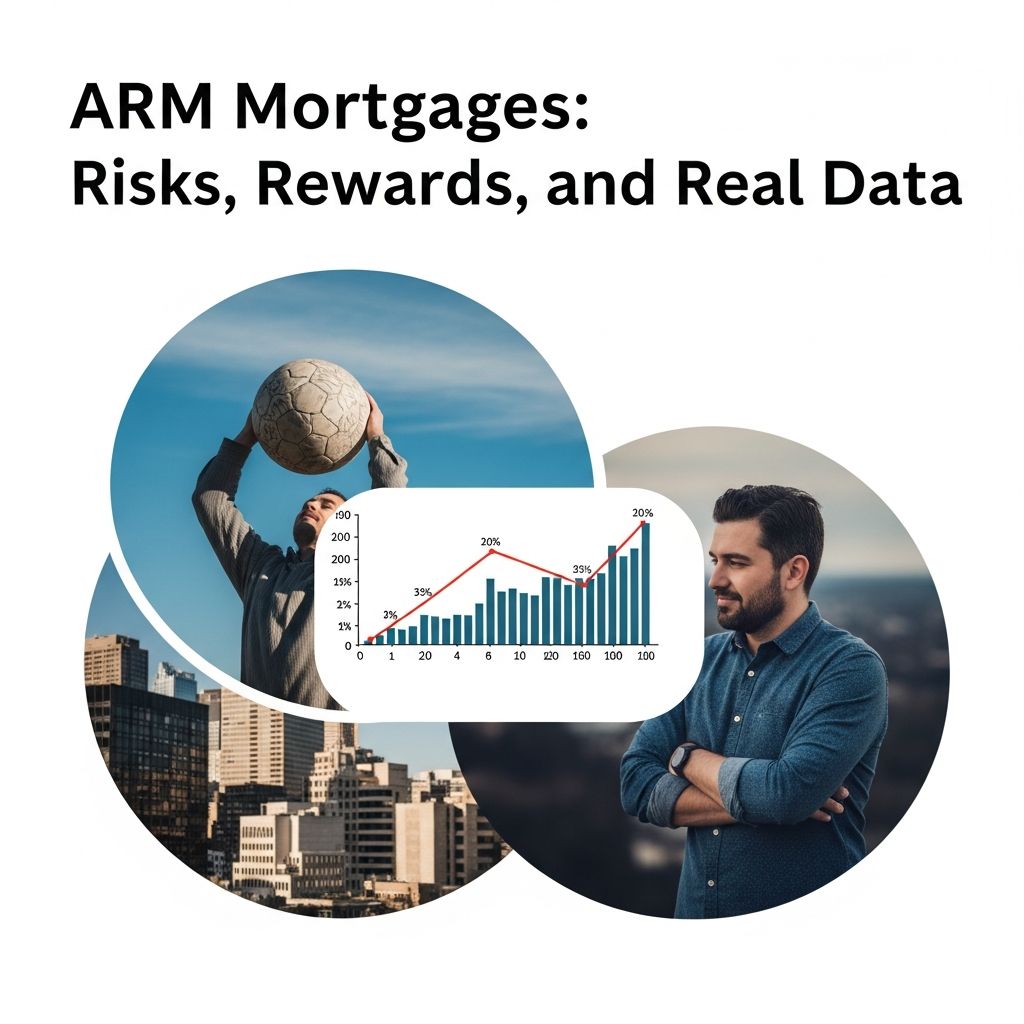
Adjustable-rate mortgages (ARMs) provide homebuyers with an alternative to traditional fixed-rate loans by offering lower starting interest rates that later fluctuate based on market conditions. Recent studies show ARMs gaining traction as fixed rates climb, appealing to those seeking affordability in competitive housing markets.
Understanding the Mechanics of Adjustable-Rate Loans
An ARM begins with a fixed interest rate for an initial period, often 3 to 10 years, after which it adjusts periodically—typically annually—tied to a benchmark index like the Secured Overnight Financing Rate (SOFR) plus a lender margin. This structure contrasts with fixed-rate mortgages, where payments remain constant throughout the term.
Key protective features include caps: an initial adjustment cap limits the first rate change, subsequent caps restrict yearly increases, and a lifetime cap sets the maximum rate over the loan’s life. Some ARMs also feature payment caps, though these risk negative amortization if payments fail to cover accruing interest.
Why ARMs Are Resurging in Popularity
As fixed mortgage rates exceed 7% in recent years, ARMs have captured a larger market share, rising from under 5% to over 10% of originations in some periods. Borrowers favor introductory rates often 1-2% below fixed options, enabling larger purchases or qualification with tighter budgets.
This shift benefits short-term owners, investors, or those anticipating income growth, as low early payments build equity faster when extra funds go toward principal. In declining rate environments, automatic adjustments can lower costs without refinancing fees.
Core Advantages of Choosing an ARM
- Reduced Starting Costs: Introductory rates slash monthly payments, freeing cash for savings or improvements during the fixed phase.
- Enhanced Purchasing Power: Lower rates qualify buyers for pricier homes, ideal for modest-income households or upscale markets.
- Potential for Rate Declines: If indexes drop, payments decrease automatically, unlike fixed loans requiring costly refinances.
- Short-Term Flexibility: Perfect for relocators or flippers selling before adjustments begin.
Significant Drawbacks and Potential Pitfalls
Despite attractions, ARMs expose borrowers to payment shocks if rates rise, potentially doubling monthly obligations over time. Historical spikes, like post-2008, underscore risks of being priced out, especially without refinance options.
Long-term holders face uncertainty, as fully indexed rates (index + margin) often exceed initial teasers, eroding savings. Negative amortization in capped-payment ARMs can balloon balances, complicating equity. Borrowers must stress-test affordability against maximum capped rates.
ARM Variants and Their Structures
| ARM Type | Fixed Period | Adjustment Frequency | Best For |
|---|---|---|---|
| 3/1 ARM | 3 years | Annual thereafter | Quick relocators |
| 5/1 ARM | 5 years | Annual thereafter | Medium-term plans |
| 7/1 ARM | 7 years | Annual thereafter | Stable job holders |
| 10/1 ARM | 10 years | Annual thereafter | Longer-term with caution |
These hybrids balance stability and flexibility; longer fixed periods suit conservative borrowers.
Borrower Demographics and Credit Insights
Data reveals ARM users skew toward prime credit profiles (740+ FICO), with average scores surpassing fixed-rate applicants by 20-30 points. They originate larger loans—$450,000 versus $380,000 for fixed—targeting high-cost regions like California and New York.
- Young professionals (under 40) dominate, leveraging future earnings.
- Investors favor ARMs for rental cash flow.
- Higher-income brackets (over $150K) represent 60% of originations.
Lower default rates (under 1%) reflect strong underwriting, though refinance rates spike post-adjustment.
Comparing ARM Payments: Fixed vs. Adjustable Scenarios
For a $400,000 loan at 6.5% fixed, monthly principal and interest is about $2,528. A 5/1 ARM at 5.5% introductory drops to $2,272, saving $256 monthly initially. Post-adjustment to 7.5%, it rises to $2,798—a 23% jump.
| Scenario | Year 1-5 Payment | Year 6+ (Adjusted) | Total Interest (30 Yrs, Avg) |
|---|---|---|---|
| Fixed 6.5% | $2,528 | $2,528 | $510,000 |
| 5/1 ARM 5.5% Intro | $2,272 | $2,798 | $480,000 |
Assumes moderate rate path; actuals vary by caps and indexes.
Strategic Tips for ARM Success
Evaluate your timeline: ARMs excel under 10 years ownership. Budget for worst-case payments (add 2-3% to intro rate). Monitor indexes quarterly and refinance if fixed rates drop. Hybrid ARMs with longer fixes minimize early risk.
Consult lenders on margins (typically 2-3%) and indexes. Use online calculators to model adjustments. Strong credit unlocks best terms.
Market Forecasts and ARM Outlook
With Fed rate cuts anticipated, ARMs could see rates stabilize or dip, rewarding holders. Persistent inflation might trigger hikes, favoring fixed converts. Adoption may plateau at 15% if fixed rates ease below 6%.
Frequently Asked Questions
What triggers an ARM rate adjustment?
Rates adjust based on an index like SOFR plus margin, at intervals post-fixed period.
Can ARM payments ever decrease?
Yes, if market indexes fall, subject to any floor rate.
Are ARMs riskier than fixed loans?
Potentially, due to variability, but caps mitigate extremes.
Who qualifies for the best ARM rates?
Those with 740+ credit, 20%+ down payments.
Should I refinance an ARM?
If adjustments loom and fixed rates compete favorably, yes.
Key Takeaways for Homebuyers
ARMs offer entry to homeownership via low intros but demand payment shock preparedness. Ideal for short horizons or falling-rate bets; otherwise, fixed provides peace. Analyze personal finances rigorously before committing.
References
- Adjustable-Rate Mortgage Risks and Benefits — WSECU. 2024. https://wsecu.org/resources/arm-risks-benefits
- Pros and Cons of an Adjustable-Rate Mortgage — Securityplus FCU. 2024-06. https://www.securityplusfcu.org/learn/education/prosperity-pulse/june-2024/the-pros-and-cons-of-an-adjustable-rate-mortgage
- Pros & Cons of an Adjustable-Rate Mortgage — Chase Bank. 2024. https://www.chase.com/personal/mortgage/education/financing-a-home/pros-and-cons-adjustable-rate-mortgage
- Pros and Cons of an Adjustable-Rate Mortgage (ARM) — Freedom Mortgage. 2024. https://www.freedommortgage.com/learn/mortgages/adjustable-rate-mortgage-pros-cons
- What Is an Adjustable-Rate Mortgage? — PNC Insights. 2024. https://www.pnc.com/insights/personal-finance/borrow/what-is-adjustable-rate-mortgage.html
- Pros And Cons Of An Adjustable-Rate Mortgage (ARM) — Bankrate. 2024. https://www.bankrate.com/mortgages/pros-and-cons-arm/
- Adjustable-rate mortgages: Pros and cons — Rocket Mortgage. 2024. https://www.rocketmortgage.com/learn/adjustable-rate-mortgage-pros-and-cons
Similar Articles








Read full bio of medha deb