Are We In A Recession In 2026? How To Protect Your Wallet
Understanding recession indicators, economic data, and practical steps to safeguard your finances amid uncertainty.
The question on everyone’s mind in early 2026 is simple yet loaded: Are we in a recession? With inflation lingering around 3%, uneven consumer spending, and a GDP dip in Q1 2025 followed by a rebound, economic uncertainty persists. Economists define a recession as two consecutive quarters of declining gross domestic product (GDP), but real-life signals like job slowdowns and shaky consumer confidence paint a more nuanced picture. This article breaks down the indicators, latest data, potential impacts, and actionable steps to protect your wallet.
How Economists Define a Recession
Officially, a recession occurs when GDP—a measure of all goods and services produced—shrinks for two straight quarters. The National Bureau of Economic Research (NBER) confirms recessions by examining broader data including employment, industrial production, and income. “You cannot just look to one number, but to a sustained, across-the-board slowdown,” says Michael Baynes, co-founder and CEO of Clarify Capital. Factors like decelerating job growth, stagnant wages, and business cutbacks signal trouble.
Top Recession Indicators
Several key metrics serve as early warning signs. Here’s a breakdown:
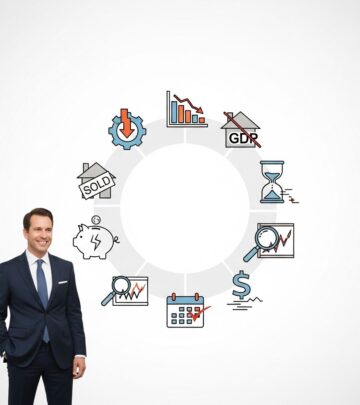
- Inverted Yield Curve: When short-term bond yields exceed long-term ones, it predicts recessions with high accuracy. Currently, short-term yields are not higher, offering some relief.
- Rising Unemployment Rates: At 4.3% as of late 2025, unemployment is low but hiring has slowed, hinting at caution.
- Falling Consumer Confidence: The Conference Board’s U.S. Consumer Confidence Index tracks this. A Harris poll shows 57% of Americans believe we’re already in a recession, with 45% feeling financially worse off. Declines lead to reduced spending, amplifying slowdowns.
- Declining GDP: Q1 2025 saw a drop, but Q2 rebounded. Two quarters are needed for official status. Data from the Bureau of Economic Analysis is key.
- Lower Corporate Earnings: Profit drops signal consumer pullback, leading to layoffs.
| Indicator | Current Status (2025-2026) | Recession Signal |
|---|---|---|
| Inverted Yield Curve | Not inverted | Low risk |
| Unemployment | 4.3%, hiring slowing | Moderate risk |
| Consumer Confidence | Declining (57% think recession) | High risk |
| GDP | Q1 drop, Q2 rebound | Watch closely |
| Corporate Earnings | Declining in sectors | Moderate risk |
What the Latest Economic Data Says
As of January 2026, inflation hovers at 3% year-over-year, down from peaks but sticky. Consumer spending is mixed: growth in essentials, declines elsewhere. Credit card rejections are up, per borrower reports. Positive notes include no yield curve inversion and stable unemployment. However, Federal Reserve high rates could tip into a shallow recession. Baynes warns: “The Fed maintaining high rates can push into recession, likely shallow but felt by consumers”. A Harris poll underscores pessimism, with most Americans sensing downturn.
What Happens During a Recession? Financial Impacts
Recessions hit households hard across jobs, debt, housing, and costs.
Job Losses and Layoffs
Companies cut payrolls in tight times. Hospitality, retail, and construction suffer most, but hiring freezes spread wide. Even stable jobs face wage stagnation.
Rising Debt Defaults
Layoffs plus inflation strain budgets. Credit card minimums, mortgages, student loans, and car payments falter, boosting repossessions and foreclosures.
Housing and Rent Market Effects
Demand cools as moves delay. Inventory drops, slowing rent hikes—a silver lining. But mortgage denials rise for buyers.
Impact on Everyday Costs
Prices may fall for oversupplied goods but rise where demand outstrips supply. Groceries and energy remain pressures.
How to Prepare Your Money for a Recession
Proactive steps build resilience. Prioritize an emergency fund versus debt payoff? Experts like Robin Hartill suggest balancing both, favoring liquidity in uncertainty.
- Build an Emergency Fund: Aim for 3-6 months’ expenses in a high-yield savings account. Tap if needed, but avoid 401(k)s—protected in bankruptcy.
- Reduce Debt Strategically: Focus high-interest first, but preserve cash for crises.
- Cut Non-Essentials: Downgrade cable, eat out less, review subscriptions.
- Boost Income: Side gigs, unemployment benefits, government aid.
What to Do If You Can’t Pay Your Bills
Crisis demands a plan.
- Create a Barebones Budget: List all expenses/income on one page. Prioritize housing, food, transport.
- Add Up Funding Sources: Include savings, gigs, relief. Avoid retirement accounts.
- Deal with Unpayable Bills: Contact creditors early for hardship plans. Don’t ignore—worsens credit.
- Get Back on Track: Resume debt payoff and saving post-crisis.
Smart Saving Tips During Recession Fears
- Buy in Bulk: Stockpile non-perishables at Costco or Sam’s.
- Shop Secondhand: Thrift stores, ThredUp, Poshmark for clothes.
- Haggle Bills: Negotiate cable, insurance rates.
- Grow Food: Start a garden for fresh produce.
Frequently Asked Questions (FAQs)
What is the official definition of a recession?
Two consecutive quarters of negative GDP growth, confirmed by NBER using broader data like employment and income.
Are we in a recession right now (2026)?
Not officially—Q1 2025 dipped but Q2 rebounded. Indicators mixed: no inversion, but confidence low.
How does a recession affect my job?
Increased layoff risk, especially in retail/hospitality. Hiring freezes common.
Should I pay off debt or save in a recession?
Build emergency fund first for liquidity; tackle high-interest debt after.
What if I can’t pay bills?
Prioritize essentials, contact creditors, use savings/gigs. Avoid 401(k) withdrawals.
References
- 8 Recession Indicators and What They Mean for Your Money — The Penny Hoarder. 2025. https://www.thepennyhoarder.com/save-money/recession-indicators/
- When a Recession Looms, Should You Build an Emergency Fund or Kill Your Debt? — Robin Hartill, The Penny Hoarder. 2026-01-05. https://www.moneytalksnews.com/author/robin-hartill/
- OPINION: Why 2026 will be worse than 2025 — Midland Daily News. 2026. https://www.ourmidland.com/opinion/voices/article/2026-worse-2025-21284333.php
- What to Do When You Can’t Pay Your Bills During Tough Times — The Penny Hoarder. 2025. https://www.thepennyhoarder.com/debt/cant-pay-your-bills/
- Gross Domestic Product, 2nd Quarter 2025 (Advance Estimate) — U.S. Bureau of Economic Analysis. 2025-07-25. https://www.bea.gov/news/2025/gross-domestic-product-2nd-quarter-2025-advance-estimate
- The Employment Situation — December 2025 — U.S. Bureau of Labor Statistics. 2026-01-10. https://www.bls.gov/news.release/empsit.nr0.htm
Similar Articles








Read full bio of Sneha Tete