Safety Deposit Boxes: Risks, Insurance Gaps, Safer Options
Uncover the real risks and protections of safety deposit boxes in today's banking environment.

Safety deposit boxes, often perceived as the ultimate secure storage for valuables like jewelry, documents, and heirlooms, come with significant risks that many users overlook. While banks provide physical security, the absence of insurance, potential government access, and operational vulnerabilities undermine their safety.
What Is a Safety Deposit Box?
A
safety deposit box
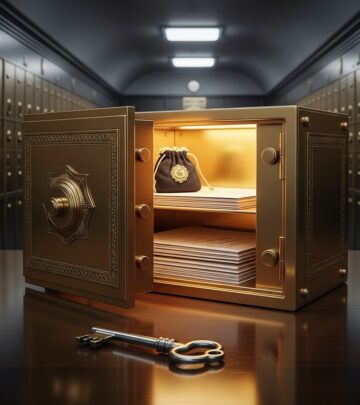
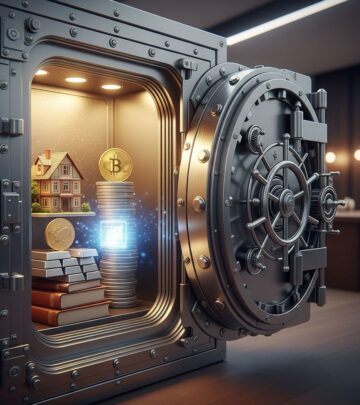
is a small, secure container rented from a bank, located in a vault with restricted access, surveillance, and robust construction designed to protect against theft, fire, and natural disasters. Customers store items such as passports, wills, precious metals, family jewels, and birth certificates. Rental fees typically range from $25 to $300 annually, depending on size and location.These boxes require dual keys—one held by the customer and one by the bank—for access, adding a layer of protection. Banks position them as superior to home storage due to professional security measures like alarms, guards, and time-locked vaults.
Are Safety Deposit Boxes Insured?
No, contents of safety deposit boxes are
not insured
by the FDIC or the bank itself. FDIC coverage applies only to deposit accounts like checking, savings, or money market accounts up to $250,000 per depositor, per insured bank. Safety deposit boxes are rental spaces, not deposits, so losses from theft, fire, flood, or damage receive no federal protection.Banks explicitly disclaim liability in rental agreements, often limiting responsibility to $500 or less for box damage, not contents. Homeowners or renters insurance may cover items off-premises, but policies vary—coverage is typically low (e.g., $1,000–$5,000) unless added via riders, which cost extra and exclude certain risks like mysterious disappearance.
- FDIC does not cover box contents under any circumstances.
- Bank insurance protects the box structure, not your valuables inside.
- Private insurance: Check your policy; specialized valuables insurance from providers like Chubb or Jewelers Mutual offers broader protection but requires appraisals.
Bank Failures and Safety Deposit Boxes
During bank failures, safety deposit box contents face uncertainty. The FDIC prioritizes depositors with insured accounts; boxes may be frozen, transferred to successor institutions, or auctioned if unclaimed. Historical cases, like the 2012 Vernon, California scandal, revealed missing valuables during seizures.
In FDIC takeovers, vaults are sealed, delaying access for months. Customers must prove ownership via lease agreements and keys. Wealth concentration in megabanks heightens risks for smaller institutions, where boxes may be phased out post-failure.
| Scenario | Impact on Safety Deposit Boxes |
|---|---|
| Bank Failure | Vault sealed; access delayed; contents transferred or at risk. |
| FDIC Intervention | Priority to deposits; boxes secondary. |
| Successor Bank | Potential policy changes, higher fees, or discontinuation. |
Government Access to Safety Deposit Boxes
Governments can access boxes without your consent via court orders, warrants, or civil forfeiture. The Patriot Act enables broad surveillance; IRS can seize for tax debts. Banks comply quickly, often drilling boxes if keys are unavailable.
Privacy is illusory—banks report suspicious contents (e.g., large cash, gold). Recent trends show increasing forfeitures without criminal charges, eroding Fourth Amendment protections. Examples include DEA raids on boxes holding legal assets mistaken for drug proceeds.
- Court order: Fastest access method.
- No notification required in some cases.
- Appeal process lengthy and costly.
Bankruptcy and Institutional Risks
In bankruptcy, banks treat boxes as rental contracts, potentially terminating leases. Contents become unclaimed property after 3–5 years, auctioned publicly. Mergers lead to box relocations, lost leases, or service elimination—some banks like Chase have phased out boxes entirely.
Operational risks include employee theft (rare but documented) and natural disasters overwhelming vault protections. Low interest rates on related accounts exacerbate wealth shifts to megabanks, destabilizing smaller ones with boxes.
Fire, Flood, and Natural Disaster Protection
Banks claim fireproof vaults (withstanding 1700°F for hours) and flood-resistant designs, but failures occur. Hurricane Katrina (2005) saw flooded vaults in New Orleans banks, damaging contents despite claims. Earthquakes can shift vaults, compromising seals.
No guarantees exist; water damage ruins paper documents, photos, and non-waterproof items. Regular inventories and digital backups mitigate losses.
Who Has Access to Your Box?
Access requires your key plus bank master key, but authorized persons (via notarized letters) or deputies (spouse, lawyer) can enter. Upon death, probate delays access—executor needs court orders. Divorce or disputes trigger legal battles.
Banks drill boxes for lost keys ($200+ fee), exposing contents briefly. Employees witness openings, risking privacy breaches.
- Primary renter: Full access.
- Co-renter: Independent entry.
- Legal heirs: Probate required.
Costs Associated with Safety Deposit Boxes
Annual rentals: Small box ($25–$75), medium ($75–$150), large ($150–$300). Fees for drilling ($100–$500), extra keys ($25), late payments (leading to auction). Banks may impose access fees or discontinue service.
| Box Size | Typical Annual Cost | Common Add-On Fees |
|---|---|---|
| 3×5 inches (small) | $25–$75 | Drilling: $200 |
| 5×10 inches (medium) | $75–$150 | Extra key: $25 |
| 10×10 inches (large) | $150–$300 | Late fee: Varies |
Alternatives to Safety Deposit Boxes
Modern options offer better protection:
- Private Vaults: Insured, 24/7 access, privacy (e.g., Delaware Vaults cover up to $1M).
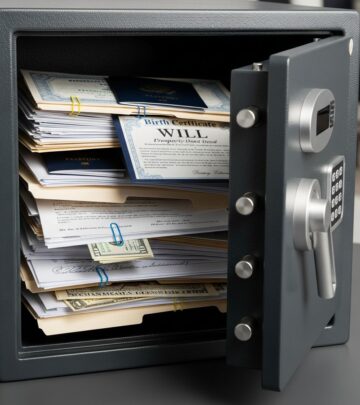
- Home Safes: Fireproof, bolted models ($200–$2,000); combine with insurance.
- Diversified Storage: Split valuables across locations.
- Digital Solutions: Blockchain for documents; insured cloud backups.
- Precious Metals Depositories: Segregated, insured storage for gold/silver.
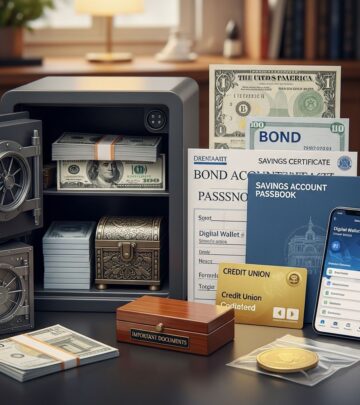
Money market accounts provide FDIC-insured liquidity for cash equivalents, blending safety with returns—higher rates than savings, check-writing access.
Pros and Cons of Safety Deposit Boxes
| Pros | Cons |
|---|---|
| High physical security (vaults, surveillance). | No FDIC/ bank insurance. |
| Protection from home theft/fire. | Government seizure risk. |
| Low cost relative to insurance. | Access delays (bank hours, death). |
| Dual-key system. | Potential auction in bankruptcy. |
Frequently Asked Questions (FAQs)
What should you not put in a safety deposit box?
Avoid anything needed frequently (passports for travel), perishables, hazardous materials, or illegal items. Do not store cash (prefer FDIC-insured accounts) or weapons (bank policies prohibit).
Are safety deposit boxes worth it?
For irreplaceable, low-value items, yes. For high-value assets, weigh risks against private vaults or insurance-enhanced home safes.
What happens if the bank loses your safety deposit box contents?
Limited recourse; bank’s liability capped low. File insurance claim if covered personally.
Can the government open my safety deposit box?
Yes, with warrant or court order; no notice sometimes required.
Are safety deposit boxes fireproof?
Vaults resist high heat, but floods or earthquakes pose risks; not infallible.
References
- How to Choose Between a Time Deposit or Money Market Account — Security 1st Bank. 2022-01-11. https://security1stbank.com/2022/01/how-to-choose-between-a-time-deposit-or-money-market-account/
- Pros and Cons of Money Market Accounts — Academy Bank. N/A. https://www.academybank.com/article/pros-and-cons-of-money-market-accounts
- The Risks of Safe Deposit Boxes — Monetary Metals. N/A. https://www.monetary-metals.com/insights/articles/risks-of-safe-deposit-boxes/
- What Is a Safe Deposit Box? — NerdWallet. N/A. https://www.nerdwallet.com/banking/learn/what-is-safe-deposit-box
- Safe Deposit Box: What To Know — Bankrate. N/A. https://www.bankrate.com/banking/savings/safe-deposit-box-etiquette-what-not-to-put-in-your-safe-box/
- When to Consider a Safe Deposit Box — Arthur State Bank. N/A. https://www.arthurstatebank.com/blog/when-security-is-essential-a-safe-deposit-box-can-deliver-peace-of-mind/
Similar Articles








Read full bio of Sneha Tete