Are Annuities a Good Investment for Retirement?
Discover if annuities are right for your retirement strategy with comprehensive pros, cons, and expert guidance.

Are Annuities a Good Investment?
When planning for retirement, one of the most critical decisions you’ll face is determining which financial vehicles will provide the income and security you need. Annuities have emerged as a popular retirement tool, attracting millions of investors seeking guaranteed income and protection from market volatility. However, whether annuities represent a good investment depends entirely on your individual financial situation, risk tolerance, and retirement objectives.
Annuities offer a unique value proposition: they convert a lump sum of money into a stream of guaranteed income that can last for your entire life. This feature directly addresses one of retirement’s most pressing concerns—longevity risk, or the possibility of outliving your savings. Yet like all investment vehicles, annuities come with tradeoffs that warrant careful consideration before committing your retirement funds.
Understanding What Annuities Are
An annuity is a contract between you and an insurance company. You provide a sum of money (either as a lump sum or through periodic payments), and in return, the insurance company agrees to provide you with regular income payments. These payments can begin immediately or be deferred until a future date you specify.
The fundamental appeal of annuities lies in their promise of predictable income. Unlike stock portfolios that fluctuate with market conditions, annuities offer certainty about how much money you’ll receive and when you’ll receive it. This predictability becomes increasingly valuable as you approach and enter retirement, when the ability to absorb investment losses diminishes.
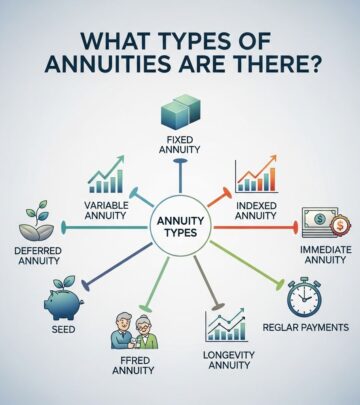
The Three Main Types of Annuities
Understanding the different annuity types is essential for making an informed decision about whether they suit your needs.
Fixed Annuities
Fixed annuities represent the safest annuity option, providing guaranteed returns regardless of market conditions. With a fixed annuity, the insurance company commits to paying you a predetermined interest rate for the duration of your contract. This rate remains constant, ensuring complete predictability about your income stream.
Fixed annuities, particularly multi-year guaranteed annuities (MYGAs), function similarly to certificates of deposit. You know exactly what rate you’ll receive and for how long. The insurance company guarantees your principal investment remains untouched, and you won’t lose money due to market downturns. However, this safety comes at a cost: returns tend to be modest and may not consistently outpace inflation over extended periods.
Current fixed annuity rates have become increasingly competitive, reaching levels not seen in nearly two decades. For investors primarily focused on capital preservation rather than aggressive growth, fixed annuities can serve as a solid foundation within a diversified retirement portfolio.
Fixed Index Annuities
Fixed index annuities occupy a middle ground between fixed annuities and variable annuities, offering the potential for enhanced returns while still protecting your principal. These products tie their interest rate to the performance of a specific stock market index—typically the S&P 500—without actually investing your money directly in the index itself.
Here’s how the mechanics work: if the index experiences strong performance, you receive some of that gain added to your contract value. Conversely, if the index declines, your annuity doesn’t lose value—there’s simply no index interest added. This structure creates a floor below which your investment cannot fall while still allowing participation in market gains.
However, insurance companies employ several mechanisms to limit your actual returns. Participation rates determine what percentage of index gains you receive. For example, with a 50 percent participation rate, if the index rises 10 percent, you only receive credit for a 5 percent gain. Spreads and caps further reduce your returns. Insurance companies can adjust these limiting factors throughout your contract term, so returns aren’t entirely predictable.
Variable Annuities
Variable annuities invest your money in mutual fund-like accounts called subaccounts. Your returns directly depend on the performance of these underlying investments, and your principal faces market risk. Variable annuities offer the highest growth potential among annuity types but also carry the greatest risk.
During market downturns, variable annuities can experience significant losses. Additionally, they typically charge higher fees than fixed or indexed alternatives, which can substantially impact your long-term returns. Variable annuities do offer optional guarantees through riders—such as guaranteed minimum withdrawal benefits—but these additional protections come at extra cost.
Key Benefits of Annuities
Annuities deliver several compelling advantages for retirement investors:
Guaranteed Lifetime Income
Perhaps the most valuable feature of annuities is their ability to provide reliable income throughout your lifetime. This guarantee eliminates the anxiety about whether your retirement savings will last. Unlike managing your own investment portfolio, where you must carefully plan withdrawals and face the risk of depleting your funds, annuities shift this responsibility to the insurance company. You receive a predetermined payment regardless of market conditions or your lifespan.
Principal Protection (Fixed and Indexed Annuities)
Fixed and fixed index annuities guarantee that your initial investment remains safe regardless of economic conditions. You won’t lose your principal due to market crashes, recessions, or bear markets. This protection provides peace of mind for conservative investors who prioritize capital preservation.
Tax-Deferred Growth
Earnings within annuities grow tax-deferred, meaning you don’t pay income taxes on those earnings until you begin receiving distributions or make withdrawals. This tax advantage allows your money to compound more efficiently than in taxable accounts, potentially resulting in significantly larger accumulations over time.
Recession Hedge
Fixed and fixed index annuities can provide partial protection during economic downturns. With their guaranteed returns or floor protections, they help stabilize your overall retirement income when stock markets decline. While not complete protection—especially if you need immediate access to your funds or want to capitalize on market rebounds—annuities work well as part of a diversified retirement strategy.
Important Drawbacks to Consider
Before investing in an annuity, you should carefully weigh several significant disadvantages:
Capped Returns and Limited Growth Potential
The safety annuities provide comes with a tradeoff: limited upside potential. Fixed annuities offer modest returns that typically won’t match inflation over decades. Fixed index annuities cap your gains through participation rates, spreads, and caps, so you’ll never capture the full returns of a bull market. If you’re young and have decades until retirement, the growth limitations might significantly underperform compared to diversified stock portfolios.
High Fees and Expenses
Many annuities carry substantial fees that can erode returns. Variable annuities typically charge the highest fees, including administrative charges, mortality and expense risks, and individual subaccount expenses. Even fixed and indexed annuities can include surrender charges, rider fees, and other costs that reduce net returns. Always request detailed fee information before purchasing an annuity.
Limited Liquidity
Annuities typically impose surrender charges if you need to access your money before the contract term ends. These penalties can be substantial—sometimes 5 to 10 percent of your account value—and can persist for many years. This illiquidity means your money is essentially locked away, which can be problematic if unexpected expenses arise or your circumstances change.
Complex Contracts
Annuity contracts are notoriously complicated, filled with technical language and numerous conditions. The complexity makes it difficult for average investors to fully understand what they’re purchasing. Features like participation rates, spread calculations, and cap structures can be confusing. This complexity requires careful planning and often benefits from professional guidance.
Inflation Risk
Most annuities provide fixed payments that don’t adjust for inflation. Over decades of retirement, inflation can substantially erode your purchasing power. An income stream that feels adequate today might prove insufficient ten or twenty years later when the same dollars purchase far less.
Annuities in Different Economic Scenarios
During Recessions
Fixed annuities shine during recessions, offering guaranteed returns completely insulated from market chaos. Variable annuities, conversely, suffer during recessions as their payouts decline with falling market values. Fixed index annuities provide middle-ground protection through their floor mechanisms, though if market losses exceed the buffer percentage, you’ll absorb the remaining losses.
During Strong Markets
When markets perform strongly, annuity owners experience frustration. Your returns remain capped, preventing you from fully participating in bull markets. Someone with a diversified stock portfolio experiences much higher gains during years when the S&P 500 rises significantly. This represents the opportunity cost of choosing safety over growth.
Who Should Consider Annuities?
Annuities may be appropriate if you:
– Are conservative and prioritize safety and guaranteed income over maximum growth- Are concerned about outliving your savings- Have already accumulated substantial retirement savings through other sources- Are in or approaching retirement and want to reduce portfolio management responsibilities- Want to supplement Social Security with additional guaranteed income- Have a longer life expectancy and value lifetime income guarantees- Are uncomfortable with market volatility and stock market investing
Conversely, annuities may be less suitable if you:
– Are young with decades until retirement and can weather market volatility- Need flexible access to your money- Want to maximize growth potential- Can’t tolerate the complexity and fees- Plan to leave a substantial inheritance- Expect to move or face changing life circumstances
Important Safety Considerations
Since insurance companies underwrite annuities, their financial health is paramount. An insurance company must remain solvent to honor decades of payment promises. When evaluating annuity providers, research their credit ratings from reputable agencies such as A.M. Best, Moody’s, and Standard & Poor’s. Choose companies with high ratings and demonstrated financial stability. An attractive rate means nothing if the insurance company cannot make good on its promises.
How to Evaluate Annuity Offers
When considering specific annuity products, examine:
– The insurance company’s financial strength and credit ratings- All fees and surrender charges- The guaranteed rate (for fixed annuities) or crediting method (for indexed annuities)- Any participation rate limits or caps- Income options and payout structures- Rider costs and what protections they provide- Tax implications for your situation- How the product fits within your overall retirement plan
The Role of Annuities in Retirement Planning
Rather than viewing annuities as an all-or-nothing decision, consider them as one component of a comprehensive retirement strategy. Many financial advisors recommend a laddered approach: allocate a portion of your portfolio to annuities for guaranteed income and safety, while maintaining other investments for growth and flexibility.
This balanced approach allows you to:
– Cover essential retirement expenses with guaranteed annuity income- Maintain flexibility with other invested assets- Pursue growth through diversified investments- Reduce overall portfolio risk- Sleep better knowing a portion of your income is guaranteed
Frequently Asked Questions
Q: Can I lose money with a fixed annuity?
A: No, fixed annuities guarantee your principal and provide a guaranteed minimum interest rate. Your money cannot lose value with a fixed annuity. However, variable annuities do expose your principal to market risk.
Q: Are annuities taxed differently than other investments?
A: Annuities offer tax-deferred growth, meaning you don’t pay taxes on earnings until you withdraw funds. Upon withdrawal, gains are taxed as ordinary income. This differs from long-term capital gains rates on stocks or mutual funds held over one year.
Q: When should I buy an annuity?
A: The ideal time depends on your circumstances. Many investors purchase annuities after accumulating substantial retirement savings, typically around age 50-65. Current interest rates matter too—higher rates make annuities more attractive. Consider purchasing when rates are favorable and you’re comfortable reducing portfolio flexibility.
Q: What happens to my annuity if the insurance company fails?
A: Each state maintains a guaranty fund that protects annuity holders if an insurance company becomes insolvent. These funds typically provide coverage up to specific limits (often $250,000 or more per person per company). This protection is why choosing financially stable insurers remains important.
Q: Can I withdraw money from my annuity early?
A: Most annuities impose surrender charges for early withdrawals, often lasting 5-10 years. These penalties can significantly reduce your withdrawal amount. Some annuities allow penalty-free withdrawals of 10 percent annually, and all annuities become fully accessible without penalty at age 59½ (subject to income tax).
Q: Are annuities a good hedge against inflation?
A: Standard annuities provide fixed payments that don’t adjust for inflation, making them vulnerable to inflation erosion over time. Some annuities offer inflation-adjusted riders, but these typically increase costs. Variable annuities offer more inflation protection through market-based returns, though with higher risk.
Q: How do fixed index annuities compare to index funds?
A: Index funds directly own the stocks in the index and capture full market returns. Fixed index annuities tie returns to an index but cap your gains through participation rates and spreads. During strong markets, index fund investors significantly outperform. During downturns, index annuity investors have principal protection. Each serves different investor needs.
Final Verdict: Are Annuities Right for You?
Whether annuities represent a good investment ultimately depends on your individual circumstances, goals, and risk tolerance. They excel at providing guaranteed lifetime income, principal protection, and peace of mind for conservative investors. However, they sacrifice growth potential, require accepting limited liquidity, and involve complexity and fees.
Before purchasing an annuity, thoroughly evaluate your retirement needs, review all fees and terms, confirm the insurance company’s financial strength, and consider how the annuity fits within your overall retirement plan. For many people, annuities deserve a place in a diversified retirement portfolio—but typically as one component rather than the entire retirement strategy.
Consider consulting with a qualified financial advisor who can review your complete financial picture and help you determine whether annuities align with your specific retirement objectives. The best investment is one that matches your unique situation and helps you achieve a secure, comfortable retirement.
References
- Fixed Index Annuities: Benefits, Risks and How They Work — Bankrate. 2025. https://www.bankrate.com/retirement/fixed-index-annuities/
- Are Annuities A Safe Investment? — Bankrate. 2025. https://www.bankrate.com/investing/are-annunities-safe/
- Are Annuities A Safe Investment In A Recession? — Bankrate. 2025. https://www.bankrate.com/investing/are-annuities-safe-investments-in-recession/
- How To Buy An Annuity: Get Passive Income For Life — Bankrate. 2025. https://www.bankrate.com/retirement/how-to-buy-an-annuity/
- Income Annuities: What Are They And How Do They Work? — Bankrate. 2025. https://www.bankrate.com/retirement/what-are-income-annuities/
- Retirement Annuities: Pros and Cons of Annuity Investing — Bankrate. 2025. https://www.bankrate.com/retirement/pros-and-cons-of-annuities/
Similar Articles








Read full bio of Sneha Tete