Amazon Prime Day Deals: Data-Driven Verdict For 2025
Analyzing whether Amazon Prime Day offers genuine savings or just marketing hype.
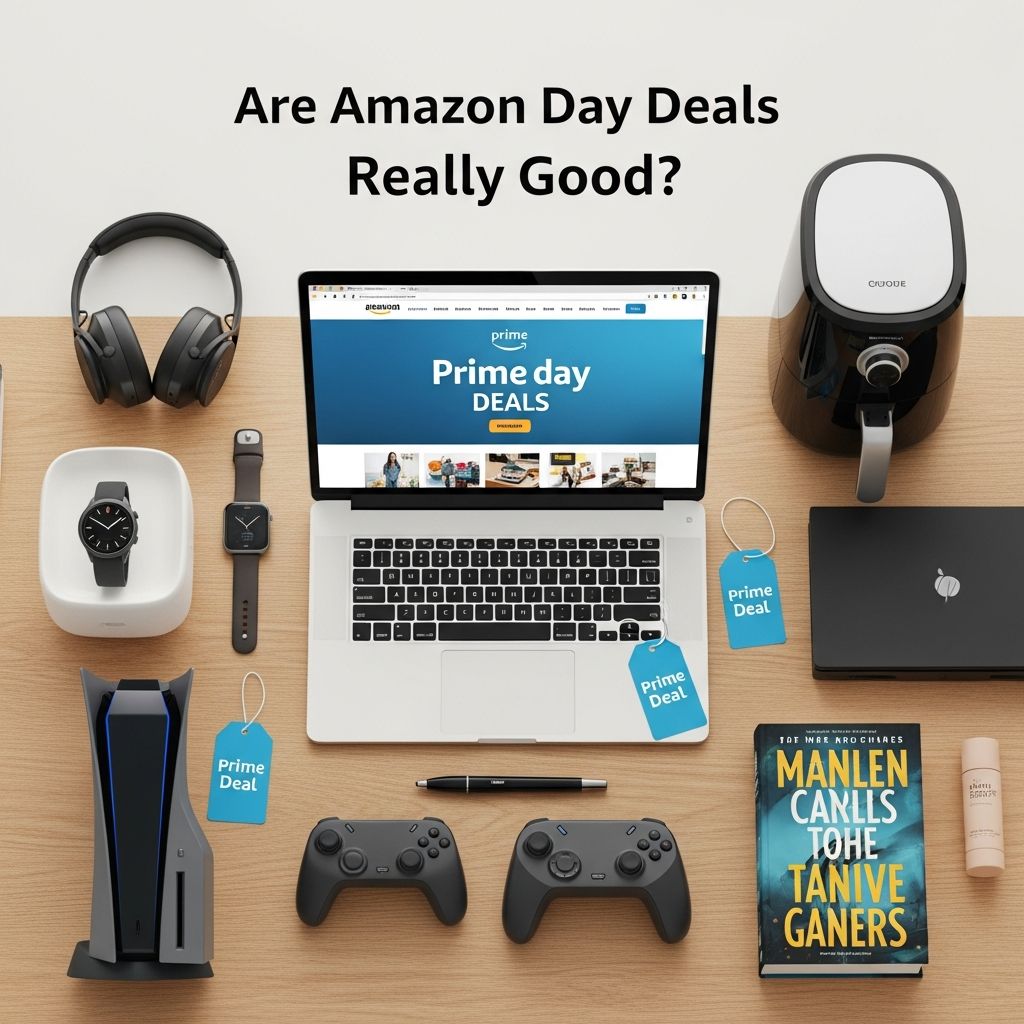
Amazon Prime Day has become one of the most anticipated shopping events of the year, drawing millions of customers seeking significant savings. But behind the marketing buzz lies an important question: are these deals actually good? To answer this, we need to look beyond the headlines and examine real data about pricing, discounts, and consumer behavior during these events.
Understanding Amazon Prime Day’s Scale and Impact
Amazon Prime Day has evolved into a retail phenomenon that extends far beyond Amazon itself. In October 2025, Amazon’s fall Prime Day generated $3.75 billion in sales over just two days, with an average order value of $46-48. This represents a 61% average lift compared to typical shopping days, demonstrating the event’s extraordinary ability to drive consumer spending.
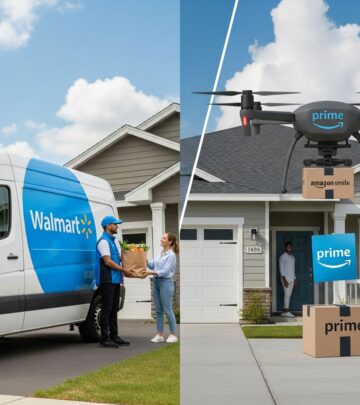
What makes this particularly interesting is how Prime Day reshapes purchasing behavior across the entire retail landscape. During the October 2025 event, while Amazon dominated with massive sales increases, competitors struggled to capture meaningful gains. Target’s Circle Week achieved only a 6.5% lift over seven days, while Walmart’s counter-promotion on the same day resulted in essentially flat performance. This stark contrast reveals something fundamental about how Prime Day operates beyond just offering good prices.
The Real Discount Picture
How Deep Are Prime Day Discounts?
When analyzing whether Prime Day deals are genuinely good, the discount percentages tell an important story. During Prime Big Deal Days 2025, the average discount rate decreased from 28% to 24%, marking a shift from previous years. This represents a notable reduction in promotional depth, suggesting that while deals still exist, they may not be as aggressive as in years past.
However, the picture becomes more nuanced when examining specific product categories and seller strategies. Brands that achieved the best results combined discounts of 25% or higher with increased paid media visibility, while unsuccessful sellers offered smaller discounts in a less competitive market. This indicates that good deals during Prime Day aren’t uniform—they depend heavily on which products you’re shopping for and which sellers are actively promoting.
Price Changes and Item Selection
One critical finding about Prime Day deals comes from analyzing the average selling price of top products. During Prime Big Deal Days 2025, the average selling price of the 1,000 best-selling items fell 4.7%, the largest drop since early 2024. This suggests that while individual items may see modest reductions, the most popular products might not experience the deepest cuts.
Additionally, data from Prime Day 2025 reveals that 67% of items sold for under $20, while only 3% were priced above $100. The average spend per item was $24.59, indicating that Prime Day deals tend to cluster around lower-priced items rather than high-value electronics or luxury goods.
Which Categories Offer the Best Prime Day Deals?
Not all product categories deliver equally good deals during Prime Day. Understanding which sectors offer genuine value is crucial for smart shopping during these events.
Strong Performing Categories
The categories that drove the most gains during Prime Big Deal Days 2025 were:
- Grocery items
- Clothing and apparel
- Beauty products
These essential and affordable categories consistently outperformed expectations, reflecting broader consumer trends toward value-conscious shopping. The top individual items purchased included Premier Protein Shakes, Dawn Platinum Powerwash, and Liquid I.V. Packets—all practical, consumable products with strong price competition.
Underperforming Categories
Several categories failed to deliver compelling Prime Day deals:
- Electronics
- Patio and garden items
- Video games
These categories underperformed, suggesting that consumers looking for significant savings in these areas may face disappointment during Prime Day. This “trading down” trend reflects how shoppers have become more selective, prioritizing everyday essentials over discretionary purchases.
The Psychology Behind Prime Day Pricing
How Amazon Shapes Your Purchasing Decisions
A fascinating aspect of Prime Day reveals how Amazon doesn’t just offer good deals—it fundamentally changes how people shop. During October 2025 Prime Day, average order value jumped from a $36.58 baseline to $45.88 on day one and $48.01 on day two. This represents a 27-31% increase in what customers spend per order.
This shift occurs through strategic mechanisms including bundling incentives, free shipping thresholds at $35, and algorithmic cross-selling that converts casual browsing into multi-item purchases. On a typical day, 82% of Amazon purchases fall under $50, but during Prime Day this dropped to 78%, with millions of customers trading up to higher-value purchases.
The FOMO Factor
Prime Day’s effectiveness isn’t solely about discount depth. The event creates artificial urgency through time-limited deals, Prime membership exclusivity, and cultural momentum that concentrates purchasing into specific dates. Over half of Prime Day shoppers reported purchasing items they had been waiting to buy until they went on sale, suggesting the event genuinely influences purchasing decisions. However, this raises the question of whether these are truly good deals or simply deals that feel good because of scarcity and psychological priming.
What Shoppers Actually Spend on Prime Day
Data from the 2025 Prime Day event provides insight into actual consumer spending patterns. The average order size reached $53.34, with nearly two-thirds of households placing 2+ separate orders. This demonstrates Prime Day’s power to generate multiple purchase occasions rather than a single transaction.
These figures suggest that while individual deals might be modest, the cumulative impact drives significant spending. The question becomes whether this represents finding good deals or simply spending more because of strategic marketing and psychological manipulation.
Prime Day Performance Compared to Competitors
Understanding whether Prime Day deals are good requires context—how do they compare to competitor offerings?
| Retailer | Event Name | Duration | Sales Lift | Key Outcome |
|---|---|---|---|---|
| Amazon | Prime Day | 2 days | +61% average | $3.75B total sales, $46-48 AOV |
| Target | Circle Week | 7 days | +6.5% | Modest growth, required full week |
| Walmart | Walmart Deals | 2 days (coinciding with Prime Day) | -0.7% (flat) | Counter-promotion ineffective |
These comparisons reveal a striking reality: Amazon’s Prime Day deals generate 9 times more lift than Target’s promotion and essentially infinite returns compared to Walmart’s flat performance. However, this doesn’t necessarily mean Amazon’s deals are better—it means Amazon’s ecosystem advantages (Prime membership, personalization infrastructure, and cultural momentum) create winner-take-all outcomes regardless of relative discount depth.
Red Flags When Shopping Prime Day
Recent Issues and Challenges
Not everything about Prime Day operates smoothly. During 2025 Prime Big Deal Days, several significant issues emerged that affected deal quality:
- Last-minute changes to Prime Exclusive Discount (PED) eligibility mid-event
- Products initially approved at 20% discount suddenly flagged as ineligible
- Amazon requiring higher discount percentages to maintain PED badging
- Shifts toward selective product discounting rather than full-catalog promotions
These issues suggest that Prime Day deals can be unpredictable, with advertised discounts subject to change and availability subject to Amazon’s real-time algorithms and profitability calculations.
How to Maximize Prime Day Value
Strategic Shopping Approaches
Based on data from successful Prime Day shoppers, several strategies maximize the value of deals:
- Focus on essentials and consumables: Grocery, clothing, and beauty items offer the most consistent discounts
- Research prices beforehand: Compare pre-Prime Day prices to identify genuine reductions versus marketing claims
- Use external traffic sources: 73% of top performers on Prime Day drove traffic from external sources, suggesting deals found off-Amazon may be better vetted
- Seek 25%+ discounts: Discounts of 25% or higher, ideally 30%+, represent genuinely competitive offers
- Buy multiple items strategically: Take advantage of free shipping thresholds to consolidate purchases
Frequently Asked Questions About Prime Day Deals
Q: Are Prime Day deals better than regular Amazon deals?
A: Prime Day deals are more heavily marketed and feature strategic discounts on popular items, but they’re not universally better. Data shows average discounts of 24% during Prime Big Deal Days, similar to regular promotional periods. The real advantage is concentrated availability and the psychological impact of urgency.
Q: Which product categories have the worst Prime Day deals?
A: Electronics, patio and garden products, and video games historically underperform during Prime Day, offering fewer significant discounts compared to essential categories like groceries, clothing, and beauty products.
Q: Should I buy electronics during Prime Day?
A: While some electronics deals exist, they tend to be less competitive during Prime Day. You may find better discounts during Black Friday or manufacturer-specific sales events.
Q: How much can I expect to save on average?
A: Average discounts during recent Prime Big Deal Days ranged from 24-28%, with most items under $50. Realistic savings expectations should center on 20-30% off popular items, not the 50%+ discounts sometimes marketed.
Q: Is a Prime membership required to get good deals?
A: Yes. Prime Day deals are exclusively available to Prime members. However, Amazon offers free trial periods that coincide with Prime Day, allowing non-members to access the event with a temporary membership.
The Verdict: Are Prime Day Deals Good?
The answer is nuanced. Prime Day deals are good for specific product categories and specific shoppers, but they’re not universally excellent. The data reveals:
Prime Day deals are good if you’re shopping for: Essentials, grocery items, clothing, beauty products, and other consumables where discounts genuinely exceed regular promotional levels.
Prime Day deals are mediocre if you’re shopping for: Electronics, patio furniture, video games, and luxury items where discounts are smaller or non-existent.
Prime Day deals are psychologically compelling but potentially wasteful if: You buy items you don’t need simply because of artificial urgency and social pressure, which data suggests happens frequently.
Ultimately, whether Prime Day deals are good depends on your shopping discipline and product focus. For value-conscious shoppers targeting essentials with a pre-planned list, Prime Day offers genuine savings. For impulse buyers or those seeking technology discounts, the event may simply represent well-marketed spending rather than smart shopping.
References
- Amazon Prime Day Fall 2025: Wrap Up — Facteus. 2025-10-31. https://facteus.com/news/amazon-prime-day-october-2025
- What Prime Big Deal Days revealed about holiday 2025 – how brands win long-game — eMarketer. 2025-11-01. https://www.emarketer.com/content/what-prime-big-deal-days-revealed-about-holiday-2025–how-brands-win-long-game
- Prime Big Deal Days 2025 Results: Trends, Insights & Key Takeaways — Acadia.io. 2025-11-01. https://acadia.io/prime-big-deal-days-2025-results
- Amazon Prime Day 2025 Insights & Real-Time Tracker — Numerator. 2025-10-31. https://www.numerator.com/prime-day/
- Amazon Prime Day Ignites Battle of Promotions — Lipper Alpha Insight. 2025-10-15. https://lipperalpha.refinitiv.com/2025/10/amazon-prime-day-ignites-battle-of-promotions-2/
Similar Articles








Read full bio of Sneha Tete