APR vs. Interest Rate: Key Differences
Uncover the real cost of borrowing: Learn how APR reveals hidden fees that interest rates overlook for smarter loan decisions.
The
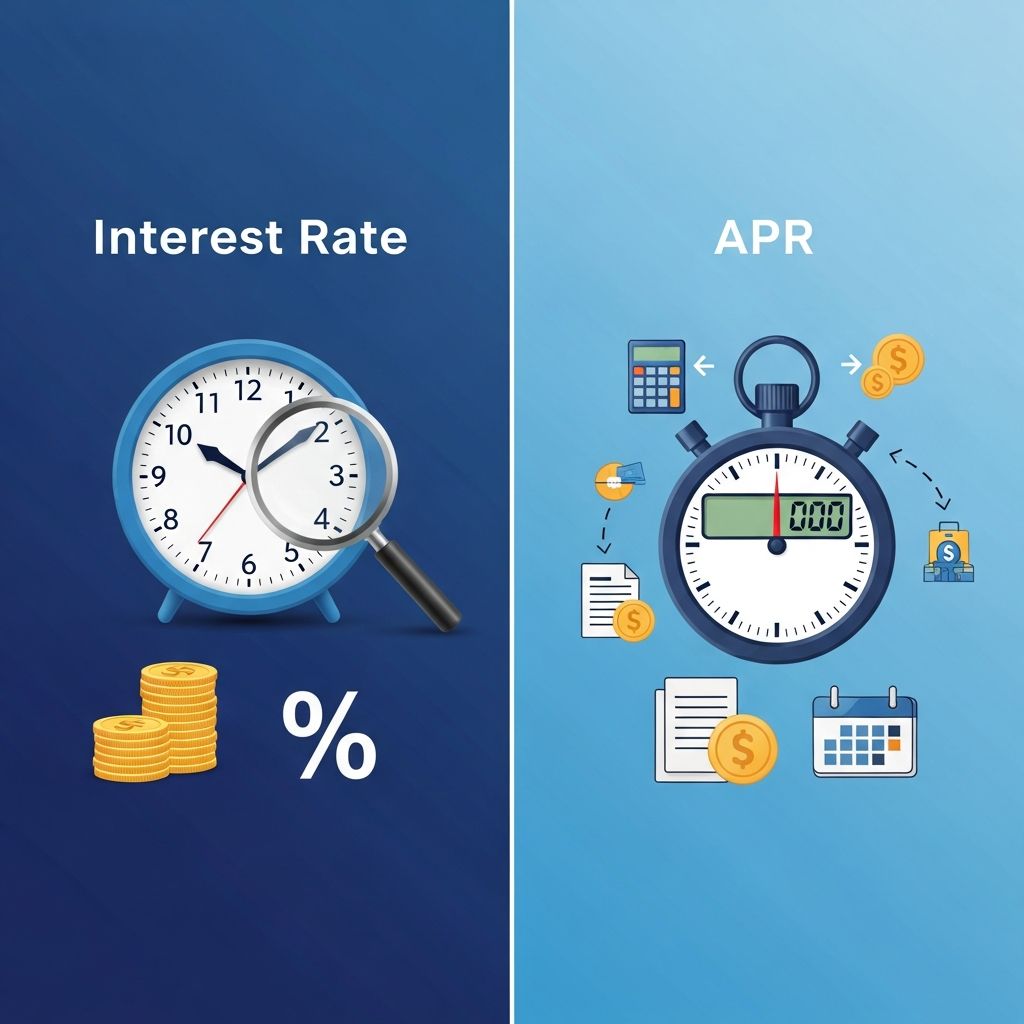
interest rate
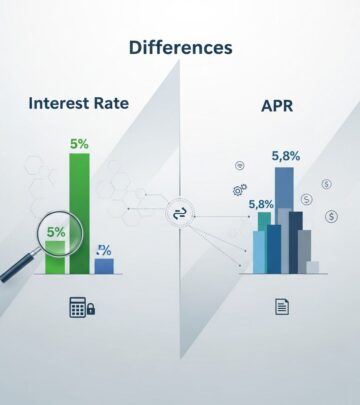
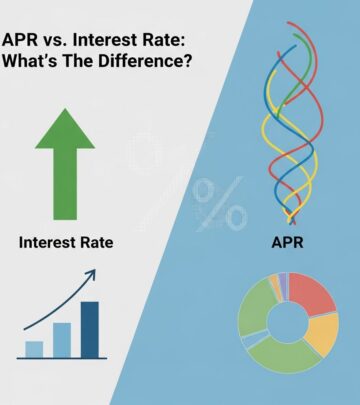
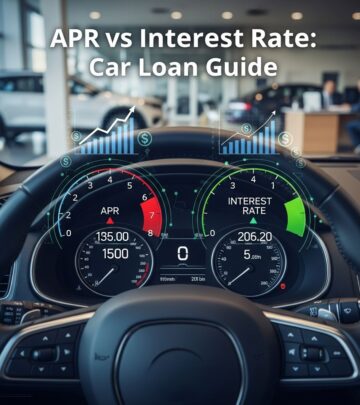
represents the basic cost of borrowing money, expressed as a percentage of the principal, while theAPR (Annual Percentage Rate)
encompasses that rate plus additional fees and charges, offering a comprehensive view of the total annual borrowing expense.Understanding the Fundamentals of Borrowing Costs
When you take out a loan, whether for a home, car, education, or personal needs, two key figures dominate the conversation: the interest rate and the APR. These metrics help gauge the expense of credit, but they serve distinct purposes. The interest rate is straightforward—it’s the lender’s charge for using their funds. In contrast, APR paints a broader picture by incorporating upfront costs that inflate the effective price of the loan over time.
Grasping these concepts is vital for anyone navigating loans. A seemingly low interest rate might hide hefty fees, making one offer less attractive than it appears. Lenders are required by law, such as the Truth in Lending Act (TILA), to disclose both, empowering borrowers to compare options accurately.
Defining Interest Rate: The Core Cost of Credit
The interest rate is the percentage charged on the outstanding loan balance. It directly determines how much extra you pay back beyond the principal amount borrowed. For fixed-rate loans, this remains constant; for variable-rate loans like some adjustable-rate mortgages (ARMs), it fluctuates with market conditions.
Consider a simple example: Borrowing $20,000 at a 5% annual interest rate over one year yields $1,000 in interest, assuming simple interest. In practice, calculations often use amortization, where payments cover both principal and interest, with interest portions decreasing over time as the balance shrinks.
- Fixed rates provide payment stability, ideal for budgeting.
- Variable rates may start lower but carry adjustment risks.
- Interest accrues daily on many loans, compounding the total owed if payments are missed.
This rate influences monthly payments significantly. On mortgages, Federal Reserve policies often drive changes, affecting affordability across the market.
Defining APR: The True Annual Expense
APR expands on the interest rate by annualizing all borrowing costs, including origination fees, closing costs, points, and sometimes insurance premiums. It’s designed for standardization, allowing fair comparisons between lenders.
Unlike interest rates, APR always reflects the full picture for installment loans like mortgages or auto financing. For credit cards, however, APR typically equals the interest rate, as revolving credit doesn’t factor in the same upfront fees.
| Feature | Interest Rate | APR |
|---|---|---|
| Core Components | Percentage of principal borrowed | Interest + fees annualized |
| Includes Fees? | No | Yes (origination, points, etc.) |
| Best For | Understanding base borrowing cost | Comparing total loan expenses |
| Typical Range | Lower than APR | Higher due to added costs |
This table highlights why APR is often higher—those extra charges push it up.
How Interest Rates Are Computed in Practice
Interest calculation varies by loan type. For simple interest loans, the formula is Principal × Rate × Time. Most consumer loans use compound interest, applied to the remaining balance after each payment.
On a $300,000 mortgage at 6% over 30 years, early payments heavily favor interest (e.g., ~$1,500 of the first $1,800 payment). By the end, nearly all goes to principal. Tools like amortization schedules illustrate this shift visually.
Factors influencing rates include credit score, loan term, and economic conditions. Higher scores secure lower rates, reducing lifetime costs substantially.
Decoding APR Calculations: A Step-by-Step Guide
APR computation is more complex, integrating fees into an equivalent annual interest rate. Regulators mandate uniform methods to prevent misleading advertising.
Example: A $300,000 mortgage at 7% interest with $6,000 in fees (1% origination + 1 point) results in an APR of about 7.197%. The formula spreads fees over the loan life, reflecting their amortized impact.
Key inclusions:
- Origination and processing fees
- Discount points (prepaid interest)
- Underwriting and appraisal costs
- Mortgage insurance for low-down-payment loans
Exclusions might cover third-party fees like title insurance in some cases, varying by regulation.
Practical Scenarios: Interest Rate vs. APR in Action
Scenario 1: Two auto loans for $25,000 over 5 years. Loan A: 4.5% interest, no fees. Loan B: 4.2% interest, $1,500 origination fee. Loan A’s APR matches its rate; Loan B’s jumps to ~4.8%, making A cheaper overall.
Scenario 2: Mortgages. A 6.5% rate with $5,000 fees yields ~6.7% APR. Shoppers fixating on rates alone might pick pricier options.
For credit cards, a 15% APR means just the interest—watch annual fees separately.
Why APR Matters More for Loan Shopping
Interest rates grab headlines, but APR reveals the unvarnished truth. It’s especially crucial for short-term loans where fees weigh heavier proportionally.
Use APR to:
- Compare offers from different lenders apples-to-apples.
- Assess long-term affordability beyond monthly payments.
- Spot predatory lending with low rates but high fees.
Always request a Loan Estimate (for mortgages) or Truth-in-Lending disclosure to verify figures.
Exceptions and Special Cases to Watch
Credit cards sidestep APR’s fee inclusions, focusing solely on interest. Variable-rate loans have fluctuating APRs tied to index rates plus margins.
Prepaid loans or those with balloon payments can skew APRs, sometimes understating costs if not fully amortized.
Strategies to Minimize Borrowing Costs
Boost your credit score for better rates—FICO scores above 740 often unlock primes.
- Compare at least three lenders’ APRs.
- Negotiate fees; some are waivable.
- Buy points if planning long-term retention.
- Opt for shorter terms despite higher monthly payments for interest savings.
Online calculators from reputable sites help simulate scenarios.
Common Misconceptions Debunked
Myth: Lower interest always means cheaper loan. Not if fees dominate.
Myth: APR includes all closing costs. Some, like homeowner’s insurance, are excluded.
Myth: Credit card APR covers everything. No, add annual/balance transfer fees.
Frequently Asked Questions (FAQs)
What is the main difference between APR and interest rate?
Interest rate is the borrowing cost percentage; APR adds fees for total cost.
Is a higher APR always bad?
Generally yes, but context like loan term matters. Lower is better for same type.
Does APR change over time?
For fixed loans, no. Variable loans adjust with rates.
Why use APR for mortgages?
It standardizes comparisons including lender fees.
Can I calculate APR myself?
Yes, with formulas or online tools, but lender disclosures are official.
Navigating Loans with Confidence
Armed with APR and interest rate knowledge, borrowers avoid pitfalls. Prioritize APR for holistic views, supplement with total payment projections. Regulatory protections ensure transparency—leverage them.
In today’s market, where rates hover amid economic shifts, diligence pays off. Review terms meticulously before signing.
References
- APR vs. Interest Rate: What’s the Difference? — Experian. 2023-10-01. https://www.experian.com/blogs/ask-experian/apr-vs-interest-rate-whats-the-difference/
- APR vs. Interest Rate: What’s The Difference? — Bankrate. 2024-05-15. https://www.bankrate.com/mortgages/apr-and-interest-rate/
- APR vs. interest rate: What’s the difference? — Rocket Mortgage. 2024-02-20. https://www.rocketmortgage.com/learn/comparing-mortgage-options-apr-vs-interest-rate
- What’s the Difference Between APR and Interest Rate? — YouTube (Consumer Financial Protection Bureau). 2023-01-10. https://www.youtube.com/watch?v=0G5fqiQvnjE
- Mortgage APR vs. Interest Rate: Key Differences — Chase Bank. 2024-03-05. https://www.chase.com/personal/mortgage/education/financing-a-home/how-mortgages-aprs-work
- Understanding APR vs. Interest Rates — Elements Financial. 2023-11-12. https://www.elements.org/about-elements/news/advice/credit-cards/understanding-apr-vs-interest-rates-what-s-the-real-cost-of-borrowing/
- What is the difference between a loan interest rate and the APR? — Consumer Financial Protection Bureau. 2024-01-22. https://www.consumerfinance.gov/ask-cfpb/what-is-the-difference-between-a-loan-interest-rate-and-the-apr-en-733/
Similar Articles








Read full bio of medha deb